
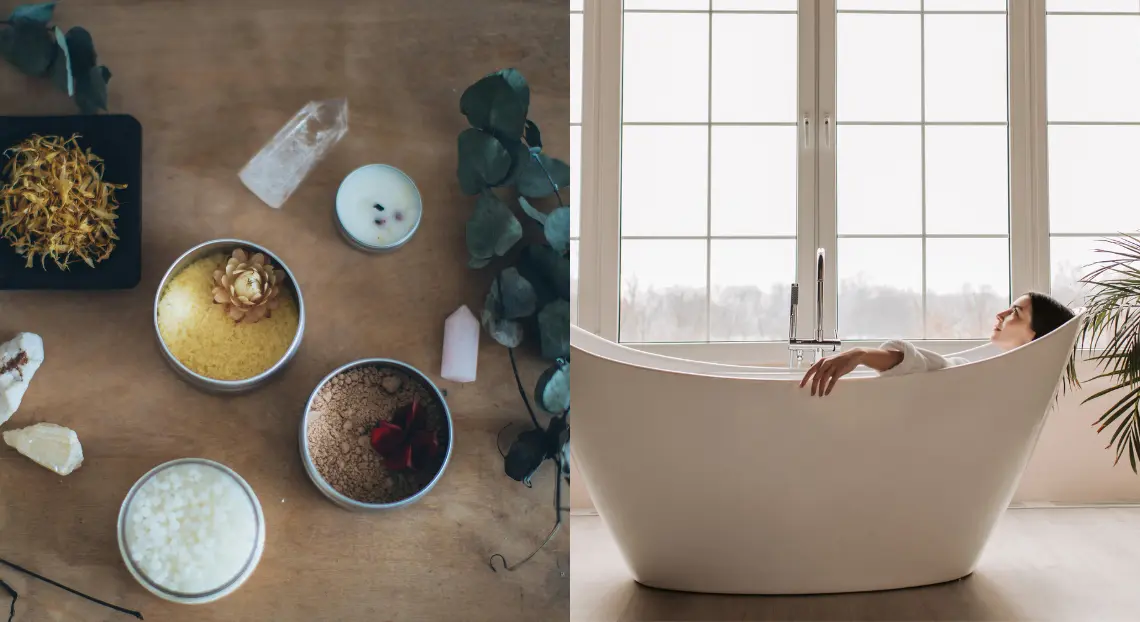
A bentonite bath is a bath made by mixing bentonite clay with warm water. Bentonite clay is a natural clay formed from volcanic ash and is known for its strong absorbing properties. When added to water, the clay creates a smooth mixture that is commonly used in skincare and body care routines.
People use bentonite clay baths to help clean the skin, remove excess oil and dirt, and relax the body. It is also used for soothing tired muscles, refreshing the skin, and supporting general skin care. Many spa and wellness treatments include bentonite clay because of its ability to absorb impurities from the skin’s surface.
Bentonite baths are commonly used as full-body baths, foot soaks, and skin cleansing treatments. They are simple to prepare at home and are widely used by people looking for a natural way to care for their skin and body.
What Is Bentonite Clay?
Bentonite clay is a natural absorbent clay mainly formed from volcanic ash that has changed over time after contact with water. It is known for its ability to absorb moisture, oils, and impurities, which makes it widely used in skincare, personal care, and wellness products.
The clay is usually soft, fine, and gray or cream in color. When mixed with water, it swells and forms a thick paste-like texture. This property makes it useful in face masks, body treatments, soaps, and bath products.
Bentonite clay contains several natural minerals, including magnesium, calcium, silica, sodium, iron, and potassium. The mineral content can vary depending on where the clay is sourced and the type of bentonite clay being used.
In skincare and wellness products, bentonite clay is mainly used for its cleansing and absorbing properties. It helps remove excess oil, dirt, and impurities from the skin’s surface. Because of this, it is commonly added to clay masks, bath products, body wraps, and foot soaks.
What Is a Bentonite Bath?
A bentonite bath is a bath made by adding bentonite clay to warm water. The clay mixes with the water and creates a smooth, cloudy solution that is commonly used for skin cleansing and body care. Bentonite baths are often used in home wellness routines, spa treatments, and foot soaks.
To prepare the bath, bentonite clay is usually mixed with a small amount of water in a non-metal bowl before being added to the bathtub. This helps the clay dissolve more evenly in the water and prevents clumping. Once added to the bath, the clay spreads through the water and forms a soft coating on the skin during soaking.
When the skin comes in contact with the clay water, bentonite clay helps absorb excess oil, dirt, and surface impurities. It also creates a cleansing effect on the skin, which is why many people use bentonite baths as part of their skincare and relaxation routines. After soaking, the skin is usually rinsed with clean water to remove any remaining clay residue.
How Bentonite Baths Work on the Skin?
How Bentonite Clay Absorbs Dirt and Oil?
Bentonite clay is known for its strong absorbing and binding properties. When mixed with water, the clay swells and forms a smooth layer that can attach to oil, dirt, and other particles on the skin. This happens because bentonite clay has a natural negative charge that helps attract certain impurities from the skin’s surface.
The clay also absorbs excess moisture and oil. This is why bentonite baths are commonly used by people with oily or acne-prone skin. As the clay sits on the skin during the bath, it helps lift away surface buildup that can collect in pores over time.
How Bentonite Baths Help Clean the Skin?
During a bentonite bath, the clay spreads through the bath water and forms a thin coating over the skin. While soaking, the clay helps remove excess oil, sweat, dirt, and dead skin particles from the body. This gives the skin a cleaner and fresher feel after rinsing.
Many people use bentonite baths after physical activity, outdoor work, or long days because the bath helps wash away buildup from the skin. The clay can also help reduce greasy feeling on the skin and leave the body feeling refreshed. However, bentonite clay mainly works on the skin surface and should not be seen as a full body “detox” treatment.
Why Bentonite Baths Are Common in Body Care?
Bentonite baths are widely used in skincare and wellness routines because they are simple to prepare and easy to use. The clay is commonly added to bath products, face masks, body wraps, and foot soaks because of its cleansing properties. Many people also use bentonite baths to relax the body and refresh tired skin after daily activities.
Because bentonite clay can be drying if used too often, it is usually recommended to rinse well and apply moisturizer after the bath.
Types of Bentonite Clay Used for Baths
Different types of bentonite clay are used in bath and skincare products. The two most common types are sodium bentonite clay and calcium bentonite clay. Both come from volcanic ash, but they have different properties and uses. The type of clay used in a bath can affect how the product feels on the skin and how strongly it absorbs oil and moisture.
Sodium Bentonite Clay for Deep Cleansing
Sodium bentonite clay is known for its strong absorbing properties. When mixed with water, it expands more than other types of bentonite clay and forms a thick texture. Because of this, it is often used in products made for deep cleansing and oil absorption.
This type of clay can absorb large amounts of oil, dirt, and moisture from the skin’s surface. Many people use sodium bentonite clay in baths and body treatments when they want a stronger cleansing effect. It is also commonly used in clay masks, body wraps, and industrial products because of its ability to swell and bind with particles.
However, sodium bentonite clay can feel drying on some skin types if used too often. People with dry or sensitive skin usually use it carefully and follow with moisturizer after the bath.
Calcium Bentonite Clay for Skin Care Baths
Calcium bentonite clay is considered gentler on the skin compared to sodium bentonite clay. It does not swell as much in water and usually has a smoother and softer feel during use. Because of this, it is widely used in skincare and bath products.
This type of clay is commonly added to bath powders, face masks, soaps, and spa products. It helps clean the skin by removing excess oil and surface impurities without causing too much dryness. Many people prefer calcium bentonite clay for regular skin care and relaxation baths because it is milder and more comfortable for longer soaking sessions.
Benefits of a Bentonite Bath
Bentonite baths are commonly used in skincare and body care routines because of their cleansing and refreshing properties. The clay mixes with warm water and forms a soft layer on the skin during soaking. Many people use bentonite baths to help clean the body, remove excess oil, and relax after daily activities.
Helps Clean the Skin Naturally
One of the main benefits of a bentonite bath is skin cleansing. Bentonite clay can absorb dirt, sweat, and other particles from the skin’s surface. During the bath, the clay helps loosen buildup that may collect on the body throughout the day. After rinsing, the skin often feels cleaner and fresher.
Removes Excess Oil and Surface Impurities
Bentonite clay is known for its strong oil-absorbing properties. This makes bentonite baths useful for people with oily skin or heavy sweating. The clay can help remove excess oil, dead skin particles, and surface impurities that may block pores and leave the skin feeling greasy.
Helps Soothe Mild Skin Irritation
Some people use bentonite baths to calm dry, itchy, or mildly irritated skin. The warm water combined with the smooth clay texture can help the skin feel more comfortable. However, people with sensitive skin should avoid using the bath too often because bentonite clay may cause dryness in some cases.
Supports Relaxation After Physical Activity
Bentonite baths are also used after exercise, outdoor work, or long hours of standing. Soaking in warm clay water may help the body feel relaxed and refreshed. Many people use these baths as part of their post-workout or self-care routine.
Helps Refresh Tired Feet and Body
Bentonite clay baths and foot soaks are often used to refresh tired feet and muscles after a long day. The bath helps clean the skin while giving a cooling and relaxing feeling to the body.
May Help Reduce Body Odor
Because bentonite clay absorbs sweat, oil, and impurities, some people use it to help reduce body odor. Regular cleansing with a bentonite bath may help the skin feel cleaner and fresher for a longer time.
Common Uses of Bentonite Baths
Bentonite baths are used in many skincare and body care routines because they are simple to prepare and easy to use. People use bentonite clay in different ways depending on their needs. The clay is commonly added to bath water, foot soaks, spa treatments, and cleansing routines to help clean and refresh the skin.
Full Body Bentonite Clay Baths
One of the most common uses of bentonite clay is a full body bath. In this method, the clay is mixed with warm water in a bathtub and the body is soaked for several minutes. Many people use full body bentonite baths to help remove sweat, excess oil, and dirt from the skin. The bath also gives a clean and refreshing feeling after long workdays or outdoor activities.
Bentonite Clay Foot Soaks
Bentonite clay is also widely used in foot soaks. The clay is mixed in a bucket or tub filled with warm water, and the feet are soaked for a short time. Foot soaks are commonly used to clean tired feet, reduce bad odor, and refresh the skin after standing or walking for long hours. Many people include bentonite foot soaks in their regular foot care routine.
Use in Spa and Wellness Treatments
Many spas and wellness centers use bentonite clay in body wraps, baths, and skin treatments. The clay is popular because of its cleansing and oil-absorbing properties. Warm bentonite baths are often used in relaxation treatments to help the body feel calm and refreshed.
Bentonite Baths for Skin Cleansing
Bentonite baths are commonly added to skin cleansing routines. People with oily or sweaty skin often use these baths to help remove surface buildup from the body. The clay helps clean the skin without using harsh scrubbing products.
Post-Workout and Recovery Soaks
Some people use bentonite baths after exercise or physical activity. Soaking in warm clay water may help the body feel relaxed after workouts, sports, or physically demanding work. The bath can also help wash away sweat and leave the skin feeling fresh and clean.
How to Take a Bentonite Bath?
Taking a bentonite bath is simple and does not require many materials. The bath is usually prepared by mixing bentonite clay with warm water before adding it to the bathtub. Many people use this bath as part of their skin care or relaxation routine because it is easy to prepare at home.
Materials Needed for a Bentonite Bath
To prepare a bentonite bath, you need bentonite clay, warm water, and a non-metal bowl and spoon. Non-metal tools are commonly recommended because bentonite clay may react with metal and reduce its effectiveness. Many people use glass, wooden, or plastic containers when mixing the clay.
The amount of clay used can vary, but beginners often start with a small amount to see how their skin reacts. Warm water is usually preferred because it helps the clay mix more easily and creates a more comfortable soaking experience.
Steps to Prepare and Use a Bentonite Bath
Start by filling the bathtub with warm water. The water should feel comfortable and not too hot, especially for longer soaking sessions. In a separate non-metal bowl, mix bentonite clay with a small amount of water until it forms a smooth liquid or paste. Mixing the clay separately helps prevent lumps in the bathwater.
After the clay is fully mixed, pour the mixture into the bathtub and stir the water gently with your hand. Once the clay spreads evenly in the water, soak your body for about 15 to 20 minutes. During the bath, the clay coats the skin and helps absorb excess oil and surface dirt.
After soaking, rinse the body well with clean water to remove any clay residue left on the skin. Bentonite clay can sometimes leave the skin feeling dry, so many people apply moisturizer after the bath to help keep the skin soft and comfortable.
How Much Bentonite Clay to Use in a Bath?
The amount of bentonite clay used in a bath can vary depending on the type of bath and personal comfort. Using the right amount is important because too little may not give the desired cleansing effect, while too much can make the bath uncomfortable and may dry out the skin.
Recommended Amount for Beginners
People using a bentonite bath for the first time usually start with a small amount of clay. About half a cup of bentonite clay is commonly recommended for beginners. This allows the skin to adjust to the clay without causing too much dryness or irritation. Starting with a smaller amount also helps people understand how their skin reacts after soaking.
The clay should always be mixed with water separately before adding it to the bathtub. This helps create a smooth mixture and prevents clumps from forming in the bathwater.
Common Amount for Full Baths and Foot Soaks
For a regular full body bath, many people use between half a cup and one cup of bentonite clay in a standard bathtub filled with warm water. This amount is generally enough to spread evenly through the water and coat the skin during soaking.
For foot soaks, a smaller amount is usually used because less water is needed. Around two to four tablespoons of bentonite clay are commonly added to a bucket or foot tub filled with warm water. This is enough for cleaning and refreshing tired feet after long hours of walking or standing.
Why Too Much Bentonite Clay Should Be Avoided?
Using too much bentonite clay in a bath can make the water very thick and difficult to rinse from the skin. Overuse may also leave the skin feeling dry, tight, or irritated, especially for people with sensitive skin.
Long soaking sessions with large amounts of clay may remove too much natural oil from the skin. Because of this, many people use bentonite baths only a few times a week and apply moisturizer after the bath to help keep the skin soft and balanced.
Bentonite Bath for Skin Care
Bentonite baths are commonly used in skin care routines because bentonite clay can absorb excess oil, dirt, and surface impurities from the skin. Different skin types may react differently to bentonite clay, so the way the bath is used often depends on individual skin needs. Many people use bentonite baths to help keep the skin clean, fresh, and comfortable.
Bentonite Baths for Oily Skin
People with oily skin often use bentonite baths because the clay has strong oil-absorbing properties. During soaking, the clay helps remove excess oil and sweat from the skin’s surface. This can help reduce greasy feeling on the body and leave the skin feeling cleaner after rinsing.
Because oily skin may collect more dirt and buildup, bentonite baths are sometimes included in regular body cleansing routines. However, using the bath too often may still dry out the skin, so moderate use is important.
Bentonite Baths for Dry Skin
People with dry skin can also use bentonite baths, but they should use smaller amounts of clay and shorter soaking times. Bentonite clay may absorb natural oils from the skin, which can increase dryness if overused.
After the bath, it is important to rinse the skin well and apply moisturizer to help keep the skin soft. Many people with dry skin use calcium bentonite clay because it is considered gentler than sodium bentonite clay.
Bentonite Baths for Acne-Prone Skin
Bentonite clay is commonly used in products made for acne-prone skin because it helps remove excess oil and surface impurities that may block pores. A bentonite bath may help keep the skin cleaner, especially on areas like the back, chest, and shoulders where body acne is common.
The bath is not a medical treatment for acne, but many people use it as part of their regular skin care routine.
Bentonite Baths for Itchy or Irritated Skin
Some people use bentonite baths to help soothe mildly itchy or irritated skin. The cool and smooth texture of the clay water may help the skin feel more comfortable during soaking. However, people with very sensitive skin or serious skin conditions should use bentonite baths carefully and avoid long soaking sessions.
Bentonite Bath vs Epsom Salt Bath
Bentonite baths and Epsom salt baths are both commonly used in body care and relaxation routines, but they work in different ways. Bentonite baths use bentonite clay, while Epsom salt baths use magnesium sulfate crystals. People choose between them based on their skin care needs, body comfort, and personal preference.
Main Difference Between Bentonite and Epsom Salt Baths
The main difference is how the two products work in water. Bentonite clay is known for its absorbing properties. When mixed with warm water, the clay forms a smooth coating that helps absorb excess oil, dirt, and surface impurities from the skin. Because of this, bentonite baths are commonly used for skin cleansing and oily skin care routines.
Epsom salt works differently. It dissolves completely in water and is mainly used for relaxation and muscle comfort. Many people use Epsom salt baths after exercise, sports, or long workdays because warm salt water may help the body feel relaxed and refreshed.
Benefits of Bentonite Baths
Bentonite baths are mainly used for skin cleansing. The clay helps remove excess oil, sweat, and dirt from the body. Many people use bentonite baths to refresh oily or sweaty skin and to clean areas that collect buildup, such as the back, shoulders, and feet.
The bath is also commonly used in spa and wellness treatments because the clay creates a smooth and calming soaking experience.
Benefits of Epsom Salt Baths
Epsom salt baths are popular for relaxation and post-workout soaking. Many people use them to help relax tired muscles and reduce body discomfort after physical activity. The warm water and dissolved salt can also help soften rough skin during soaking.
When People Choose One Over the Other
People often choose bentonite baths when the goal is skin cleansing and oil removal. Epsom salt baths are more commonly chosen for relaxation and muscle comfort. Some people also combine bentonite clay and Epsom salt in the same bath to get both cleansing and relaxing effects.
Bentonite Bath vs Clay Mask
Bentonite baths and clay masks both use bentonite clay, but they are used in different ways and serve different purposes. Both are popular in skin care routines because bentonite clay can absorb excess oil, dirt, and surface impurities. The main difference is how the clay is applied and which areas of the body are treated.
Difference in How They Are Used
A bentonite bath is made by mixing bentonite clay into warm bath water. The body is soaked in the clay water for a short time, usually around 15 to 20 minutes. During the bath, the clay spreads across large areas of the skin and creates a light coating over the body.
A clay mask is thicker and is directly applied to the skin as a paste. It is most commonly used on the face, but some people also apply it to the neck, back, chest, or other small areas. The mask is left on the skin until it starts to dry and is then washed off with water.
Difference in Purpose and Skin Coverage
Bentonite baths are mainly used for full body cleansing, relaxation, and refreshing the skin. They cover large areas of the body at the same time, making them useful for people who want overall skin cleansing or post-workout soaking.
Clay masks are more targeted treatments. They are often used for oily areas, clogged pores, acne-prone skin, or small problem areas. Because the clay mask sits directly on one part of the skin, it can provide stronger oil absorption in that specific area.
Which Option Is Better for Different Needs?
People usually choose bentonite baths when they want full body skin care, relaxation, or foot soaks. Clay masks are often preferred for facial skin care and spot treatment because they can focus on smaller areas with more buildup or oil.
Some people use both as part of their regular skin care routine. A bath may be used for body cleansing, while a clay mask is used separately for facial care and pore cleaning.
Safety Tips for Using a Bentonite Bath
Bentonite baths are generally simple to use, but following proper safety steps is important for comfortable and safe skin care. Using the clay correctly can help reduce the risk of dryness, irritation, or other skin problems. Many people use bentonite baths regularly, but moderate and careful use is recommended for the best results.
Avoid Using Metal Containers and Spoons
Bentonite clay is usually mixed in non-metal bowls using non-metal spoons. Many people avoid metal because bentonite clay may react with metal surfaces and affect the texture and performance of the clay. Glass, wood, ceramic, or plastic containers are commonly used when preparing the bath mixture.
Mixing the clay separately before adding it to the bathtub also helps create a smoother mixture and prevents clumps in the water.
Stay Hydrated Before and After the Bath
Warm baths can sometimes cause sweating and mild dehydration, especially during longer soaking sessions. Drinking water before and after a bentonite bath can help keep the body hydrated. This is particularly important when using warm or hot bath water for more than a few minutes.
Do Not Use on Open Wounds or Broken Skin
Bentonite baths should not be used on open cuts, wounds, or severely damaged skin. The clay may irritate sensitive areas and cause discomfort. People with serious skin conditions should also speak with a healthcare professional before using bentonite clay products.
Avoid Using Bentonite Baths Too Often
Using bentonite clay too frequently may remove too much natural oil from the skin. This can lead to dryness, tightness, or irritation, especially for people with sensitive or dry skin. Many people use bentonite baths only once or twice a week to avoid overuse.
Patch Test for Sensitive Skin
People with sensitive skin should test a small amount of bentonite clay on one area of the skin before taking a full bath. This can help check for redness, itching, or irritation. If discomfort appears after the patch test, the bath should be avoided or used with a smaller amount of clay.
Possible Side Effects of Bentonite Baths
Bentonite baths are commonly used for skin cleansing and relaxation, but some people may experience mild side effects after using them. These effects are usually related to the clay’s strong absorbing properties. The risk of side effects can increase if too much clay is used or if the bath is taken too often.
Skin Dryness After a Bentonite Bath
One of the most common side effects of a bentonite bath is dry skin. Bentonite clay absorbs oil and moisture from the skin’s surface, which can leave the skin feeling rough or dry after soaking. People with naturally dry or sensitive skin may notice this more than others.
Using smaller amounts of clay and shorter soaking times may help reduce dryness. Many people also apply moisturizer after the bath to help restore moisture and keep the skin soft.
Mild Redness or Skin Irritation
Some people may experience mild redness, itching, or irritation after using bentonite clay. This can happen if the skin is sensitive or if the clay is left on the body for too long. Hot water may also increase skin irritation during the bath.
In many cases, the irritation is temporary and improves after rinsing the skin with clean water. However, if redness or itching becomes worse, the bath should be stopped.
Tight Feeling on the Skin
After a bentonite bath, the skin may feel tight or stretched for a short time. This happens because the clay removes excess oil from the skin surface. A mild tight feeling is common, especially after long soaking sessions or when using larger amounts of clay.
Applying moisturizer after the bath can help reduce this feeling and improve skin comfort.
When to Stop Using Bentonite Baths
People should stop using bentonite baths if they notice strong irritation, burning, swelling, severe dryness, or ongoing discomfort after soaking. These signs may show that the skin is reacting badly to the clay or the bath routine.
Anyone with serious skin conditions or very sensitive skin should speak with a healthcare professional before using bentonite clay products regularly.
Who Should Avoid Bentonite Baths?
Bentonite baths are commonly used for skin cleansing and relaxation, but they may not be suitable for everyone. Because bentonite clay absorbs oil and moisture from the skin, some people may experience irritation or discomfort after using it. Understanding who should avoid bentonite baths can help reduce the risk of skin problems and unwanted reactions.
People With Very Sensitive Skin
People with very sensitive skin should use bentonite baths carefully or avoid them if the skin reacts easily to skincare products. Bentonite clay can sometimes cause dryness, redness, itching, or a tight feeling on sensitive skin. Warm bath water may also increase irritation in some cases.
Before taking a full bentonite bath, many people with sensitive skin do a small patch test on one area of the body. This helps check for irritation before using the clay on larger skin areas.
People With Serious Skin Conditions
People with severe skin conditions such as eczema, psoriasis, open sores, severe rashes, or infected skin should avoid bentonite baths unless advised by a healthcare professional. The clay and warm water may increase discomfort or dryness on damaged skin.
If the skin is already cracked, inflamed, or highly irritated, soaking in bentonite clay water may make the condition worse instead of helping.
Children Should Use Bentonite Baths Only With Supervision
Children have more delicate skin than adults, so bentonite baths should only be used with proper supervision. Large amounts of clay or long soaking times may dry out a child’s skin more quickly.
Parents should use small amounts of bentonite clay and avoid hot water when preparing a bath for children. If any irritation appears, the bath should be stopped immediately.
People Advised to Avoid Clay-Based Products
Some people may be advised by doctors or skin specialists to avoid clay-based products because of allergies, skin sensitivity, or medical conditions. In such cases, bentonite baths should not be used without medical advice.
Anyone who experiences strong irritation, swelling, burning, or discomfort after using bentonite clay should stop using the product and speak with a healthcare professional if needed.
How Often Should You Take a Bentonite Bath?
The right frequency for a bentonite bath depends on skin type, skin sensitivity, and the reason for using the bath. Bentonite clay has strong absorbing properties, so using it too often may remove too much natural oil from the skin. Moderate use is usually recommended to help keep the skin clean without causing dryness or irritation.
Recommended Bentonite Bath Frequency
For general skin care and body cleansing, many people use a bentonite bath once or twice a week. This is often enough to help remove excess oil, dirt, and sweat from the skin while avoiding overuse. Beginners usually start with shorter soaking sessions and smaller amounts of clay to see how their skin reacts.
People who use bentonite baths after exercise, outdoor work, or heavy sweating may use them more often, but regular moisturizing after the bath is important to help protect the skin.
Bentonite Bath Frequency by Skin Type
People with oily skin may tolerate bentonite baths more often because the clay helps absorb excess oil from the skin surface. Those with dry or sensitive skin usually benefit from less frequent use and shorter soaking times.
If the skin becomes dry, itchy, red, or tight after bathing, it may be a sign that the clay is being used too often. In such cases, reducing bath frequency can help improve skin comfort.
How to Choose the Right Bentonite Clay?
Choosing good-quality bentonite clay is important for safe and effective use. Different clay products may vary in purity, texture, and intended use, so checking the label before buying is recommended.
Food-Grade and Cosmetic-Grade Bentonite Clay
Bentonite clay is often sold as food-grade or cosmetic-grade. Cosmetic-grade bentonite clay is commonly used for baths, face masks, and skin care products. It is processed for external use and is widely available in beauty and wellness products.
Check Purity and Product Ingredients
Good bentonite clay products usually contain pure clay without added fragrance, colors, or unnecessary chemicals. Reading the ingredient label helps make sure the product is suitable for skin care use.
Proper Packaging and Storage
Bentonite clay should be stored in a dry and sealed container to prevent moisture from affecting the product. Many people prefer products packed in airtight bags or containers because they help keep the clay fresh and easy to use.
How to Store Bentonite Clay?
Proper storage is important to keep bentonite clay clean, dry, and easy to use. Bentonite clay can absorb moisture from the air, so storing it correctly helps maintain its texture and quality for a longer time. Poor storage conditions may cause the clay to form lumps or become difficult to mix with water.
Keep Bentonite Clay in a Dry Place
Bentonite clay should always be stored in a cool and dry place away from direct moisture. Areas with high humidity, such as bathrooms with poor ventilation, may cause the clay to absorb water from the air. This can affect the texture of the powder and reduce its smooth consistency during use.
Keeping the clay away from heat and direct sunlight may also help protect the product from unwanted moisture buildup.
Use Airtight Containers for Storage
Many people store bentonite clay in airtight containers to protect it from air and moisture exposure. Sealed containers help keep the clay dry and prevent contamination from dust or dirt.
Plastic, glass, or ceramic containers with tight lids are commonly used for storage. If the clay comes in a resealable package, it should always be closed tightly after each use.
Avoid Moisture Contamination
Wet spoons or wet hands should not be placed inside bentonite clay containers. Even small amounts of moisture may cause clumping and make the clay harder to use later. Using a clean and dry spoon each time helps keep the product fresh and smooth.
Common Mistakes to Avoid When Using Bentonite Baths
Some common mistakes may reduce the effectiveness of a bentonite bath or cause skin discomfort. Using too much clay is one of the most common problems. Large amounts can make the bath water very thick and may leave the skin feeling dry or tight after soaking.
Another mistake is mixing bentonite clay with metal bowls or spoons. Many people prefer non-metal tools because bentonite clay may react with metal surfaces over time.
Staying in the bath too long may also dry out the skin, especially when using hot water. Most soaking sessions are usually limited to around 15 to 20 minutes.
After the bath, the body should be rinsed properly with clean water. Leaving clay residue on the skin may cause dryness or irritation for some people.
Conclusion
A bentonite bath is a simple and popular way to support skin cleansing and body care. Bentonite clay is known for its strong absorbing properties, which help remove excess oil, dirt, and surface impurities from the skin. Many people use bentonite baths for relaxation, skin refreshing, foot soaks, and post-workout care.
When used properly, bentonite baths can be a helpful part of a regular skin care routine. Choosing the right type of bentonite clay, using the correct amount, and following basic safety steps can help reduce the risk of dryness or irritation. It is also important to avoid overuse and moisturize the skin after soaking.
Although bentonite baths are commonly used for skin care and wellness, they may not be suitable for everyone, especially people with very sensitive or damaged skin. Using the bath carefully and paying attention to how the skin reacts can help create a safer and more comfortable experience.
Frequently Asked Questions (FAQs)
Is a bentonite bath safe for daily use?
Daily use is usually not recommended because bentonite clay can dry out the skin. Many people use bentonite baths once or twice a week.
Can bentonite clay help with body odor?
Bentonite clay may help reduce body odor by absorbing sweat, oil, and surface impurities from the skin.
How long should you stay in a bentonite bath?
Most people soak in a bentonite bath for about 15 to 20 minutes. Staying too long may cause dryness or skin irritation.
Can children use a bentonite bath?
Children can use bentonite baths in small amounts and under adult supervision. Short soaking times are usually recommended.
Does a bentonite bath stain the tub?
Bentonite clay usually does not permanently stain the tub, but it can leave residue. Rinsing the tub after use helps keep it clean.
Can I mix bentonite clay with Epsom salt?
Yes, many people mix bentonite clay with Epsom salt in the same bath for skin cleansing and relaxation.
Is bentonite clay safe for sensitive skin?
People with sensitive skin should use bentonite clay carefully and do a patch test before taking a full bath.
Should I moisturize after a bentonite bath?
Yes, applying moisturizer after the bath can help reduce dryness and keep the skin soft.
Can bentonite baths dry out the skin?
Yes, bentonite clay can remove natural oils from the skin, especially if used too often or in large amounts.
What is the best type of bentonite clay for baths?
Calcium bentonite clay is commonly preferred for baths because it is considered gentler on the skin than sodium bentonite clay.