

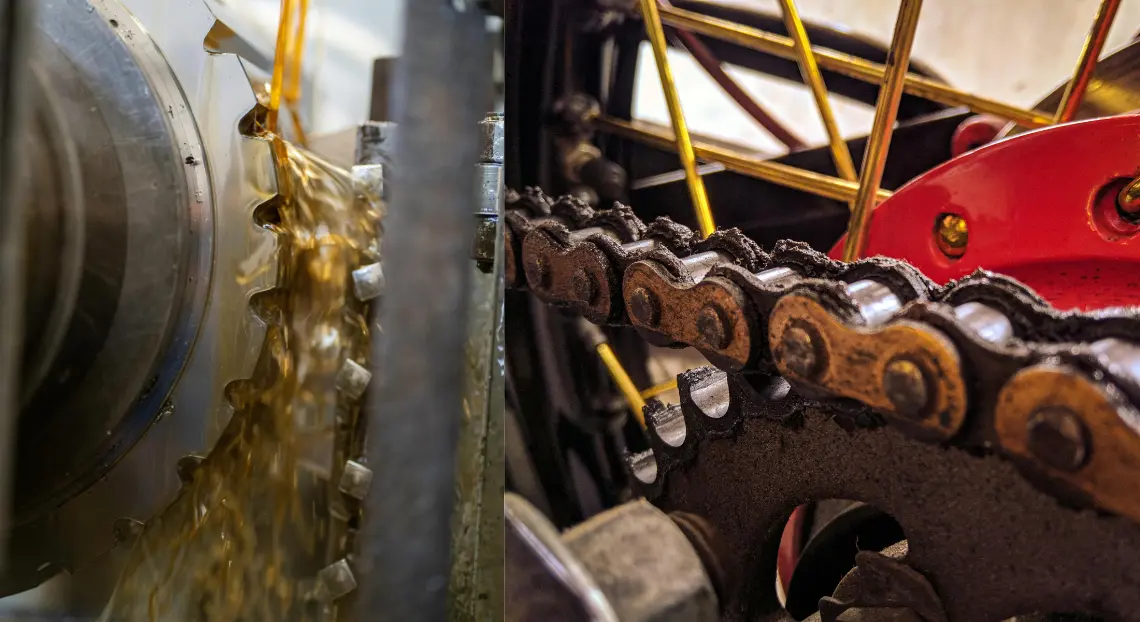
What Are Lubricants?
Lubricants are substances used to reduce friction between two surfaces that are in contact and moving against each other. They create a thin layer between the surfaces, which helps them move smoothly without direct contact.
How Lubricants Work Between Surfaces?
When two surfaces rub against each other, they create friction, heat, and wear. Lubricants form a protective film between these surfaces. This film:
- Prevents direct contact
- Reduces friction and heat
- Minimizes wear and damage
In simple terms, lubricants act as a smooth barrier that allows parts to move easily, improves efficiency, and extends the life of machines and components.
Why Lubrication Is Important?
Reduces Friction Between Surfaces
Friction happens when two surfaces move against each other. Even smooth surfaces have tiny rough points that create resistance. This resistance slows down movement and wastes energy. Lubrication adds a thin layer between the surfaces, which helps them slide easily. This reduces resistance and makes movement smooth and efficient.
Prevents Wear and Surface Damage
When surfaces rub continuously, material starts to wear off. This is called wear. Over time, it can damage parts and reduce their life. Lubrication prevents direct contact between surfaces, which reduces damage. It helps machines and components last longer and work properly without frequent repairs.
Improves Performance and Efficiency
High friction leads to energy loss because more power is needed to move parts. Lubrication reduces this loss by allowing smooth motion. As a result, machines run better, use less energy, and give consistent performance. Proper lubrication also helps in maintaining reliability and avoids sudden failures.
Reduces Heat and Energy Loss
Friction generates heat, which can damage machine parts and affect performance. Lubricants help control this heat by reducing friction and carrying heat away from moving parts. This prevents overheating and keeps systems running safely. Lower heat also means less energy is wasted during operation.
In simple terms, lubrication is important because it keeps machines running smoothly, reduces damage, saves energy, and increases the life of components.
Types of Lubricants
Liquid Lubricants (Oils) and Their Uses
Liquid lubricants are the most common type. These include engine oil and industrial oils. They flow easily and form a thin film between moving parts. This film reduces friction and helps in smooth movement. Engine oil is used in vehicles to protect engine parts, reduce wear, and control heat. Industrial oils are used in machines, turbines, and compressors. They also help in cleaning, cooling, and protecting parts from rust. Liquid lubricants are preferred where fast and continuous movement is required.
Semi-Solid Lubricants (Grease) and Their Uses
Grease is thicker than oil and stays in place for a longer time. It is made by mixing oil with a thickening agent. Grease is used in parts where liquid oil cannot stay, such as bearings, joints, and gears. It provides long-lasting lubrication and protects parts from dust, water, and dirt. Grease is useful in heavy load conditions and where regular lubrication is difficult. It reduces maintenance and keeps components protected for a longer period.
Solid Lubricants and Their Applications
Solid lubricants are used in conditions where liquid and grease cannot work properly. Common examples are graphite and molybdenum disulfide. These materials can handle high temperature and heavy pressure. They form a dry layer on surfaces, which reduces friction without the need for liquid. Solid lubricants are used in high-heat environments, vacuum conditions, and heavy machinery. They are also used where clean and dry lubrication is required.
Gaseous Lubricants and Special Applications
Gaseous lubricants use air or gas to reduce friction. These are used in special systems like air bearings. In such systems, a thin layer of air separates the surfaces, allowing smooth and contact-free movement. This type of lubrication is used in high-speed and precision equipment where even small friction can affect performance.
Properties of Good Lubricants
Viscosity and Flow Behavior
Viscosity is one of the most important properties of a lubricant. It shows how thick or thin the lubricant is and how easily it can flow. A good lubricant should have the right viscosity so it can form a proper film between moving surfaces. If the lubricant is too thin, it cannot protect the surfaces properly. If it is too thick, it creates extra resistance and reduces efficiency. Temperature also affects viscosity, as most lubricants become thinner when heated.
Thermal Stability at High and Low Temperature
Thermal stability means the ability of a lubricant to work properly at different temperatures. Machines often operate under high heat, and a good lubricant should not break down in such conditions. It should also remain fluid at low temperatures to ensure smooth movement during startup. Poor thermal stability can lead to oil breakdown, deposit formation, and reduced performance.
Resistance to Oxidation and Oil Degradation
Oxidation happens when a lubricant reacts with oxygen over time. This can lead to the formation of acids, sludge, and harmful deposits. A good lubricant should resist oxidation to maintain its quality for a longer period. High oxidation resistance helps in extending the life of both the lubricant and the machine, especially in systems where the oil is used for long durations.
Low Friction and Smooth Performance
A good lubricant must reduce friction effectively. It should create a strong and stable film between surfaces to prevent direct contact. This helps in smooth movement and reduces wear. Low friction also improves energy efficiency and reduces heat generation. Additives in lubricants are often used to improve this performance and protect surfaces from damage.
In simple terms, a good lubricant should flow properly, handle temperature changes, resist chemical breakdown, and provide smooth and reliable performance.
Applications of Lubricants
Use of Lubricants in the Automotive Industry
Lubricants play a key role in vehicles. Engine oil is used to reduce friction between engine parts, which move at high speed and temperature. It helps in smooth operation, reduces wear, and removes heat from the engine. Gear oils are used in transmissions to protect gears under heavy load. Brake systems also use special fluids to ensure proper and safe functioning. Without proper lubrication, vehicle parts can wear out quickly and performance can drop.
Use of Lubricants in Industrial Machinery
In industries, machines run for long hours under heavy load. Lubricants are used in equipment like motors, turbines, compressors, and production machines. They help reduce friction, control heat, and protect parts from damage. Lubrication also helps in reducing downtime and maintenance cost. In many systems, lubricants also act as a sealing and cleaning agent by removing dirt and particles from moving parts.
Use of Lubricants in Household Items
Lubricants are also used in many household items. They are applied to door hinges, locks, fans, and small tools to ensure smooth movement. Over time, these parts may become stiff or produce noise due to friction. Applying a small amount of lubricant can fix this problem and improve performance. It also helps in protecting metal parts from rust and wear.
Use of Lubricants in Medical and Personal Care
Lubricants are used in medical and personal care products as well. These include skin-safe gels and creams that reduce friction on the skin. They are used in medical procedures, personal care products, and cosmetic applications. These lubricants are made to be safe, non-irritating, and easy to apply. They help in improving comfort and reducing skin damage caused by dryness or friction.
Benefits of Using Lubricants
Increases Machine Life and Durability
Lubricants help protect machine parts by forming a thin layer between moving surfaces. This layer reduces direct contact, which lowers wear and damage over time. As a result, parts last longer and machines do not fail quickly. Proper lubrication can significantly extend the life of components and reduce the need for early replacement.
Ensures Smooth and Reliable Operation
Machines work better when friction is low. Lubricants reduce resistance between moving parts, allowing smooth and steady motion. This improves overall performance and reduces noise and vibration. When machines run smoothly, they are more reliable and less likely to stop suddenly during operation.
Reduces Maintenance and Repair Cost
Frequent wear and damage increase maintenance needs. Lubricants reduce wear, which means fewer breakdowns and less need for repairs. This lowers maintenance costs and reduces downtime in both machines and vehicles. Proper lubrication also helps in keeping parts clean by carrying away dirt and small particles.
Improves Energy Efficiency and Saves Power
Friction causes energy loss because more power is needed to move parts. Lubricants reduce friction, which helps machines use less energy. Lower friction also reduces heat generation, which improves efficiency. As a result, machines perform better while using less power, leading to cost savings in the long run.
In simple terms, lubricants help machines last longer, run smoothly, require less maintenance, and use energy more efficiently.
How to Choose the Right Lubricant?
Choose Based on Operating Temperature
Temperature is one of the most important factors when selecting a lubricant. Every machine works within a certain temperature range, and the lubricant must perform well within that range. At high temperatures, some lubricants can break down or become too thin, which reduces protection. At low temperatures, they can become too thick and slow down movement. A good lubricant should stay stable and maintain proper flow in both hot and cold conditions.
Choose Based on Load and Pressure Conditions
The load on machine parts affects how strong the lubricant film should be. Heavy loads create more pressure between surfaces, which increases the risk of wear. In such cases, lubricants with high load-carrying capacity and strong film strength are required. For light loads, a thinner lubricant may be enough. Choosing the wrong lubricant for load conditions can lead to damage and reduced machine life.
Choose Based on Type of Application
Different machines and uses need different types of lubricants. For example, engines, gear systems, compressors, and bearings all have different working conditions. Some require liquid oils for fast movement, while others need grease for long-lasting lubrication. The type of friction, speed, and working environment also affect the choice. It is important to select a lubricant that matches the specific application for better performance.
Check Compatibility with Materials and Environment
A lubricant must be compatible with the materials it comes in contact with, such as metal, rubber, or plastic parts. Some lubricants can react with materials and cause damage. The working environment also matters. In dusty, wet, or chemical conditions, the lubricant should resist contamination and corrosion. Choosing a compatible lubricant helps ensure smooth operation and long-term reliability.
In simple terms, the right lubricant depends on temperature, load, application type, and material compatibility. Choosing correctly helps improve performance and prevents damage.
Common Problems Without Proper Lubrication
Excess Friction and Heat Build-Up
When lubrication is not proper, surfaces come in direct contact with each other. This increases friction and creates more resistance during movement. High friction generates heat, which can damage machine parts. In many cases, heat keeps increasing in a cycle, where friction causes heat and heat increases wear further. This can quickly reduce the performance of the machine and lead to serious damage.
Machine Failure and Breakdown
Lack of lubrication is one of the main reasons for machine failure. Without a proper lubricant film, metal parts rub directly, causing fast wear and damage. Over time, this leads to breakdown of components like bearings and gears. Studies show that poor lubrication is a major cause of equipment failure and can lead to costly repairs and downtime.
Rust and Corrosion on Metal Parts
Lubricants also protect metal surfaces from moisture and air. Without this protection, metal parts are exposed to rust and corrosion. Corrosion weakens the surface and removes material over time. When combined with friction, it can cause faster damage and reduce the strength of components. This makes machines less reliable and shortens their life.
Reduced Efficiency and Higher Energy Loss
Improper lubrication increases resistance in moving parts, which means more energy is needed to run the machine. This reduces overall efficiency and increases power consumption. Machines may also run slower and produce less output. Over time, this leads to higher operating cost and lower productivity.
In simple terms, without proper lubrication, machines face more friction, heat, damage, and energy loss, which leads to poor performance and early failure.
Conclusion
Lubricants play an important role in keeping machines and equipment running smoothly. They reduce friction, control heat, and protect parts from wear and damage. From vehicles and industrial machines to household items and personal care products, lubricants are used in many areas of daily life.
Choosing the right lubricant based on temperature, load, and application helps improve performance and increase the life of components. On the other hand, poor or no lubrication can lead to friction, heat, damage, and higher costs.
In simple terms, proper lubrication helps machines work better, last longer, and use less energy.
Frequently Asked Questions (FAQs) About Lubricants
What are lubricants used for?
Lubricants are used to reduce friction, prevent wear, and ensure smooth movement between surfaces.
What are the main types of lubricants?
The main types are liquid oils, grease, solid lubricants, and gaseous lubricants.
What is the difference between oil and grease?
Oil is a liquid and flows easily, while grease is thicker and stays in place for longer use.
Why is lubrication important in machines?
It reduces friction, prevents damage, and helps machines run smoothly and efficiently.
Can machines run without lubrication?
Machines can run for a short time, but it leads to high friction, heat, and fast damage.
How often should lubricants be changed?
It depends on the machine and usage, but regular checks and timely replacement are important.
What happens if wrong lubricant is used?
It can cause poor performance, increased wear, and possible damage to machine parts.
Do lubricants help in cooling?
Yes, lubricants help reduce heat by lowering friction and carrying heat away from parts.
Are lubricants used in daily life?
Yes, they are used in vehicles, household items, and personal care products.
Can lubricants prevent rust?
Yes, many lubricants protect metal surfaces from moisture and help prevent rust and corrosion.