
What is Dodecyl Acid?
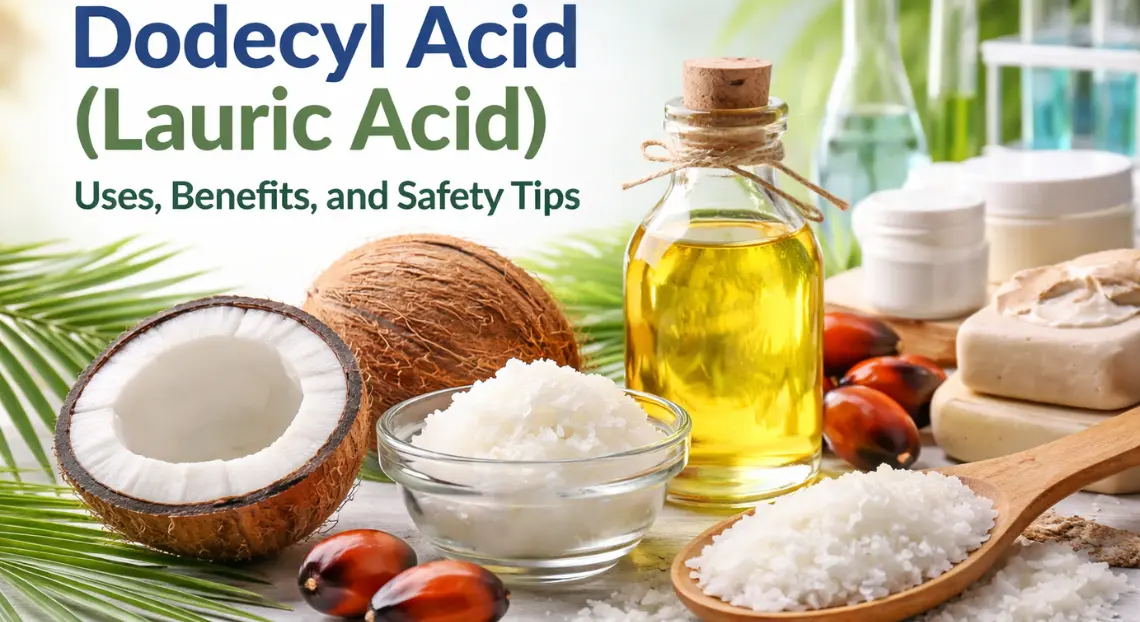
Dodecyl acid, also called dodecanoic acid or more commonly lauric acid, is a saturated fatty acid with 12 carbon atoms in its chain. Its chemical formula is C12H24O2. It is naturally found in many vegetable fats and oils, particularly coconut oil and palm kernel oil.
Physical and Chemical Properties of Dodecyl Acid (Lauric Acid)
Appearance and Odor
Dodecyl acid, also called lauric acid, is a white to off-white crystalline solid. It has a mild fatty or faintly waxy smell. This appearance and odor are typical for natural fatty acids.
Melting and Boiling Point
Lauric acid has a melting point of about 43–46°C, which makes it solid at room temperature. Its boiling point is much higher, around 225–298°C depending on the pressure. This makes it stable under normal conditions.
Solubility
Dodecyl acid does not dissolve in water because of its long carbon chain. It is, however, soluble in organic solvents like ethanol, ether, and chloroform. This property makes it suitable for chemical and cosmetic formulations.
Chemical Structure and Saturation
Lauric acid is a saturated fatty acid with 12 carbon atoms and a carboxyl group at one end. Being saturated means it has no double bonds, which contributes to its solid form at room temperature.
Stability
Dodecyl acid is chemically stable under normal temperature and pressure. It maintains its structure during storage and is resistant to oxidation compared to unsaturated fatty acids.
Common Forms and Variants of Dodecyl Acid (Lauric Acid)
Dodecyl acid, commonly known as lauric acid, mainly refers to a single chemical compound with the formula C12H24O2. In its pure form, it is a saturated medium‑chain fatty acid found in natural fats like coconut oil and palm kernel oil.
In practice, lauric acid can be encountered in different physical forms depending on how it is processed. One common form is powdered lauric acid, which is made by drying or crystallizing the substance. This dry form is easier to measure and store, and it is often used in supplements and powdered cosmetic products. Another form is crystalline flakes, which are larger solid pieces used in soap making and industrial applications where controlled melting is required.
Lauric acid is also found dissolved in carrier oils such as coconut oil or MCT (medium‑chain triglyceride) oil. In this liquid form, it mixes more easily into skin and hair products or dietary blends. These variations do not change the basic chemical structure of dodecyl acid but make it easier to use in different industries.
In addition to these physical forms, lauric acid can form salts and derivatives known as laurates. These include compounds where lauric acid is combined with metals (for example, metal laurates used in industrial applications) or other molecules to achieve specific chemical properties.
Overall, while dodecyl acid itself is one compound, it appears in several usable forms and derivatives that suit different purposes in manufacturing, health, and personal care products.
Natural Sources of Dodecyl Acid
Richest Sources of Dodecyl Acid
Dodecyl acid, also called lauric acid, is found naturally in several plant and animal fats. The most concentrated sources are coconut oil and palm kernel oil, where lauric acid makes up around 45–55% of all fatty acids. These oils are widely used as raw materials to produce pure lauric acid for industrial and cosmetic applications.
Lauric Acid in Coconut Oil
Coconut oil is extracted from the meat of mature coconuts. It contains a high proportion of medium-chain fatty acids, with lauric acid being the most abundant. Its high lauric acid content makes coconut oil an ideal source for producing soaps, cosmetics, and dietary supplements.
Lauric Acid in Palm Kernel Oil
Palm kernel oil comes from the seed of the oil palm fruit. Like coconut oil, it has a significant amount of lauric acid, often close to half of its total fatty acid content. Palm kernel oil is widely used in industrial applications, including soap production and chemical manufacturing.
Other Natural Sources of Dodecyl Acid
Lauric acid is also present in smaller amounts in human breast milk, cow’s milk, goat’s milk, and plant oils such as babassu oil. While the concentration in these sources is lower, they still contribute to the natural availability of lauric acid.
Industrial and Commercial Uses of Dodecyl Acid
Uses in Soap and Detergent Production
Dodecyl acid, also known as lauric acid, is widely used in making soaps and detergents because it helps produce a rich foamy lather and acts as a strong cleansing agent. When lauric acid reacts with sodium hydroxide or potassium hydroxide, it forms sodium laurate or potassium laurate. These compounds are the main ingredients in many bar soaps and liquid cleansers used for personal care and household cleaning. Their ability to break up oils and dirt makes cleaning easier and more effective.
Use in Cosmetics and Personal Care Products
In the cosmetic industry, lauric acid is valued for its emulsifying and surfactant properties. It helps blend water and oil‑based ingredients in creams, lotions, shampoos, and conditioners, giving smooth texture and stability to products. Lauric acid also supports gentle cleansing and can help reduce skin oil and impurities. These qualities make it common in skin care, hair care, and body wash products.
Role as Food Additive and Nutrition Use
Lauric acid is used in the food industry as an additive and preservative. In food manufacturing, it helps improve texture and stability in items like bakery products, dairy blends, and confectionery. It can also serve in the production of medium‑chain triglycerides (MCTs), which are used in dietary supplements and functional foods due to their fast digestion and energy release.
Application in Industrial Chemicals and Lubricants
Beyond cleaning and personal care, lauric acid is used in industrial products. It acts as a base for making surfactants, emulsifiers, and lubricants in machinery and manufacturing processes. It also plays a part in plastics and resin production, and can be a raw material in water treatment chemicals and coatings.
Health and Skincare Benefits of Dodecyl Acid
Skin Moisturizing and Emollient Properties
Dodecyl acid, also known as lauric acid, helps the skin stay soft and hydrated. It works as an emollient, which means it supports the skin’s natural barrier and reduces dryness. When used in soaps, creams, and lotions, it helps the skin hold moisture and feel smooth. This makes it useful in products for dry, rough, or irritated skin. Lauric acid’s structure allows it to mix with natural skin oils, helping keep skin soft without feeling greasy.
Antimicrobial and Acne‑Fighting Effects
Lauric acid also shows antimicrobial properties, meaning it can slow or reduce the growth of harmful skin bacteria. Studies show it can be effective against acne‑causing bacteria like Propionibacterium acnes, and it may help reduce inflammation and breakouts when used in skincare formulas. Because of this, it is often added to products designed for problem or oily skin. These effects make lauric acid a useful ingredient in cleansers and treatments focused on clearer skin.
Benefits for Hair and Scalp
In hair care, lauric acid can help nourish both the hair shaft and scalp. It penetrates the hair structure deeply because of its medium‑chain fatty acid nature, helping reduce protein loss and breakage. This can make hair stronger, smoother, and more resilient. Lauric acid also helps keep the scalp hydrated, which can reduce dryness and flakiness. These properties make it suitable for shampoos, conditioners, and hair masks aimed at healthier, shinier hair.
How Dodecyl Acid Works in Products?
Role of Dodecyl Acid in Soaps and Detergents
Dodecyl acid, also known as lauric acid, is a key ingredient in making soaps and detergents. When it reacts with alkalis like sodium hydroxide or potassium hydroxide, it forms sodium laurate or potassium laurate, the compounds responsible for cleaning. These soap molecules help remove dirt, grease, and oils from surfaces. The high foaming ability of lauric acid–based soaps makes them effective for personal care and household cleaning. Its ability to dissolve oils and fats while being gentle on skin makes it popular in many soap and detergent products.
Function in Creams and Lotions
In creams and lotions, dodecyl acid works as an emulsifier, blending water and oil-based ingredients. Without an emulsifier, water and oil separate, leading to uneven texture and poor performance. Lauric acid helps stabilize these mixtures, ensuring the product remains smooth and consistent. This allows lotions and creams to provide uniform moisturizing and skin benefits in every application.
Surfactant Properties in Products
Dodecyl acid acts as a surfactant, lowering the surface tension between liquids and between liquids and solids. In cleansers and shampoos, it helps the product spread evenly, create foam, and remove impurities more effectively. Its surfactant action improves cleaning efficiency while keeping the product gentle on skin and hair.
Emulsifying Role for Stable Formulations
As an emulsifier, lauric acid keeps water and oil components mixed in a stable formulation. This ensures that creams, lotions, and other personal care products maintain their texture, appearance, and performance over time. It also allows active ingredients to be delivered evenly across the skin or hair.
Precautions and Safety Information
Safe Handling of Dodecyl Acid in Industry and Lab
When working with dodecyl acid (lauric acid) in industrial or laboratory settings, it is important to follow basic safety practices. Always handle it in a well‑ventilated area and avoid breathing in dust or fumes. Avoid direct contact with the skin and eyes by using protective gloves, safety goggles, and suitable clothing. Do not eat, drink, or smoke while handling the substance. After work, wash hands and any exposed skin thoroughly with soap and water. These practices help reduce the risk of irritation and ensure safe handling during production or testing.
Skin and Eye Irritation Risk
In its raw and concentrated form, lauric acid can cause mild to moderate irritation if it touches the skin or eyes. Prolonged skin contact may lead to redness or discomfort, especially if the acid is not properly diluted in formulations. For eyes, contact can cause irritation and redness, so immediate rinsing with clean water is recommended if exposure occurs. It is safer to work with lauric acid when it is already blended into finished products like soaps or lotions, as these are formulated to be gentle on skin under normal use.
Storage and Stability Tips
Lauric acid is stable under normal conditions but should be stored correctly to maintain quality. Keep the material in a cool, dry, and well‑ventilated place, away from heat sources and sunlight. Containers should be tightly closed when not in use to prevent dust formation and moisture exposure. Storing it in the original sealed packaging helps protect it from contamination. Proper storage also helps prevent degradation and makes sure the acid remains effective for its intended uses.
Common Mistakes to Avoid When Using Dodecyl Acid
Avoid Confusion With Concentrations in Formulas
One common mistake when using dodecyl acid (lauric acid) in formulations is not understanding the right amount to use. Lauric acid is a strong active ingredient in soaps, lotions, and cleansers. Using too much of it can make the product harsh or drying on skin, especially in leave‑on products like creams. In many cosmetic formulas, lauric acid is used at low levels (often below 10%) to balance effectiveness with gentleness. If you add it without checking recommended usage, your final product can feel rough or irritating rather than smooth and beneficial.
Not Following Safety Steps
Another mistake is ignoring basic safety precautions while handling concentrated lauric acid. The pure powder or flakes can cause mild skin and eye irritation if it comes into contact with bare skin or eyes. People handling raw material should wear gloves and eye protection, and work in a well‑ventilated space. Not taking these steps can lead to accidental irritation or discomfort during production.
Choosing Low‑Quality or Unverified Sources
Using low‑quality or unverified sources of lauric acid can also cause problems. Commercial‑grade or impure lauric acid may contain contaminants or inconsistent concentrations. This can affect how well your product works and may lead to issues with texture, stability, or performance. It is important to choose high‑quality, trusted raw materials with proper purity documentation to ensure consistent results in your formulations.
Frequently Asked Questions (FAQs) About Dodecyl Acid
1) Is dodecyl acid safe for skin?
Yes, dodecyl acid (lauric acid) is generally safe for skin when used in cosmetic products at recommended concentrations. Pure concentrated forms can cause mild irritation, so proper handling and formulation are important.
2) Can it be used in food?
Yes, lauric acid is used in the food industry, mainly as a stabilizer, preservative, or source of medium-chain triglycerides. It is safe when used according to food regulations.
3) What is the difference between lauric acid and other fatty acids?
Lauric acid is a medium-chain saturated fatty acid with 12 carbon atoms. Other fatty acids may be short, long, saturated, or unsaturated, affecting their melting point, solubility, and applications.
4) How is dodecyl acid made commercially?
Commercially, it is extracted from coconut oil or palm kernel oil using hydrolysis or saponification processes, followed by purification to obtain pure lauric acid.
5) How should it be stored?
Store dodecyl acid in a cool, dry place away from direct sunlight. Keep containers tightly closed to prevent moisture or contamination.
6) Can it cause allergic reactions?
Allergic reactions are rare. Some people may experience mild skin irritation if they are sensitive to concentrated lauric acid.
7) Is it environmentally friendly?
Yes, lauric acid is biodegradable and derived from natural plant sources, making it environmentally safe when disposed of properly.
8) Can it be used in hair care products?
Yes, lauric acid helps strengthen hair, reduce breakage, and moisturize the scalp. It is commonly used in shampoos, conditioners, and hair masks.
9) Does it help in acne treatment?
Lauric acid has antimicrobial properties and can help reduce acne-causing bacteria, making it useful in facial cleansers and acne care products.
Conclusion
Dodecyl acid, also known as lauric acid, is a versatile natural fatty acid with many uses in everyday life. It is primarily found in coconut oil and palm kernel oil, and it plays an important role in soaps, detergents, creams, lotions, and hair care products. Its unique properties make it an effective cleaning agent, emulsifier, and moisturizer, while its antimicrobial effects help improve skin and hair health.
When used correctly, dodecyl acid is safe, effective, and environmentally friendly. It is important to follow recommended concentrations, handle the raw material carefully, and choose high-quality sources to get the best results. Whether in personal care, industrial applications, or food products, lauric acid remains a valuable and widely used ingredient.
Overall, understanding its properties, uses, and safety precautions ensures that dodecyl acid can be used effectively and safely in a variety of products, benefiting both manufacturers and consumers.