
What is Ammonium bifluoride?
Ammonium bifluoride is a chemical compound with the formula NH₄HF₂. It is an inorganic salt made up of ammonium (NH₄⁺) and bifluoride (HF₂⁻) ions. It is commonly used as a fluoride source in industrial applications, especially for glass etching, metal cleaning, and surface treatment, because it can release hydrofluoric acid when dissolved in water.
Physical and Chemical Properties of Ammonium Bifluoride
Appearance and Physical Form
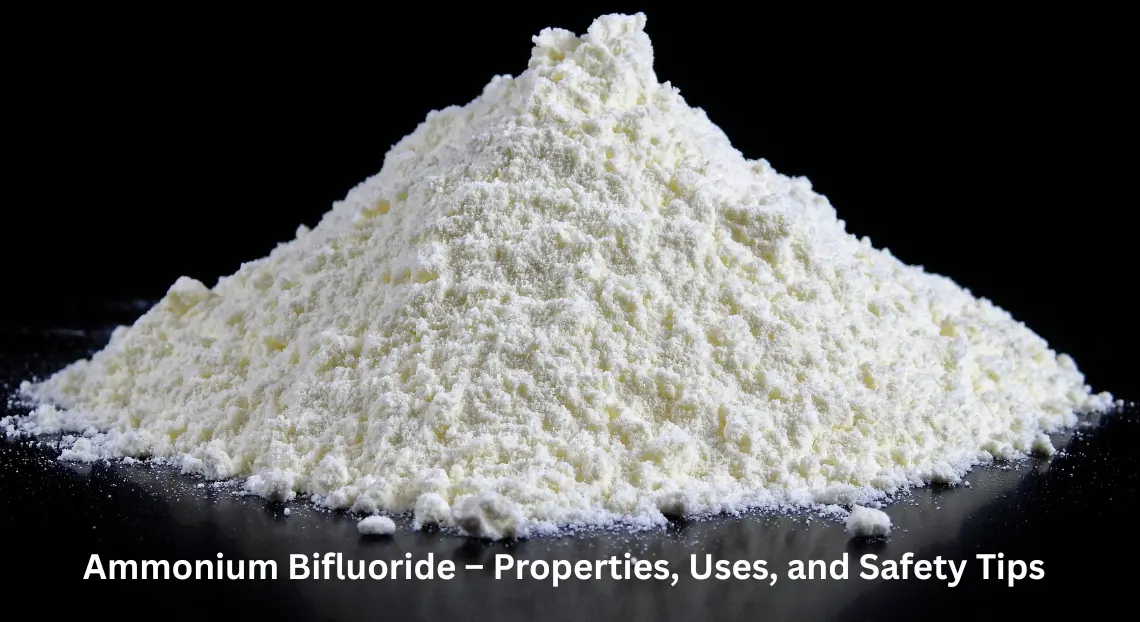
Ammonium bifluoride is a white to colourless crystalline solid. It can appear as small crystals or a fine powder. The compound is dense and may absorb moisture from the air if stored in humid conditions. At room temperature, it is stable, but it begins to decompose when heated above 240 °C.
Solubility and pH
This chemical dissolves easily in water, forming a clear acidic solution. The solution usually has a pH between 3.5 and 4.0. The acidity is due to the release of small amounts of hydrofluoric acid when the compound dissolves, making the solution capable of reacting with certain materials.
Chemical Reactivity and Corrosiveness
Ammonium bifluoride is corrosive. It can attack glass, metals, and organic materials, especially when moisture is present. The corrosiveness comes from fluoride ions, which react strongly with silicon-based materials and many metals. Because of this, it must be handled carefully to avoid burns, eye damage, or other injuries.
Melting and Decomposition
The compound has a melting point of approximately 124–126 °C. When heated further, it does not boil normally but decomposes near 240 °C, releasing toxic fumes. This makes proper storage and careful handling essential for safety.
Common Grades of Ammonium Bifluoride
Industrial Grade Ammonium Bifluoride
Industrial or technical grade ammonium bifluoride is the most common type used in factories and workshops. It usually has a purity of 95–98 percent. This grade is suitable for large-scale applications such as glass etching, metal cleaning, and surface treatments. It is cost-effective and designed for general industrial use rather than precise laboratory work.
Laboratory Grade Ammonium Bifluoride
Laboratory or analytical reagent grade is a higher-purity form of ammonium bifluoride, often above 98 percent purity. It is refined to meet strict quality standards and is used in research labs, chemical analysis, and tasks requiring accurate results. This grade ensures consistent performance in precise applications.
Physical Forms of Ammonium Bifluoride
Ammonium bifluoride is available in solid crystals, powder, and sometimes as aqueous solutions. The solid form can be granular or fine powder depending on the desired dissolution rate. Aqueous solutions provide easier handling and controlled reactivity for specific industrial or laboratory tasks.
Choosing the Right Type
Selecting the correct grade and form depends on the intended use, purity requirements, and ease of handling. Industrial grade is preferred for large-scale applications, while laboratory grade is used where accuracy and consistency are important. Solid or solution forms are chosen based on the process needs.
Industrial and Commercial Uses of Ammonium Bifluoride
Glass Etching and Frosting with Ammonium Bifluoride
Ammonium bifluoride is widely used in the glass industry to create etched and frosted surfaces. When dissolved in water, it releases fluoride ions that react with silica in the glass. This reaction gradually wears away the surface, making it appear frosted or patterned. This process is common in decorative glass products, mirrors, windows, and glassware where a textured or non‑reflective finish is required. Glass etching with ammonium bifluoride allows controlled surface treatment without the need for stronger liquid acids.
Metal Cleaning and Rust Removal Applications
In metalworking and manufacturing, ammonium bifluoride serves as an effective cleaning and pickling agent. It reacts with oxides, rust, scale, and surface impurities on metals like steel, stainless steel, and aluminium. By removing these unwanted layers, it prepares the metal for further processing such as painting, coating, electroplating, or welding. This cleaning action improves the quality of metal surfaces before finishing operations.
Other Industrial and Commercial Uses
Beyond glass and metal work, ammonium bifluoride has several other applications in industry. It can be part of cleaning formulations for industrial equipment, removing mineral deposits and scale from boilers, heat exchangers, and pipelines. It is also used in some oil and gas operations to help dissolve silicate minerals during well stimulation. In ceramics and porcelain work, it assists in surface finishing and cleaning before firing. These varied uses make ammonium bifluoride a versatile industrial chemical.
How Ammonium Bifluoride Works?
How Ammonium Bifluoride Reacts with Glass?
Ammonium bifluoride works by releasing fluoride‑containing species when it dissolves in water. Glass is mostly made of silicon dioxide (SiO₂), a network of silicon and oxygen atoms. The fluoride ions released from ammonium bifluoride react with the silicon‑oxygen bonds in the glass surface. This reaction breaks down the glass surface slowly, forming silicon fluoride compounds and water. The surface material dissolves or vaporises, causing the glass to become frosted or etched. This controlled reaction is the basis of glass etching and surface patterning in industrial applications.
How Ammonium Bifluoride Affects Metals?
When ammonium bifluoride is in contact with metals and moisture, it reacts with metal oxides and rust on the surface. The fluoride ions help break up the oxide layer, making it easier to clean the metal surface. This reaction can also attack the base metal if the exposure is long or the concentration is high. Because of this, solutions of ammonium bifluoride are used to remove rust, scale, and other surface impurities before further processing like coating, plating, or welding.
Fluoride Ion Release and Its Effects
Ammonium bifluoride dissolves in water to release fluoride ions (F⁻) and hydrogen fluoride (HF) species. These fluoride ions are highly reactive and able to interact with both silica in glass and oxides on metal surfaces. The release of HF makes the solution acidic and corrosive, which enhances its ability to etch materials. Careful control of concentration, temperature, and contact time is necessary to ensure the reaction does the intended work without damaging parts or creating unsafe conditions.
Handling and Safety Guidelines
Protective Gear Needed When Handling Ammonium Bifluoride
Ammonium bifluoride is corrosive and can cause serious burns if it comes in contact with skin or eyes. Always wear chemical-resistant gloves made from nitrile or neoprene. Use safety goggles or a face shield to protect your eyes. A long-sleeved lab coat or apron will protect your skin and clothing.
If there is a chance of inhaling dust or fumes, use a suitable respirator. Ensure the area is well-ventilated to prevent breathing in harmful particles. Checking protective gear before handling the chemical helps reduce accidents.
Safe Storage of Ammonium Bifluoride
Store ammonium bifluoride in a cool, dry, and well-ventilated area. Keep it away from heat, sunlight, and materials it may react with. Containers should be tightly sealed to avoid moisture, which can release corrosive vapors.
Use containers made of plastic or other materials resistant to fluoride compounds. Avoid storing near food or drink. Label storage areas clearly with warning signs. Regularly inspect containers to prevent leaks or accidents.
Precautions to Avoid Burns and Inhalation Risks
Never touch ammonium bifluoride directly. Do not eat, drink, or smoke when handling it. If it contacts skin or eyes, rinse immediately with plenty of water for at least 15 minutes and seek medical help.
Work in well-ventilated areas, and use local exhaust systems if needed. Wash hands and exposed skin thoroughly after handling. Keep emergency eyewash stations and safety showers nearby in case of accidental exposure.
Common Mistakes to Avoid When Using Ammonium Bifluoride
Not Following Safety Instructions Carefully
One of the biggest mistakes people make with ammonium bifluoride is ignoring safety instructions. This chemical is corrosive and can cause severe burns if it touches skin or eyes. Not wearing proper safety gloves, eye protection, or a mask increases the risk of injury. Always read the product label and safety data sheet before use. Make sure you understand the required protective gear and safe handling steps. Skipping these instructions or working in a poorly ventilated area can lead to serious health problems.
Using Incorrect Concentrations of Solution
Using the wrong concentration of ammonium bifluoride solution is another common issue. Different tasks require different strengths. For example, glass etching may need a different concentration than metal cleaning. If the solution is too strong, it can damage materials or increase danger to people handling it. If the solution is too weak, it may not work properly and waste time and resources. Always measure carefully and follow recommended concentration guidelines for your specific application to get the right results without extra risk.
Improper Storage and Handling of the Chemical
Storing ammonium bifluoride improperly can lead to accidents. Some people keep it near food, in open containers, or in damp areas. Moisture can react with the chemical and release corrosive vapors. Always store it in a cool, dry, and well‑ventilated place with a tight lid. Keep it away from children, food, and incompatible materials. Label all containers clearly so anyone in the area knows what is inside. Proper storage helps prevent leaks, spills, and accidental exposure.
Environmental and Health Impact
Toxicity and Exposure Risks of Ammonium Bifluoride
Ammonium bifluoride is highly corrosive and toxic. Contact with skin or eyes can cause serious burns and tissue damage. Pain may appear slowly, so immediate washing is important. Inhalation of dust or fumes can irritate the nose, throat, and lungs, causing coughing and difficulty breathing.
Swallowing ammonium bifluoride is very dangerous. Fluoride ions in the chemical can affect calcium in the body, which may harm the heart, bones, and other organs. Long-term exposure can lead to fluorosis, a condition that weakens bones and teeth over time. Because of these risks, proper protective gear and careful handling are essential.
Ammonium bifluoride that enters water can release fluoride ions. High levels of these ions can harm fish and other aquatic life, affecting growth and survival. Accumulation in the food chain is also possible, making careful disposal and handling important to protect the environment.
Safe Disposal Methods for Ammonium Bifluoride
Ammonium bifluoride should never be poured down household drains or thrown in regular trash. Small amounts should be collected and handled as hazardous waste.
Always follow local laws and regulations when disposing of this chemical. Industrial solutions may be neutralized under controlled conditions, but this must be done by trained personnel. Using proper disposal methods prevents harm to people and the environment.
Frequently Asked Questions (FAQs) About Ammonium Bifluoride
1. Is ammonium bifluoride safe for household use?
No. It is highly corrosive and toxic. It should only be used by trained personnel in controlled environments with proper protective gear.
2. Can it be used on all types of glass?
No. It reacts with silica in glass and can etch or damage it. It is best used on soda-lime glass or surfaces intended for etching. Avoid using on delicate or specialty glass.
3. How should spills be handled?
Spills should be contained immediately. Wear protective gloves, goggles, and clothing, and use inert absorbent materials. Avoid direct contact and follow proper chemical disposal guidelines.
4. How is it different from other fluoride compounds?
Ammonium bifluoride releases fluoride ions and weak hydrofluoric acid when dissolved. Its controlled reactivity makes it suitable for etching and cleaning, unlike some stronger or weaker fluoride chemicals.
5. What is the proper way to store ammonium bifluoride?
Store in a cool, dry, and ventilated area, away from moisture, heat, sunlight, food, and incompatible chemicals. Keep containers tightly sealed and clearly labeled.
6. What is its shelf life?
When stored correctly, ammonium bifluoride can remain stable for several years. Check containers regularly for moisture, leaks, or damage.
7. Can it be disposed of in regular trash or drains?
No. It is hazardous. Always follow local regulations for hazardous chemical disposal or contact professional waste management services.
Conclusion
Ammonium bifluoride is a versatile chemical widely used in glass etching, metal cleaning, and other industrial applications. It works by releasing fluoride ions, which react with silica in glass and oxides on metals. While highly effective, it is also corrosive and toxic, requiring careful handling, proper protective gear, and correct storage.
Understanding its properties, types, and safe usage helps prevent accidents and ensures the chemical performs as intended. Improper use, wrong concentrations, or careless storage can cause serious injury or environmental harm. Always follow safety instructions, handle it with care, and dispose of it responsibly.
By respecting its hazards and benefits, ammonium bifluoride can be used efficiently and safely in industrial and laboratory settings, protecting both people and the environment.