

What Is Calcium Bentonite?
Calcium bentonite is a natural clay formed from volcanic ash that has aged and settled over time. It is mainly made of the mineral montmorillonite and contains calcium as its primary exchangeable element. This calcium content gives the clay its specific physical and chemical behavior.
This clay is known for its strong absorption and binding properties. When it comes in contact with water or oils, it absorbs moisture and holds substances on its surface. Unlike sodium bentonite, calcium bentonite swells only slightly, which makes it suitable for applications where controlled absorption is required.
Calcium bentonite is mined from natural deposits and processed with minimal chemical treatment. Because of its natural origin, it is widely used in cosmetics, pharmaceuticals, agriculture, and industrial purification. It appears as a fine powder and usually has a light gray, cream, or pale green color.
In simple terms, calcium bentonite works like a natural sponge. It absorbs liquids, traps impurities, and helps separate unwanted materials from useful products. This is why it is valued in products that need cleaning, purifying, or moisture control.
Chemical Composition of Calcium Bentonite
Main Minerals Present in Calcium Bentonite
Calcium bentonite is mainly composed of montmorillonite, which is the key clay mineral responsible for its properties. Montmorillonite belongs to the smectite group of clays and is formed from volcanic ash that has changed over time. Along with montmorillonite, calcium bentonite also contains smaller amounts of silica, alumina, iron oxides, and magnesium compounds. These minerals affect the clay’s color, texture, and overall stability. The exact mineral composition can vary slightly depending on the source of the clay deposit.
Role of Calcium Ions in the Clay Structure
Calcium ions play an important role in how calcium bentonite behaves. These calcium ions are located between the clay layers and help hold them together. Because calcium attracts less water compared to sodium, the clay shows moderate swelling when it comes in contact with moisture. This controlled behavior makes calcium bentonite suitable for applications where strong absorption is needed without excessive expansion.
Montmorillonite Structure Explained Simply
Montmorillonite has a layered structure made of thin sheets of silica and alumina. These layers have small spaces between them where water and calcium ions can enter. This structure allows calcium bentonite to absorb liquids and bind particles on its surface. The layered arrangement is the main reason why calcium bentonite is effective as an absorbent, binder, and purifying material across many industries.
Physical Properties of Calcium Bentonite
Color and Texture of Calcium Bentonite
Calcium bentonite typically has a light gray, beige, cream, or pale green color, which comes from the specific mix of minerals in the clay. The color can vary slightly depending on the amount of iron or other trace minerals present in the deposit. The texture of calcium bentonite is very fine and soft to the touch. It often feels smooth and can be easily crushed or molded when slightly moistened. This soft texture comes from the tiny clay particles that make up the material, giving it a powder-like feel when dry.
Particle Size of Calcium Bentonite
The particles in calcium bentonite are very small and fine, usually in the micron range. These fine particles allow the clay to spread easily when mixed with water and provide a large surface area for absorption and binding. Because of the small size of these particles, calcium bentonite can disperse evenly in liquids, making it useful in applications like thickening, purifying, and moisture control.
Swelling and Absorption Behavior
When calcium bentonite comes into contact with water, it absorbs moisture and expands. However, its swelling capacity is moderate compared with sodium bentonite. The calcium ions in the clay do not attract as much water as sodium ions do, so the clay expands less, making it stable and suitable where excessive swelling is not wanted. Despite lower swelling, calcium bentonite still absorbs liquids efficiently and forms a gel-like mass when hydrated.
Moisture Retention Capacity
Calcium bentonite has a high ability to hold moisture once it absorbs water. The spaces between the clay layers trap water and other liquids, which helps the clay stay moist for longer periods. This moisture retention makes it effective in environments where slow release of water or moisture control is required, such as in soil conditioning and animal feed. The combination of fine particles and layered structure supports this strong moisture-holding capacity.
Types and Forms of Calcium Bentonite
Natural Calcium Bentonite
Natural calcium bentonite is the raw form of the clay that is mined directly from the earth. It is processed only by drying, crushing, and grinding. This type keeps its original mineral structure and natural calcium content. Natural calcium bentonite is commonly used in agriculture, animal feed, absorbents, and basic industrial applications. It provides good moisture absorption and binding without strong swelling, which makes it stable and easy to handle.
Processed Calcium Bentonite
Processed calcium bentonite is refined to improve its consistency and performance. The clay is ground into finer particles to achieve uniform size and better dispersion. This type is mainly used in cosmetics, personal care products, and pharmaceutical formulations. Fine processing improves smoothness, purity, and absorption efficiency, which are important for products that come in direct contact with skin or are used in controlled formulations.
Activated Calcium Bentonite
Activated calcium bentonite is treated to enhance its absorption capacity. This treatment improves its ability to remove impurities, oils, and color from liquids. Activated calcium bentonite is widely used in oil purification, grease clarification, and industrial filtration processes. Although it remains calcium bentonite, activation increases its performance for specialized industrial uses.
Granular Calcium Bentonite
Granular calcium bentonite is available in larger particle sizes. It is mainly used where slow absorption and moisture control are required, such as animal feed additives, spill absorbents, and soil conditioning. The granular form allows gradual release and longer-lasting effectiveness.
Key Characteristics of Calcium Bentonite
Strong Absorption and Adsorption Ability
Calcium bentonite has a strong ability to absorb and adsorb substances. Absorption means it can take in liquids like water or oil into its structure. Adsorption means it can attract and hold particles or molecules on its surface. The layered structure of the clay and its small particles create large surface area, which helps the clay pull in and hold liquids and impurities. This property makes calcium bentonite useful in cleaning, filtering, and moisture control.
Effective Binding Properties
One important feature of calcium bentonite is its binding ability. When mixed with liquids, the clay particles stick together and form a gel-like mass. This helps the clay bind unwanted particles, toxins, or sediments and separate them from the main material. The binding property is one reason calcium bentonite is used in products like cat litter, animal feed additives, and industrial purifiers.
Good Stability and Safety Profile
Calcium bentonite is chemically stable and does not react easily with other substances under normal conditions. It is generally safe to use when handled properly and does not release harmful chemicals. In many applications, especially in cosmetics and food-grade products, quality and purity standards ensure safety for human and animal use.
Natural and Eco-Friendly Material
Calcium bentonite is a natural clay formed over time from volcanic ash. It does not require heavy chemical processing, which makes it more environmentally friendly than many synthetic materials. Because it is natural and biodegradable, calcium bentonite is preferred in applications where sustainability and low environmental impact are important.
How Calcium Bentonite Works?
How Calcium Bentonite Absorbs Liquids?
Calcium bentonite absorbs liquids when water or other fluids come into contact with its tiny clay particles. The layered structure of the clay has spaces between sheets that take in liquid molecules. When these spaces open, water or oil moves into them and becomes trapped. This process causes the clay to hold moisture within its structure. Because calcium bentonite contains calcium ions instead of sodium, it absorbs liquids without swelling too much. This controlled absorption makes it useful in applications where excessive expansion is not wanted.
How Calcium Bentonite Binds Impurities and Particles?
Once calcium bentonite absorbs liquid, it can also bind impurities and particles. As liquid moves into the clay, charged sites on the clay surface attract particles, toxins, or suspended solids. These particles stick to the clay surface and become trapped. This binding action allows calcium bentonite to separate unwanted materials from the main liquid. For example, in filtering oil or water, the clay captures small particles and helps clarify the fluid.
Understanding Absorption and Adsorption
Absorption and adsorption are related but different. Absorption is when a substance like liquid enters and fills the internal spaces of the clay. In contrast, adsorption is when molecules or particles stick to the surface of the clay. Calcium bentonite performs both actions: it absorbs liquids into its structure and adsorbs impurities on its surface. Together, these processes make calcium bentonite effective for cleaning, filtering, and moisture control.
Common Uses of Calcium Bentonite
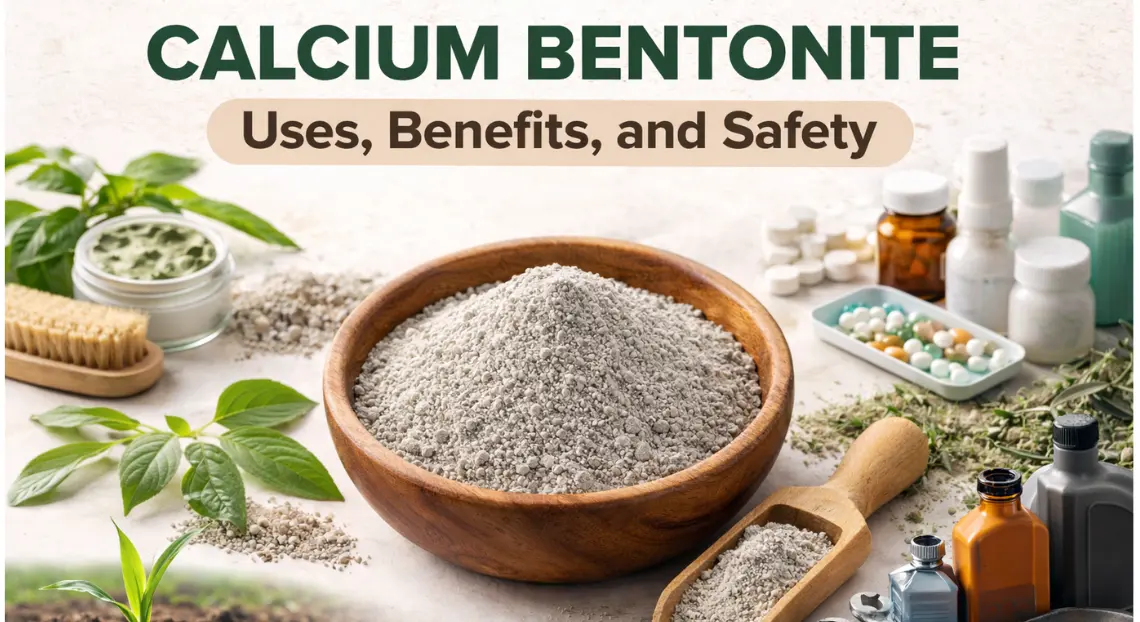
Calcium bentonite is used in many fields because it can absorb liquids, bind particles, and hold moisture. In cosmetics and personal care, it is added to face masks, body masks, and cleansers to help draw out oil and remove impurities from the skin. Its fine texture and gentle action make it suitable for skin contact. In pharmaceuticals, calcium bentonite is used as a filler, binder, or carrier in certain tablet formulations and detox products. Its ability to hold liquids and bind substances makes it useful in creating stable mixtures.
In agriculture, calcium bentonite is used as a soil conditioner and as an additive in animal feed. In soil, it helps improve water retention and supports root growth. In animal feed, it helps prevent clumping and improves the consistency of the mixture.
In industrial applications, calcium bentonite is used for filtering and purifying liquids such as oils and wastewater. It can trap small particles and clarify fluids. It is also used in absorbents for spills and in construction materials.
Why Calcium Bentonite Is Preferred?
Industries choose calcium bentonite because it is natural, safe, and cost effective. Its ability to absorb and bind makes it useful for cleaning, filtering, and moisture control. Calcium bentonite does not swell excessively, which is important in applications where stability is needed. Its natural origin and moderate performance make it suitable for a wide range of uses without heavy chemical processing.
Calcium Bentonite in Cosmetics and Personal Care
Use of Calcium Bentonite in Face Masks and Cleansers
Calcium bentonite is widely used in face masks and cleansers because it helps clean the skin deeply. When mixed with water or other liquid ingredients, this clay forms a smooth paste that spreads easily on the face. As the mask dries, it draws out excess oil, dirt, and tiny particles from the skin surface and pores. This makes the skin feel cleaner and fresher after washing off the mask. In cleansers, calcium bentonite helps lift impurities while being gentle on the skin.
How Calcium Bentonite Removes Oil and Impurities?
The structure of calcium bentonite allows it to attract and hold oil and impurities. When applied to the skin, the clay absorbs excess sebum and oily build-up. It also grabs dirt and tiny particles from the surface and holds them in its fine layers. After rinsing, these trapped impurities are washed away, leaving the skin clearer and less greasy. This property makes calcium bentonite especially suitable for people with oily or combination skin.
Skin-Friendly Properties of Calcium Bentonite
Calcium bentonite is considered skin-friendly because it is mild and does not strip the skin of natural moisture too harshly. Its moderate absorption makes it effective without causing excessive dryness or irritation. For sensitive skin, products with calcium bentonite often provide a gentle cleansing action. The clay’s natural origin and fine texture make it suitable for different personal care products, including masks, cleansers, and exfoliating treatments that aim to improve skin clarity and smoothness.
Calcium Bentonite in Pharmaceuticals
Use of Calcium Bentonite as a Pharmaceutical Excipient
Calcium bentonite is used in the pharmaceutical industry as an excipient, which means it helps make medicines work better without being the active drug itself. In tablet and capsule formulations, it acts as a binder, helping powder particles stick together and form a solid, stable tablet. It also serves as a suspending agent in liquid medicines, keeping tiny solid particles evenly spread so the dose is consistent each time. These functions help improve the quality and performance of medicines during manufacturing and use.
Role in Detox and Drug Release Formulations
In some medicinal products, calcium bentonite helps with detoxification and controlled release of active ingredients. Its ability to absorb substances makes it useful in products designed to bind certain toxins or impurities in the digestive tract before they are eliminated from the body. The clay’s structure can also be used to create controlled-release formulations, where the active drug is released slowly over time, helping maintain steady levels in the body.
Importance of Pharmaceutical-Grade Quality
Pharmaceutical-grade calcium bentonite must meet strict quality standards before it can be used in medicines. This means it is highly purified, tested for low levels of heavy metals and contaminants, and checked for consistent particle size and performance. Using bentonite that meets recognized pharmacopeia standards, such as those in the United States, Europe, or India, ensures the ingredient is safe for medical use, does not interfere with the drug action, and supports reliable product performance.
Overall, calcium bentonite’s functions as an excipient, its use in detox-oriented formulations, and the requirement for pharmaceutical-grade quality make it a valuable clay mineral in modern medicine.
Calcium Bentonite in Agriculture
Calcium Bentonite for Soil Improvement
Calcium bentonite is used in farming to improve soil quality and plant growth. When mixed into soil, its fine particles help the soil retain water and nutrients, especially in sandy or dry soils where water drains quickly. This means the soil holds moisture longer, making water more available to plant roots and reducing the need for frequent irrigation. The clay also increases the soil’s ability to hold nutrient ions like calcium and potassium close to plant roots, helping plants absorb more nutrients and grow stronger. This improves soil structure, making it easier for roots to grow and for air and water to move through the soil.
Use of Calcium Bentonite in Animal Feed
In livestock farming, calcium bentonite is added to animal feed to improve digestion and feed quality. It acts as a natural binder that helps feed particles stick together, which improves pellet strength and reduces dust. The clay also adsorbs toxins and harmful substances in the digestive tract, which can support animal health and reduce risk from mycotoxins and other contaminants. These benefits can help improve nutrient absorption and overall animal performance.
Bentonite as a Carrier for Fertilizers and Pesticides
Calcium bentonite is also used as a carrier for fertilizers and pesticides. In this role, it helps the active fertilizer or pesticide stick to plant surfaces and soil particles more evenly. It can also slow down the release of nutrients and chemicals, allowing plants to use them over a longer period rather than all at once. This slow release improves efficiency and can reduce nutrient loss, which helps lower waste and cost.
Overall, calcium bentonite supports farming by improving soil water and nutrient balance, enhancing feed quality, and helping fertilizers and pesticides work more effectively.
Calcium Bentonite in Industrial Applications
Calcium Bentonite for Oil and Grease Purification
Calcium bentonite is used in industrial settings to clean and purify oils and greases. Because its surface attracts and holds contaminants, it can remove oxidation products, sludge, and fine solid particles from used machine oils or transformer oils. When bentonite is mixed into a liquid oil and then filtered, it traps these impurities, improving the oil’s clarity and quality. This helps extend the useful life of industrial lubricants and reduces the need for frequent oil changes.
Calcium Bentonite as Absorbent for Industrial Spills
In factories, workshops, and service stations, calcium bentonite acts as an effective absorbent for oil and chemical spills on floors or surfaces. The clay’s fine particles soak up spilled liquids and form a solid mass that is easier to collect and remove. This property makes it useful for maintaining safer and cleaner workplaces where oils or other industrial fluids can leak or spill. Bentonite absorbs both water‑based and oil‑based liquids, helping prevent slip hazards and reducing surface contamination.
Calcium Bentonite in Manufacturing and Processing
Calcium bentonite is also used in various manufacturing processes where purification or stabilization is needed. One example is its use as a purifying agent in oil refining and liquid clarification, where it removes fine particles and color bodies. The clay can also act as a binder or stabilizer in products such as foundry sands for metal casting or as a filler in industrial materials. Its ability to adsorb impurities supports cleaner end products and more efficient processing.
Overall, calcium bentonite’s capacity to absorb, adsorb, and bind makes it valuable in industrial purification, spill control, and manufacturing applications.
Benefits of Using Calcium Bentonite
Natural and Safe Material
Calcium bentonite is a natural clay that forms from volcanic ash over many years. It does not contain strong chemicals and is generally safe when used in proper grades. In personal care and food‑related uses, it is chosen because it is gentle and does not harm skin or health when tested and processed correctly. Its natural origin also means it breaks down in the environment and does not leave harmful residues. This makes it a good choice for products where safety and purity matter.
Cost‑Effective Solution
One major benefit of calcium bentonite is that it is cost effective. Because it is widely available and easy to mine and process, it costs less than many synthetic materials used for similar purposes. Industries like agriculture, cosmetics, and manufacturing can use it without high expense. Its strong ability to absorb and bind reduces waste and improves product performance, which also saves money in the long run. For example, using bentonite in oil purification can extend the life of machine fluids, reducing replacement costs.
Wide Range of Applications
Calcium bentonite is used in many fields because of its versatile properties. It absorbs liquids, binds particles, and holds moisture. These qualities make it useful in skincare products, pharmaceuticals, farming, industrial spill control, and manufacturing. Its moderate swelling and stable behavior mean it fits well where excessive expansion is not wanted. This broad range of uses shows why calcium bentonite is preferred in many practical applications across different industries.
Safety, Handling, and Storage
Safety Guidelines for Using Calcium Bentonite
When working with calcium bentonite, it is important to follow basic safety guidelines to protect health and avoid problems. In its dry form, the clay can create dust that may irritate the eyes and lungs if breathed in. It is best to avoid breathing the dust by working gently and keeping the material slightly damp if possible. Always wash hands after handling bentonite, especially before eating or touching your face. If bentonite comes into contact with the eyes, rinse with clean water until any particles are removed.
Proper Storage Conditions for Calcium Bentonite
Calcium bentonite should be stored in a dry and cool place away from moisture. Exposure to water or high humidity can cause the clay to absorb moisture and clump together, making it harder to use. Keep the material in sealed containers or bags to protect it from rain, spills, or condensation. Label the storage clearly so it can be easily identified by workers or users. Store bentonite away from strong acids and bases, as these chemicals can affect its natural properties.
Handling Precautions for Calcium Bentonite
When handling calcium bentonite, use basic protective gear such as gloves and a dust mask if working in a dusty environment. This helps prevent skin dryness and reduces the chance of inhaling fine particles. Avoid touching your eyes while working with bentonite to prevent irritation. If bentonite is used in large quantities at a workplace, make sure that the area is well‑ventilated and that workers follow safe handling practices. Following these simple precautions helps ensure that calcium bentonite remains safe and easy to work with.
Environmental Impact of Calcium Bentonite
Natural Sourcing of Calcium Bentonite
Calcium bentonite is a naturally occurring clay that forms over long periods when volcanic ash breaks down and reacts with water and minerals in the soil. It is mined from the earth using standard mining methods. Because it comes from natural geological processes, it does not require heavy chemical manufacturing. This means the starting material is simple and close to its original natural state, which helps reduce the number of artificial inputs into the environment during production.
Biodegradability of Calcium Bentonite
One key environmental benefit of calcium bentonite is that it is biodegradable. Being a natural mineral, it does not break down into harmful substances. When used and later returned to the environment, bentonite simply returns to the soil without releasing toxic residues. This property makes it suitable for applications where materials may end up in nature, such as in agriculture, soil conditioning, or spill clean‑ups.
Environmental Advantages of Calcium Bentonite
Calcium bentonite has several environmental advantages due to its natural origin and stable structure. It does not require high energy to produce compared with many synthetic materials. Its ability to absorb and bind liquids helps in managing pollution, such as cleaning up oil spills or filtering contaminants from water. In soil, it helps improve water retention and reduces the need for frequent irrigation. Because it is inert, does not release harmful chemicals, and breaks down naturally, calcium bentonite is widely seen as an environmentally friendly material for many uses.
Conclusion
Calcium bentonite is a versatile and natural clay with a wide range of applications across cosmetics, pharmaceuticals, agriculture, and industrial processes. Its key properties—absorption, adsorption, binding, and moisture retention—make it effective for cleaning, purifying, and stabilizing materials. The clay is safe, cost-effective, and eco-friendly, which adds to its value for both personal and industrial use.
In skincare, it helps remove oil and impurities gently while supporting healthy skin. In pharmaceuticals, it acts as a reliable excipient and carrier for detox and controlled-release formulations. In agriculture, it improves soil quality, enhances animal feed, and supports efficient use of fertilizers and pesticides. Industrially, it purifies oils, absorbs spills, and aids manufacturing processes.
Because calcium bentonite is naturally sourced, biodegradable, and stable, it has minimal environmental impact while delivering consistent performance. Its moderate swelling, natural purity, and wide applicability make it a preferred material across multiple sectors.
Overall, calcium bentonite stands out as a safe, natural, and multifunctional clay that offers practical solutions for industries and everyday applications alike, combining efficiency, sustainability, and reliability in a single material.