
What is a Propylene oxide?
Propylene oxide is an organic chemical compound widely used in the chemical manufacturing industry. It is a colorless and highly reactive liquid with a slightly sweet odor. The compound belongs to a group of chemicals known as epoxides, which contain a three-membered ring made of two carbon atoms and one oxygen atom. Because of this ring structure, propylene oxide reacts easily with many other substances, making it useful for producing a wide range of industrial chemicals.
Propylene oxide plays an important role as a chemical intermediate. This means it is mainly used to produce other chemicals rather than being used directly by consumers. Many everyday materials depend on products that are made from propylene oxide. Industries rely on it to manufacture compounds that are essential for plastics, foams, solvents, and several other commercial materials.
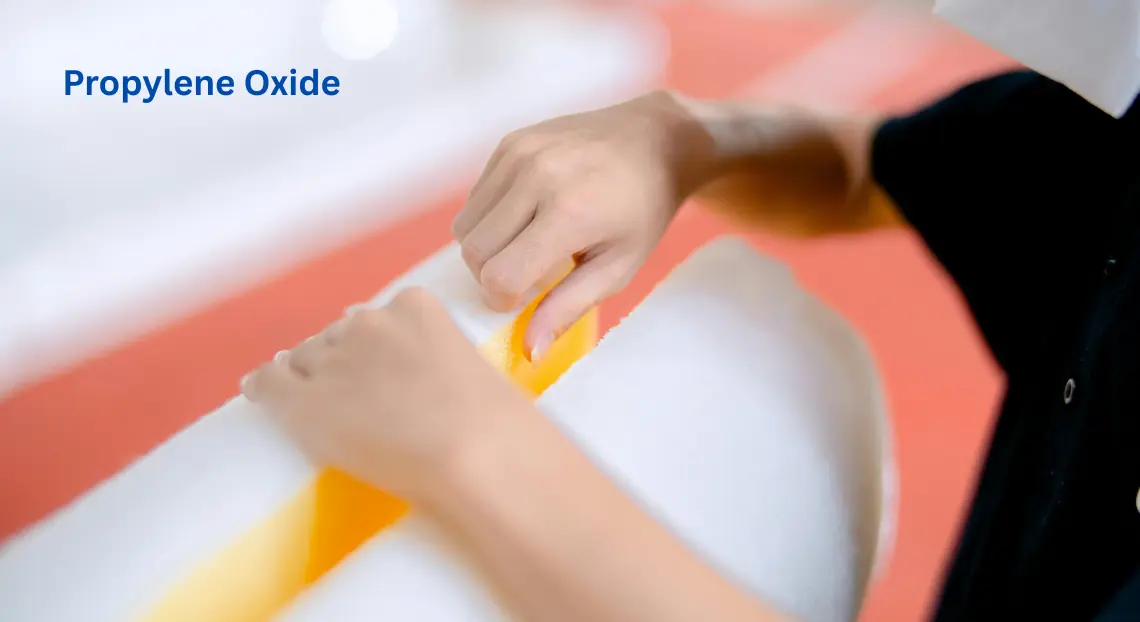
One of the largest uses of propylene oxide is in the production of polyether polyols, which are key ingredients used to make Polyurethane foams. These foams are commonly found in furniture cushions, mattresses, insulation materials, automotive seats, and packaging products. Propylene oxide is also used to produce Propylene glycol, a chemical widely used in food processing, pharmaceuticals, cosmetics, and antifreeze formulations.
Because of its wide range of industrial applications, propylene oxide is considered an important raw material in modern chemical manufacturing. Its ability to react with many different compounds allows manufacturers to produce materials that are used in construction, transportation, consumer products, and several other industries.
Physical Properties of Propylene oxide
Appearance and Odor
Propylene oxide is a colorless liquid with a slightly sweet and ether-like odor. It is a volatile substance, which means it can easily evaporate into the air at normal temperatures. Because of this high volatility, the liquid quickly forms vapors when it is exposed to open air. These vapors are flammable and must be handled carefully in industrial environments.
Boiling Point and Melting Point
Propylene oxide has a relatively low boiling point of about 34–35 °C. This low boiling point explains why the compound evaporates easily at room temperature. The melting point of propylene oxide is about −112 °C. Because of this very low melting point, the compound remains in liquid form under most natural and industrial conditions.
Density and Volatility
The density of propylene oxide is about 0.83 g/cm³ at 20 °C. This density is lower than the density of water, which means the liquid can float on water surfaces. The compound is also highly volatile, so it quickly changes from liquid to vapor when exposed to heat or open air. This property plays an important role in its storage and handling.
Solubility in Water and Organic Solvents
Propylene oxide is moderately soluble in water. In addition to water, it can mix easily with many organic solvents such as alcohols, ether, and acetone. This ability to dissolve in different liquids makes it useful in several chemical processes and industrial reactions.
Chemical Properties of Propylene oxide
Epoxide Ring Structure and Reactivity
The chemical behavior of Propylene oxide is mainly controlled by its epoxide ring structure. The molecule contains a three-membered ring made of two carbon atoms and one oxygen atom. This small ring creates internal strain in the molecule. Because of this strain, the compound is chemically reactive and can easily react with many other substances. This high reactivity makes propylene oxide useful as a chemical intermediate in many industrial reactions.
Ring-Opening Chemical Reactions
One of the most common reactions of propylene oxide is ring-opening. In this reaction, the three-membered epoxide ring breaks when it reacts with other chemicals. Substances such as water, alcohols, and amines can open the ring and form new compounds. For example, when propylene oxide reacts with water, it produces Propylene glycol. This reaction is widely used in the chemical industry to produce materials used in food, pharmaceuticals, and cosmetics.
Polymerization and Industrial Reactions
Propylene oxide can also take part in polymerization reactions. In these reactions, many small molecules join together to form larger molecules called polymers. This process is used to produce polyether polyols, which are important raw materials for making Polyurethane foams. These foams are commonly used in furniture, insulation materials, packaging products, and automotive components.
Chemical Formula and CAS Number of Propylene oxide
Chemical Formula: C₃H₆O
CAS Number: 75-56-9
Production Process of Propylene oxide
Chlorohydrin Route for Production
The oldest and once most common method for producing propylene oxide begins with propylene reacting with chlorine and water. This reaction forms an intermediate called propylene chlorohydrin. The chlorohydrin is then treated with a strong base such as calcium hydroxide or sodium hydroxide. This causes the chlorohydrin to undergo dehydrochlorination, which produces propylene oxide and a salt by‑product.
This method has been widely used in industry for many years, but it generates significant amounts of waste brine solution that must be treated before disposal.
Oxidation and Hydroperoxide Methods
In addition to the chlorohydrin process, oxidation methods are now used for many modern production plants. In these methods, propylene is reacted with organic peroxides such as ethylbenzene hydroperoxide or tert‑butyl hydroperoxide in the presence of a catalyst. This reaction directly converts propylene into propylene oxide. Depending on the type of peroxide used, useful co‑products such as styrene or tert‑butanol can also be formed.
These oxidation routes are more environmentally friendly than the chlorohydrin process because they produce fewer harmful by‑products.
Hydrogen Peroxide Epoxidation (HPPO)
A newer industrial method uses hydrogen peroxide as the oxidizing agent. In this process, propylene reacts with hydrogen peroxide over a special catalyst to form propylene oxide and water as the main by‑product. This method is considered cleaner because it avoids large amounts of salt waste and reduces environmental impact. However, it requires high‑quality hydrogen peroxide and precise reaction conditions to operate efficiently.
All these production methods use propylene as the main raw material. The choice of process in a plant depends on factors such as cost, environmental regulations, and the desired co‑products.
Types of Propylene Oxide
Structural Forms and Isomers
Technically, Propylene oxide refers to a single chemical compound with the formula C₃H₆O. However, the molecule has a chiral center, meaning it can exist in two mirror‑image forms called enantiomers. These two forms are chemically the same but differ in spatial arrangement. One form is labeled (R)-propylene oxide and the other (S)-propylene oxide. In most commercial production, propylene oxide is made as a racemic mixture, which contains equal amounts of both enantiomers.
This mix does not favor one form over the other. In specialized chemical processes, one enantiomer may be separated and used when specific reactions require a certain orientation, especially in fine chemical or pharmaceutical synthesis.
Commercial Grade Variants
In industry, propylene oxide is also categorized by grade and purity depending on its intended use. Technical or industrial grades contain low levels of impurities and are used in large‑scale chemical production, such as making Propylene glycol or polyether polyols for foams. Higher purity grades are required when the compound is an intermediate in making materials where trace impurities can affect product quality.
For example, applications in cosmetics or pharmaceutical intermediates often demand stricter specifications and quality control.
Summary of Types
The concept of “types” of propylene oxide is based mainly on its enantiomeric form and the purity grade supplied for various industrial requirements. Structurally, the compound remains the same, but its formulation and quality standards differ to suit different manufacturing and end‑use needs.
Key Industrial Uses of Propylene Oxide
Polyurethane Production from Propylene Oxide
One of the most important industrial uses of Propylene oxide is in the production of polyether polyols, which are key raw materials for making Polyurethane foams. These foams are widely used in everyday products such as furniture cushions, mattresses, car seats, insulating panels, and packaging materials.
The ability of propylene oxide to react and form long molecular chains allows manufacturers to produce flexible and rigid foams that meet different performance needs in construction, transportation, and consumer goods.
Propylene Glycol and Solvent Production
Another major industrial application of propylene oxide is in producing Propylene glycol. This compound is created when propylene oxide reacts with water. Propylene glycol serves as a building block for many products, including antifreeze solutions, heat transfer fluids, hydraulic brake fluids, and solvents used in paints, coatings, and cleaners.
Its effectiveness as a solvent makes it valuable in many manufacturing processes.
Chemical Derivatives and Performance Chemicals
Propylene oxide is also used to make propylene glycol ethers, which are solvents that improve the performance of industrial coatings, inks, and cleaning agents. These derivatives help control drying time, reduce surface tension, and enhance application properties in industrial formulations.
The diverse range of chemicals produced from propylene oxide shows its role as a cornerstone intermediate in many manufacturing sectors that support modern industrial production.
Commercial Applications of Propylene Oxide
Use in Food and Pharmaceutical Industries
Propylene oxide has commercial uses outside of large‑scale chemical manufacturing. One of its applications is in the food and pharmaceutical sectors where it is used as a fumigant. In food processing, propylene oxide can be applied to sterilize spices, nuts, and other dry foods. This treatment helps control bacteria and mold without leaving harmful residues.
In pharmaceutical production, propylene oxide is sometimes used to sterilize equipment or materials that cannot tolerate high heat. Its ability to kill microbes makes it useful for maintaining hygiene standards in these industries.
Specialty Chemical Applications
Beyond food and pharmaceuticals, propylene oxide is used to make several specialty chemicals that serve specific industrial needs. It acts as an intermediate in producing surfactants and lubricants. Surfactants are important in detergents and cleaning agents, helping to lower surface tension and improve cleaning power.
Lubricants made from propylene oxide derivatives are used in machinery and automotive applications to reduce friction and wear.
Use in Fumigation and Sterilization
In some commercial settings, propylene oxide is used directly for fumigation and sterilization. Because it can effectively kill microbes, it is applied in controlled environments to disinfect medical tools, laboratory equipment, and packaging materials. Proper safety measures are essential when using propylene oxide for these purposes because the compound is flammable and can irritate the skin and lungs.
Overall, the commercial applications of propylene oxide extend beyond raw chemical production into areas where its reactive nature and sanitizing ability provide practical benefits.
Advantages and Limitations of Propylene Oxide
Industrial Benefits of Propylene Oxide
Propylene oxide offers several important advantages for industry. Its chemical structure makes it highly reactive, allowing it to serve as a key building block for many products. One of its main benefits is in the manufacture of polyether polyols, which are essential for producing **Polyurethane foams used in furniture, insulation, packaging, and automotive parts.
It also reacts easily to form Propylene glycol and other derivatives used in solvents, antifreeze, cosmetics, and industrial fluids. These wide‑range applications make propylene oxide a flexible and valuable intermediate in chemical production.
Safety and Environmental Concerns
Despite its usefulness, propylene oxide has clear safety and environmental concerns. The compound is flammable and volatile, meaning it can form dangerous vapors if not handled correctly. Exposure to high concentrations can irritate the eyes, skin, and respiratory system. Long‑term exposure has also been linked to health risks in workers.
From an environmental perspective, production methods such as the older chlorohydrin process generate salt waste that requires proper disposal and treatment. Handling and storage require strict controls to prevent releases into air or water, and regulatory limits are in place in many countries to reduce risk.
Ongoing Industry Challenges
The chemical industry faces ongoing challenges with propylene oxide related to safety, cost, and regulation. Meeting strict safety standards adds to production and handling costs. Older production methods continue to create by‑products that must be managed, increasing environmental compliance expenses.
Additionally, industry pressure to adopt cleaner production techniques and sustainable practices means companies must invest in newer technologies like hydrogen peroxide routes, which can require higher initial capital. Balancing economic efficiency with safety and environmental responsibility remains a key industry challenge.
Alternatives of Propylene Oxide
Use of Ethylene Oxide as an Alternative
One of the main alternatives to Propylene oxide is Ethylene oxide, another epoxide used as a chemical building block. Like propylene oxide, ethylene oxide reacts with water and other chemicals to produce important industrial products such as ethylene glycols, which are used in antifreeze, polyester fibers, and resins.
Ethylene oxide is used in some applications where its chemical reactions produce similar end products. However, ethylene oxide is often more hazardous to handle because it is more toxic and classified as a carcinogen, which limits its use in certain environments.
Bio‑Based and Green Chemistry Options
Growing interest in sustainable chemistry has led to research on bio‑based alternatives for propylene oxide derivatives. Some methods use feedstocks derived from plant oils or other renewable sources to produce chemicals that serve similar functions to propylene oxide products. For example, bio‑based glycols and polyols can be made from natural oils through fermentation or catalytic processes.
These bio‑based materials are used in applications such as coatings, adhesives, and plastics where they can replace chemicals derived from propylene oxide. While these alternatives are still developing, they offer potential for reduced environmental impact.
Polymer and Material Substitutes
In certain specific applications, manufacturers are exploring polymer substitutes that reduce or eliminate the need for propylene oxide. For example, other chemical routes for producing polyurethane components use different intermediates or modified processes to achieve similar material properties. These alternatives may not fully replace propylene oxide but help reduce dependence on it, especially where safety or environmental concerns are a priority.
Overall, alternatives to propylene oxide include other chemical intermediates, bio‑based raw materials, and modified manufacturing processes. Each option balances performance, cost, and environmental impact depending on the end use.
Conclusion
Propylene oxide is a versatile and important chemical in modern industry. Its unique epoxide ring makes it highly reactive, allowing it to serve as a key building block for a wide range of products. The largest applications include the production of polyether polyols for Polyurethane foams and Propylene glycol, which are used in antifreeze, solvents, cosmetics, and pharmaceuticals.
The compound’s physical and chemical properties, such as low boiling point, moderate water solubility, and high reactivity, make it suitable for industrial chemical synthesis. Modern production methods, including the hydrogen peroxide epoxidation process, have improved efficiency and reduced environmental impact compared to older chlorohydrin-based methods.
While propylene oxide offers many advantages in manufacturing, it also comes with safety and environmental concerns. It is flammable, volatile, and requires careful handling to prevent exposure and accidents. Regulatory standards guide its storage, transport, and use to minimize risks.
With increasing demand from the polyurethane industry, emerging applications, and ongoing research into sustainable alternatives, propylene oxide will continue to play a crucial role in chemical manufacturing. Understanding its properties, uses, and limitations helps industries maximize its benefits while managing safety and environmental responsibilities.
FAQs –
1. What is Propylene Oxide?
Propylene oxide is a colorless, flammable organic compound with the formula C₃H₆O. It is an epoxide used mainly as an intermediate to produce other chemicals.
2. What is the chemical formula and CAS number of Propylene Oxide?
Its chemical formula is C₃H₆O and the CAS number is 75-56-9.
3. What are the main industrial uses of Propylene Oxide?
The primary uses are producing polyether polyols for polyurethane foams and making propylene glycol used in antifreeze, solvents, cosmetics, and pharmaceuticals.
4. How is Propylene Oxide produced?
It is produced mainly through the chlorohydrin process, hydroperoxide oxidation, or the hydrogen peroxide to propylene oxide (HPPO) process, depending on the plant and environmental requirements.
5. What are the physical properties of Propylene Oxide?
It is a colorless liquid with a slightly sweet odor, boiling point of 34–35 °C, melting point of −112 °C, and density of 0.83 g/cm³ at 20 °C.
6. What are the safety concerns of Propylene Oxide?
Propylene oxide is flammable, volatile, and irritates the eyes, skin, and respiratory system. Long-term exposure may pose health risks, so proper handling and storage are required.
7. Can Propylene Oxide be replaced by other chemicals?
Yes, alternatives include ethylene oxide, bio-based glycols, and other chemical intermediates or polymers in specific applications, depending on safety, cost, and environmental requirements.
8. What industries rely on Propylene Oxide?
It is widely used in chemical manufacturing, polyurethane production, pharmaceuticals, cosmetics, food sterilization, and industrial solvents.