

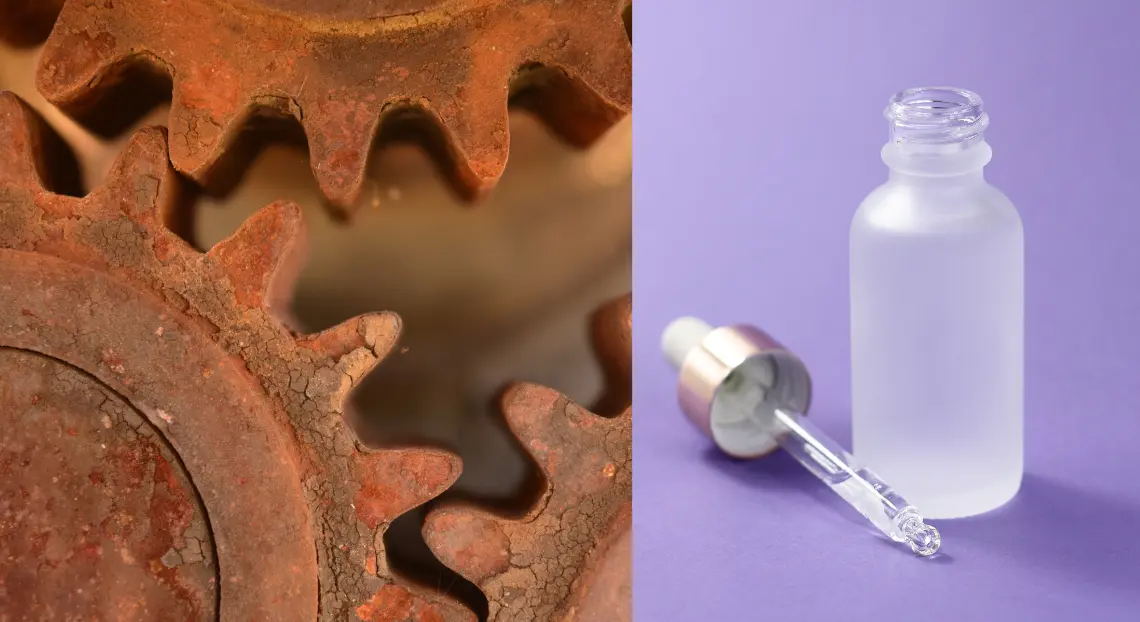
What is Hydrochloric Acid (HCl)?
Hydrochloric acid is a strong acid formed when hydrogen chloride gas dissolves in water. It is a clear, colorless liquid with a sharp smell and is widely used in industries and laboratories.
Chemical Properties of Hydrochloric Acid
Hydrochloric acid shows strong chemical behavior because it releases hydrogen ions in water. These ions make it highly reactive with many substances.
Strong Acidic Nature
Hydrochloric acid is a strong acid. It completely breaks into hydrogen ions (H⁺) and chloride ions (Cl⁻) in water. Because of this, it has a very low pH and shows strong acidic properties. It can easily react with metals, bases, and other compounds.
Reaction with Metals
Hydrochloric acid reacts with many metals such as zinc, iron, and magnesium. In this reaction, it forms a salt and releases hydrogen gas. For example, when it reacts with zinc, it produces zinc chloride and hydrogen gas. Not all metals react; less reactive metals like copper do not react easily.
Reaction with Bases (Neutralization)
Hydrochloric acid reacts with bases in a neutralization reaction. This reaction produces salt and water. For example, when it reacts with sodium hydroxide, it forms sodium chloride and water. This process reduces the acidic effect.
Reaction with Carbonates and Bicarbonates
Hydrochloric acid reacts with carbonates and bicarbonates to form salt, water, and carbon dioxide gas. This reaction is easy to identify because carbon dioxide gas is released as bubbles.
Physical Properties of Hydrochloric Acid
Hydrochloric acid has clear and easily noticeable physical features. These properties depend on its concentration but remain similar in general use.
Appearance and Smell
Hydrochloric acid is a clear and colorless liquid. Sometimes it may look slightly yellow due to impurities. It has a strong, sharp, and irritating smell. The odor comes from hydrogen chloride gas released from the solution.
Solubility in Water
Hydrochloric acid is highly soluble in water. Hydrogen chloride gas dissolves completely in water to form this acid. When it mixes with water, heat is released. Because of this, it can form solutions of different strengths easily.
Density and Concentration
The density of hydrochloric acid depends on its concentration. A common concentrated solution has a density of about 1.18–1.19 g/cm³. Higher concentration means higher density. Its boiling and melting points also change with concentration.
Fuming Nature
Concentrated hydrochloric acid gives off fumes in air. These fumes form when hydrogen chloride gas reacts with moisture in the air. This creates a mist that looks like white smoke. These fumes are corrosive and irritating, so the acid should be handled carefully.
How Hydrochloric Acid is Made?
Hydrochloric acid is mainly made in industries using simple chemical reactions. The process involves making hydrogen chloride gas first and then dissolving it in water.
Industrial Production Process
In industries, hydrochloric acid is produced by first making hydrogen chloride gas. This gas is then passed into water, where it dissolves completely and forms hydrochloric acid. The process is controlled to get the required concentration, usually around 30–37%. This method gives a pure and stable product.
Reaction of Hydrogen and Chlorine
The most common method is the direct reaction of hydrogen gas and chlorine gas. These gases combine in a controlled chamber and form hydrogen chloride gas. The reaction releases heat and is written as:
H₂ + Cl₂ → 2HCl
After this, the hydrogen chloride gas is absorbed in water to produce hydrochloric acid. This method is widely used because it is simple and gives high purity acid.
By-product from Chemical Industries
Hydrochloric acid is also formed as a by-product in many chemical processes. It is commonly produced during the manufacture of chlorinated organic compounds like PVC and other chemicals. In many plants, this by-product acid is collected and reused instead of being wasted. In fact, a large part of industrial hydrochloric acid comes from such by-product processes.
Common Uses of Hydrochloric Acid
Hydrochloric acid is widely used in many industries because of its strong acidic nature and fast reaction speed. It plays an important role in both large-scale production and small laboratory work.
Metal Cleaning and Pickling
Hydrochloric acid is commonly used to clean metal surfaces. It removes rust, scale, and unwanted layers from iron and steel. This process is called pickling. It helps prepare metals before processes like galvanizing, welding, or coating. Clean metal surfaces improve quality and durability.
Chemical Manufacturing Uses
Hydrochloric acid is used to make many important chemicals. It is used in the production of chlorides, fertilizers, dyes, and plastics such as PVC. It also helps in making compounds used in medicines and industrial products. Because it reacts easily, it is useful in many chemical processes.
Water Treatment and pH Control
Hydrochloric acid is used to control the pH level of water. It helps make water less alkaline by lowering its pH. This is important in swimming pools, drinking water treatment, and industrial water systems. Proper pH control helps prevent scaling and improves water quality.
Food Processing Applications
In the food industry, hydrochloric acid is used in small and controlled amounts. It is used to process food ingredients and adjust acidity levels. It also helps in the production of items like corn syrup and gelatin. Strict safety standards are followed to ensure it is safe for use.
Laboratory and Research Uses
Hydrochloric acid is widely used in laboratories for testing and analysis. It is used in titration, sample preparation, and chemical reactions. It helps scientists study substances and carry out experiments accurately.
Grade of Hydrochloric Acid
Industrial Grade Hydrochloric Acid
This is the most commonly used type. It contains some impurities and is used in metal cleaning, pickling, and chemical manufacturing. It is not suitable for food or lab use.
Laboratory (Reagent) Grade Hydrochloric Acid
This grade is much purer than industrial grade. It is used in laboratories for experiments, testing, and analysis. It gives accurate results because it has very low impurities.
Food Grade Hydrochloric Acid
This type is highly purified and safe for use in the food industry. It is used in controlled amounts for processing food, making syrups, and adjusting acidity levels. It follows strict safety standards.
Pharmaceutical Grade Hydrochloric Acid
This is a very high purity grade used in making medicines and healthcare products. It must meet strict quality standards to ensure safety.
Technical Grade Hydrochloric Acid
This grade is similar to industrial grade but used for general technical purposes like cleaning and water treatment. It may contain minor impurities.
In short, the main difference between these grades is purity and application.
Conclusion
Hydrochloric acid is a strong and widely used acid with important roles in both industry and daily life. It is known for its high reactivity, clear appearance, and ability to dissolve many substances. From metal cleaning and chemical production to water treatment and laboratory work, its uses are many and practical.
It is also naturally present in the human stomach, where it helps in digestion and protects against harmful bacteria. At the same time, it is a highly corrosive substance, so proper handling and safety measures are always important.
Hydrochloric acid is available in different grades based on purity, which makes it suitable for various uses, from industrial work to food and pharmaceutical applications. Understanding its properties, uses, and safety helps in using it effectively and responsibly.
Frequently Asked Questions (FAQs) About Hydrochloric Acid
What is hydrochloric acid used for?
It is used for metal cleaning, chemical production, water treatment, food processing, and laboratory work.
Is hydrochloric acid a strong acid?
Yes, it is a strong acid because it completely breaks into ions in water.
Is hydrochloric acid the same as vinegar?
No, vinegar contains acetic acid, which is a weak acid. Hydrochloric acid is much stronger.
Where is hydrochloric acid found naturally?
It is found in the human stomach, where it helps in digestion.
Is hydrochloric acid dangerous?
Yes, it is highly corrosive and can cause burns on skin and eyes if not handled properly.
What happens when hydrochloric acid reacts with metals?
It produces a salt and releases hydrogen gas.
How is hydrochloric acid stored safely?
It is stored in tightly closed containers, away from heat and reactive substances.
Can hydrochloric acid be diluted with water?
Yes, but it should be added slowly to water with care, not the other way around.
What is the pH of hydrochloric acid?
It usually has a very low pH, often between 0 and 2 depending on concentration.
Does hydrochloric acid produce fumes?
Yes, concentrated hydrochloric acid gives off strong fumes in air.