

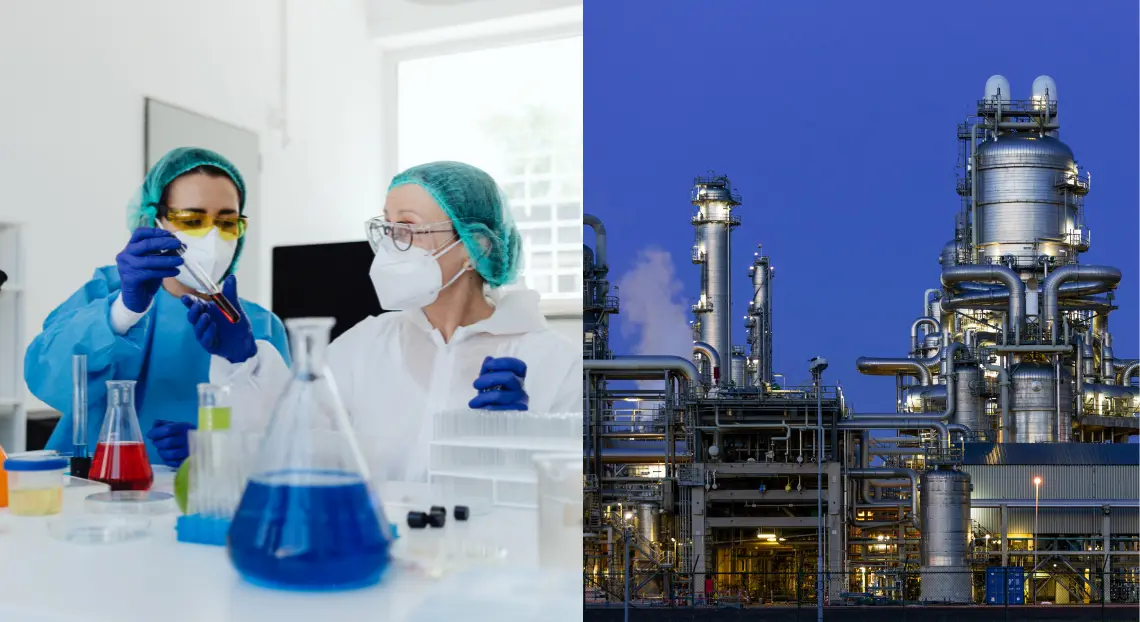
Introduction to Chemical Manufacturing
Chemical manufacturing is the process of making useful chemicals from raw materials on a large scale. These raw materials can include crude oil, natural gas, minerals, air, and water. In industries, these materials go through controlled steps like heating, mixing, and chemical reactions to produce final products.
In simple terms, it is how industries turn basic natural resources into products we use every day.
Chemical manufacturing plays an important role in both daily life and industry. It supports the production of essential items like fertilizers for farming, medicines for healthcare, plastics for packaging, and cleaning products for homes. Many industries such as agriculture, construction, automotive, and healthcare depend on chemicals to operate.
Without chemical manufacturing, modern life would be difficult. It helps improve living standards, supports industrial growth, and meets the demand for a wide range of products used every day.
What Is Chemical Manufacturing?
Chemical manufacturing is the process of converting raw materials into useful chemical products through controlled chemical reactions and physical processes. These products are made in a planned and systematic way to meet industrial and consumer needs.
Industrial vs Small-Scale Production
Chemical manufacturing can be done on different scales:
- Industrial production is carried out in large plants. It produces chemicals in bulk using advanced equipment and continuous processes. These chemicals are supplied to other industries or markets.
- Small-scale production is done in limited quantities, often in smaller units or laboratories. It is usually used for specific needs, testing, or local supply.
Key Purpose of Chemical Manufacturing
The main purpose of chemical manufacturing is to produce chemicals that are useful in different industries and daily life. It helps in:
- Converting natural resources into valuable products
- Supplying raw materials to industries like agriculture, healthcare, and construction
- Meeting the growing demand for products like plastics, fertilizers, medicines, and cleaning agents
In short, it helps turn basic materials into products that support modern living and industrial development.
Raw Materials Used in Chemical Manufacturing
Main Natural Raw Materials Used in Industry
Chemical manufacturing mainly depends on natural resources as starting materials. The most common ones are crude oil, natural gas, and minerals. Crude oil and natural gas are the primary sources for many industrial chemicals. They are made up of hydrocarbons, which are used to produce fuels, plastics, and many other products.
Minerals such as salt, limestone, and sulfur are also widely used. These materials are taken from the earth and used to make acids, fertilizers, and other basic chemicals. In most chemical industries, these natural materials act as the base for further processing and conversion into useful products.
Role of Air and Water in Chemical Production
Air and water are simple but very important raw materials in chemical manufacturing. Air provides gases like oxygen and nitrogen, which are used in many chemical reactions. For example, nitrogen is used to produce ammonia, which is a key material for fertilizers.
Water is used in many ways. It is used as a raw material, a solvent, and also for cooling and cleaning during production. Many chemical reactions also need water to take place. Because of this, almost every chemical plant depends on a steady supply of water.
Use of Renewable Raw Materials
In recent years, industries are also using renewable raw materials. These include plant-based materials, biomass, and agricultural products. These materials can be replaced naturally and help reduce dependence on fossil fuels. Some chemicals are now made from bio-based sources like sugar, starch, and vegetable oils. This shift supports more sustainable production.
Why Raw Material Selection Is Important?
Choosing the right raw material is very important in chemical manufacturing. The quality of raw materials directly affects the final product. Good quality materials help produce better and safer products. They also improve efficiency and reduce waste.
Cost, availability, and environmental impact are also important factors. Industries must select raw materials that are easy to get, affordable, and safe to use. Proper selection helps ensure smooth production and better results.
Step-by-Step Chemical Manufacturing Process
Raw Material Preparation in Chemical Production
The first step in chemical manufacturing is preparing the raw materials. In this stage, materials are cleaned and brought into the right form for processing. Solid materials may be crushed or ground into smaller particles, while liquids may be heated or adjusted to a required concentration.
Sometimes, impurities are removed before the process begins. This step is important because properly prepared materials help the reaction run smoothly and improve the final product quality.
Chemical Reaction Stage in Manufacturing
The chemical reaction stage is the main part of the process. In this stage, prepared raw materials are combined in a reactor under controlled conditions such as temperature, pressure, and time. These conditions are carefully managed to get the desired product.
In many cases, catalysts are also used to speed up the reaction. This stage changes the raw materials into new chemical substances, which is the core purpose of chemical manufacturing.
Separation of Products and By-Products
After the reaction, the mixture contains the desired product along with unwanted materials or by-products. These need to be separated. Common methods include filtration, distillation, and extraction. Separation helps isolate the useful product from the rest of the mixture. This step ensures that only the required chemical moves to the next stage.
Purification and Refining of Final Product
Once the product is separated, it is further purified to improve its quality. This step removes any remaining impurities and ensures the product meets required standards. Techniques like refining, drying, and crystallization are used to achieve the desired purity level. High purity is important, especially for chemicals used in medicines and food-related products.
Packaging and Distribution of Chemicals
The final step is packaging and distribution. The finished chemical is packed in suitable containers based on its type and safety requirements. Proper labeling and storage are also important to avoid damage or accidents.
After packaging, the product is transported to industries or markets where it is used. This step ensures that the product reaches users safely and in good condition.
Common Chemical Manufacturing Processes
Chemical Reactions Used in Manufacturing
Chemical reactions are the main part of chemical manufacturing. In this process, raw materials change into new substances. Common reactions include oxidation, reduction, and polymerization. Oxidation involves adding oxygen or removing electrons, while reduction is the opposite.
Polymerization is used to make plastics by joining small molecules to form long chains. These reactions are carried out under controlled temperature and pressure to get the desired product.
Distillation Process in Chemical Industry
Distillation is used to separate liquids based on their boiling points. In this process, a liquid mixture is heated until it starts to boil. The vapor formed is then cooled and collected as a separate liquid.
This method is widely used in industries like petroleum refining, where crude oil is separated into different fuels such as petrol, diesel, and kerosene. Distillation helps in getting pure and useful components from a mixture.
Filtration Method for Solid-Liquid Separation
Filtration is used to separate solid particles from liquids or gases. In this process, the mixture is passed through a filter that allows the liquid to pass while holding back the solid particles. It is a simple and widely used method in chemical plants. Filtration is important for removing unwanted solids and improving the quality of the final product.
Crystallization Process for Purity
Crystallization is used to obtain pure solid chemicals from a solution. In this process, the solution is cooled or the solvent is evaporated to form crystals. These crystals are then collected and dried. This method is commonly used in the production of salts, sugar, and other solid chemicals. Crystallization helps achieve high purity and uniform particle size.
Mixing and Blending in Chemical Production
Mixing and blending are used to combine different substances to form a uniform product. This process does not change the chemical structure but ensures that all components are evenly distributed.
It is commonly used in making products like paints, detergents, and fertilizers. Proper mixing is important to maintain product consistency and quality.
Types of Chemical Manufacturing Industries
Basic Chemicals Industry and Its Role
The basic chemicals industry produces large volumes of simple chemicals that are used as raw materials for other industries. These include acids, alkalis, salts, and industrial gases. Products like sulfuric acid, ammonia, and chlorine are widely used in sectors such as agriculture, construction, and manufacturing.
This industry focuses on high production and low cost. It forms the base of the entire chemical sector because many other products depend on these chemicals.
Specialty Chemicals Industry and Its Uses
The specialty chemicals industry produces chemicals designed for specific uses. These chemicals are made in smaller quantities but have higher value. They are used in products like paints, coatings, adhesives, dyes, and cleaning agents. Unlike basic chemicals, their performance and quality are more important than volume.
These chemicals are often made to meet specific customer or industry needs. This industry plays an important role in improving product performance and efficiency.
Consumer Chemicals Industry and Daily Products
The consumer chemicals industry focuses on products used in daily life. These include soaps, detergents, shampoos, cosmetics, and household cleaners. These products are made for direct use by consumers. Safety, ease of use, and cost are important factors in this industry.
Companies also focus on product quality and packaging. This sector is closely connected to everyday living and has a direct impact on health and hygiene.
Pharmaceutical Industry and Chemical Production
The pharmaceutical industry produces medicines and healthcare products. It involves the manufacturing of drugs used to treat and prevent diseases. This industry requires strict quality control and high purity standards. Chemicals used in medicines must be safe and effective.
Production processes are carefully monitored to ensure correct results. This industry plays a key role in healthcare and supports the treatment of various medical conditions.
Examples of Chemical Manufacturing Products
Acids and Bases Used in Industry
Acids and bases are some of the most widely produced chemical products. Common acids include sulfuric acid, hydrochloric acid, and nitric acid. These are used in industries such as metal processing, fertilizers, and cleaning products.
Bases like sodium hydroxide and potassium hydroxide are used in soap making, paper production, and water treatment. These chemicals are important for many industrial processes and everyday applications.
Fertilizers for Agriculture Use
Fertilizers are produced to improve soil quality and increase crop yield. Common types include nitrogen-based, phosphorus-based, and potassium-based fertilizers. Chemicals like ammonia and urea are widely used in fertilizer production.
These products help plants grow faster and healthier. The agriculture sector depends heavily on chemical manufacturing for a stable food supply.
Plastics and Polymers in Daily Life
Plastics and polymers are made by joining small chemical units to form long chains. These materials are used in packaging, construction, automotive parts, and electronic goods.
Common examples include polyethylene, polypropylene, and PVC. Plastics are lightweight, strong, and cost-effective, which makes them useful in many industries.
Paints and Coatings for Protection
Paints and coatings are used to protect and decorate surfaces. They are applied on walls, metal, wood, and vehicles. These products contain pigments, binders, solvents, and additives.
Chemical manufacturing helps produce paints that resist corrosion, weather, and wear. Coatings also improve the life of materials by protecting them from damage.
Soaps and Detergents for Cleaning
Soaps and detergents are used for cleaning clothes, utensils, and surfaces. They are made using chemical reactions between fats or oils and alkaline substances. Detergents are designed to remove dirt and grease effectively, even in hard water. These products are important for maintaining hygiene in homes and industries.
Medicines and Healthcare Products
Medicines are one of the most important products of chemical manufacturing. They are used to treat and prevent diseases. This includes tablets, syrups, injections, and other medical products.
These chemicals are produced under strict quality standards to ensure safety and effectiveness. The healthcare industry depends on chemical manufacturing to provide reliable treatment options.
Conclusion
Chemical manufacturing is an important part of modern industry. It helps convert raw materials into useful products that support daily life and different sectors. From basic chemicals to medicines and consumer products, it plays a key role in meeting everyday needs.
The process involves several steps such as preparation, reaction, separation, and purification to ensure the final product is safe and effective. Different types of industries and processes work together to produce a wide range of chemical products used in agriculture, healthcare, construction, and households.
While chemical manufacturing offers many benefits, it also comes with challenges like environmental impact and safety risks. Proper handling, safety measures, and responsible practices are important to reduce these risks.
Overall, chemical manufacturing supports industrial growth, improves living standards, and remains essential for the development of modern society.
Frequently Asked Questions (FAQs) About Chemical Manufacturing
What is chemical manufacturing in simple words?
It is the process of making useful chemicals from raw materials using industrial methods.
What are the main raw materials used in chemical manufacturing?
Common raw materials include crude oil, natural gas, minerals, air, and water.
What is the purpose of chemical manufacturing?
It is used to produce chemicals needed for industries and daily life products.
What are the main steps in chemical manufacturing?
The main steps are raw material preparation, chemical reaction, separation, purification, and packaging.
What industries depend on chemical manufacturing?
Industries like agriculture, healthcare, construction, automotive, and consumer goods depend on it.
What are some common chemical products?
Examples include acids, fertilizers, plastics, paints, detergents, and medicines.
Is chemical manufacturing safe?
It is safe when proper safety measures, equipment, and guidelines are followed.
What is the difference between basic and specialty chemicals?
Basic chemicals are produced in large quantities, while specialty chemicals are made for specific uses.
How does chemical manufacturing affect the environment?
It can cause pollution if not managed properly, but control measures can reduce the impact.
Why is quality control important in chemical manufacturing?
It ensures the final product is safe, effective, and meets required standards.