

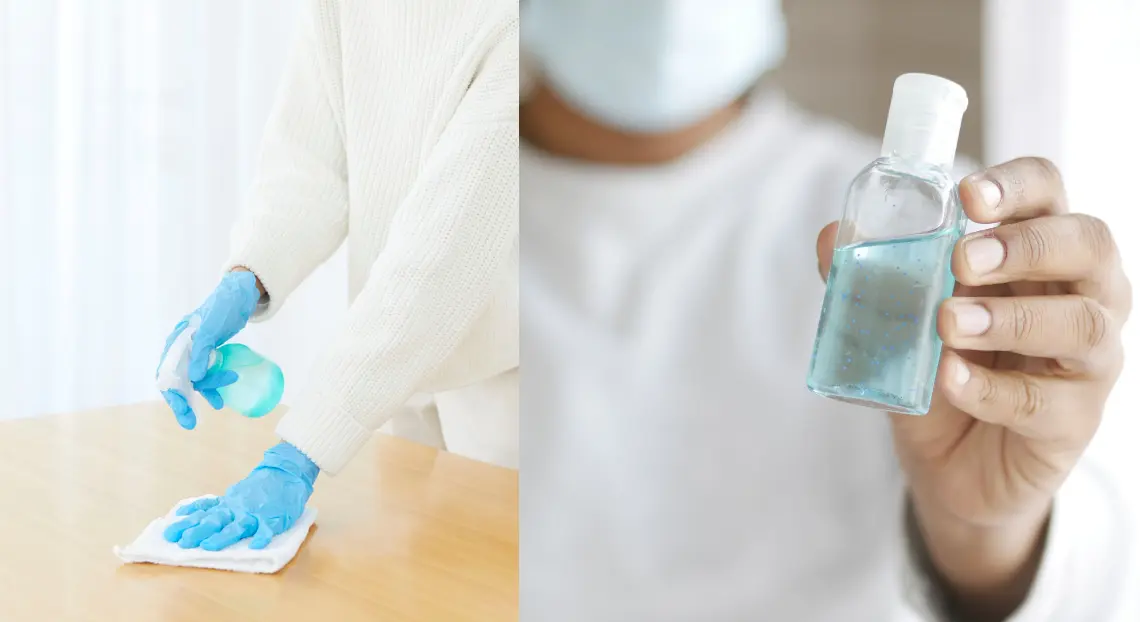
What is a Isopropyl Alcohol?
Isopropyl alcohol is a colorless, flammable chemical compound used mainly as a disinfectant, cleaning agent, and solvent.
It is widely used for cleaning and disinfecting because it can kill germs and remove oil, grease, and dirt from surfaces.
It is also called isopropanol or rubbing alcohol. The term “rubbing alcohol” usually refers to a mixture of isopropyl alcohol and water, commonly available in concentrations like 70% or 91%.The chemical formula of isopropyl alcohol is C₃H₈O. It belongs to the alcohol family, but it is not safe to drink and is used only for external or industrial purposes.
Chemical Properties of Isopropyl Alcohol
Chemical Formula and Structure
Isopropyl alcohol has the chemical formula C₃H₈O. Its structure contains three carbon atoms, eight hydrogen atoms, and one oxygen atom. The important part of the molecule is the –OH (hydroxyl) group, which makes it an alcohol. In this compound, the –OH group is attached to the middle carbon atom. Because of this structure, it is also called a secondary alcohol. This structure affects how it reacts with other substances and how it behaves as a solvent.
Molecular Weight
The molecular weight of isopropyl alcohol is about 60.1 g/mol. This value shows the total mass of all atoms in one molecule. A moderate molecular weight helps the liquid evaporate quickly while still being stable at room temperature.
Solubility in Water
Isopropyl alcohol is completely soluble in water, which means it can mix with water in any proportion. This happens because of the hydroxyl group, which forms bonds with water molecules. Due to this property, it is widely used in cleaning and disinfecting solutions, where mixing with water is required.
Flammability
Isopropyl alcohol is a highly flammable liquid. It can catch fire easily at normal temperatures and forms vapors that can also burn. Its vapors can mix with air and create a fire risk if exposed to heat, sparks, or open flames. Because of this, it must be handled and stored carefully in well-ventilated areas.
Overall, these chemical properties make isopropyl alcohol useful for cleaning, disinfecting, and industrial applications.
Physical Properties of Isopropyl Alcohol
Appearance and Odor
Isopropyl alcohol is a clear, colorless liquid at room temperature. It looks like water but has a strong and sharp smell. The odor is similar to other alcohols and is easy to पहचान during use. This strong smell makes it easy to notice when it is applied on surfaces or skin.
Boiling Point and Melting Point
Isopropyl alcohol has a boiling point of about 82°C, which means it turns into vapor at a lower temperature than water. This is one reason it dries quickly. Its melting point is around -89°C, so it remains in liquid form even at very low temperatures. These values show that it is stable as a liquid under normal conditions.
Density
The density of isopropyl alcohol is about 0.785 g/cm³ at room temperature, which is lower than water. Because of this, it feels light and spreads easily on surfaces. This property helps it cover a large area during cleaning and disinfection.
Evaporation Rate
Isopropyl alcohol has a high evaporation rate, which means it dries very fast after use. It starts evaporating quickly when exposed to air, even at room temperature. This fast drying property is useful for cleaning electronics and surfaces because it leaves little or no residue behind.
Overall, these physical properties make isopropyl alcohol a useful liquid for cleaning, disinfecting, and industrial applications.
Types/Grades of Isopropyl Alcohol
Isopropyl Alcohol Based on Concentration
Isopropyl alcohol is mainly classified based on its concentration or purity level. The most common types are 70%, 91%, and 99%. These numbers show how much pure alcohol is present and how much water is mixed in.
The 70% isopropyl alcohol contains 70% alcohol and 30% water. It is widely used for disinfecting skin and surfaces. The presence of water helps it stay longer on the surface, which improves its ability to kill germs.
The 91% isopropyl alcohol has less water and more alcohol. It provides stronger cleaning power and dries faster than 70%. It is commonly used for cleaning electronics, removing oils, and general-purpose cleaning.
The 99% isopropyl alcohol is almost pure alcohol with very little water. It evaporates very quickly and leaves almost no residue. This makes it suitable for sensitive equipment, laboratory use, and industrial cleaning where moisture is not desired.
Isopropyl Alcohol Based on Grade
Isopropyl alcohol is also available in different quality grades depending on its use. The industrial grade is used for general cleaning, solvents, and manufacturing processes. It may contain small impurities but is suitable for large-scale use.
The technical grade has higher purity and is used in electronics and precision cleaning where better quality is required.
The pharmaceutical or USP grade is the purest form. It meets strict safety standards and is used in medical, healthcare, and personal care products.
Overall, the choice of type or grade depends on the purpose, required purity, and safety needs.
How Isopropyl Alcohol Is Made?
Raw Materials Used
Isopropyl alcohol is mainly made from propene (propylene) and water. Propene is a gas that comes from crude oil and natural gas during the refining process. It is a common petrochemical used to make many products. Water is the second main raw material used in the reaction.
These two materials are combined in a controlled process to form isopropyl alcohol. In some cases, acetone is also used as a starting material in an alternative method.
Hydration of Propene Process
The most common method of making isopropyl alcohol is called the hydration of propene. In this process, propene reacts with water to form isopropyl alcohol.
There are two main ways this reaction is carried out. In the direct hydration method, propene and water react together under high pressure and temperature in the presence of an acid catalyst. This process is simple and widely used in modern plants.
In the indirect hydration method, propene first reacts with sulfuric acid to form intermediate compounds. These compounds are then mixed with water, which breaks them down to produce isopropyl alcohol.
Both methods give the same final product, but the choice of method depends on cost, raw material quality, and plant design.
Industrial Production Process Overview
In industrial production, the process is carried out in large reactors under controlled conditions. After the chemical reaction, the mixture contains isopropyl alcohol along with water and other by-products.
To get pure isopropyl alcohol, the mixture is separated using distillation. This step removes water and unwanted substances. In some cases, special distillation methods are used to increase purity.
Another method used in industry is the hydrogenation of acetone, where acetone reacts with hydrogen to form isopropyl alcohol.
Overall, isopropyl alcohol is produced on a large scale using simple raw materials and well-established chemical processes, making it widely available for many uses.
Common Uses of Isopropyl Alcohol
Medical and Disinfectant Uses
Isopropyl alcohol is widely used in medical and healthcare settings as a disinfectant and antiseptic. It helps kill bacteria, viruses, and fungi by breaking down their proteins and cell membranes. It is commonly used to clean skin before injections, disinfect small cuts, and sanitize medical tools. It is also found in hand sanitizers and first-aid products because of its fast action and quick drying nature.
Cleaning and Surface Sanitizing
Isopropyl alcohol is commonly used for cleaning household and commercial surfaces. It can remove dirt, grease, stains, and sticky residues easily. It is also used to disinfect frequently touched areas like tables, switches, and glass surfaces. Its quick evaporation helps surfaces dry fast without leaving marks or residue.
Electronics Cleaning
Isopropyl alcohol is one of the most used liquids for cleaning electronic items. It can dissolve oils, dust, and residues like flux and fingerprints. It is safe for many electronic parts because it evaporates quickly and does not leave moisture behind. It is used for cleaning circuit boards, connectors, keyboards, and other sensitive components.
Industrial Solvent Applications
In industries, isopropyl alcohol is used as a solvent to dissolve oils, chemicals, and other substances. It is used in manufacturing, paint and coating processes, and chemical production. It helps in degreasing machinery and cleaning equipment. Its ability to dissolve both water-based and oil-based materials makes it very useful in industrial processes.
Use in Personal Care Products
Isopropyl alcohol is also used in many personal care products. It is found in items like lotions, aftershaves, perfumes, and cosmetics. It helps products dry quickly and improves their texture. It is also used as a cleaning agent for tools like makeup brushes.
Overall, isopropyl alcohol is a versatile chemical used in healthcare, cleaning, electronics, industry, and daily life.
Different Grades and Concentrations of Isopropyl Alcohol
70% Isopropyl Alcohol Uses and Benefits
70% isopropyl alcohol contains 70% alcohol and 30% water. This is the most commonly used concentration for disinfection. The presence of water helps the alcohol stay longer on surfaces, which improves its ability to kill bacteria and viruses. It also allows better penetration into germs, making it more effective than higher concentrations for this purpose.
It is widely used for cleaning skin, small wounds, and household surfaces. It dries slower than higher concentrations, which gives enough contact time to kill germs properly.
91% Isopropyl Alcohol Uses and Benefits
91% isopropyl alcohol has less water and more pure alcohol. It works as a strong cleaning agent and evaporates faster than 70%. This makes it useful for removing oils, grease, and sticky residues.
It is commonly used for cleaning electronics, tools, and surfaces where less moisture is needed. However, it is slightly less effective than 70% for killing germs because it evaporates more quickly.
99% Isopropyl Alcohol Uses and Benefits
99% isopropyl alcohol is almost pure alcohol with very little water. It has the highest solvent strength and dries very fast.
It is mainly used in industrial work, laboratories, and precision cleaning. It is ideal for cleaning sensitive electronic parts because it leaves almost no moisture or residue. However, it is not the best choice for disinfecting because it evaporates too quickly.
Key Differences Between 70%, 91%, and 99%
The main difference is the amount of water in each solution. 70% alcohol is best for disinfecting because it stays longer on surfaces and kills germs more effectively. Higher concentrations like 91% and 99% are better for cleaning and dissolving oils because they contain more alcohol and less water.
Overall, the right choice depends on the use. Lower concentration is better for killing germs, while higher concentration is better for fast cleaning and drying.
Conclusion
Isopropyl alcohol is a simple but very useful chemical used in many areas. It is widely used for cleaning, disinfecting, and as a solvent in different industries. Its properties, such as fast evaporation, ability to kill germs, and strong cleaning action, make it suitable for both daily and industrial use.
Different concentrations of isopropyl alcohol serve different purposes. Lower concentrations like 70% are more effective for disinfecting, while higher concentrations like 91% and 99% are better for cleaning and removing oils. Choosing the right type depends on the task and required results.
At the same time, it is important to use isopropyl alcohol safely. It is flammable and can be harmful if misused. Proper handling, storage, and correct usage are necessary to avoid risks.
Overall, isopropyl alcohol is a reliable and widely used chemical that plays an important role in healthcare, cleaning, and industrial applications.
Frequently Asked Questions (FAQs) About Isopropyl Alcohol
What is isopropyl alcohol used for?
It is used for cleaning, disinfecting, removing oil and grease, and as a solvent in many products.
Is isopropyl alcohol safe for skin?
Yes, it is safe for limited use on skin, but frequent use can cause dryness and irritation.
Can isopropyl alcohol kill germs?
Yes, it can kill many bacteria, viruses, and fungi when used in the right concentration.
Which is better, 70% or 99% isopropyl alcohol?
70% is better for disinfecting, while 99% is better for cleaning and fast drying.
Can isopropyl alcohol be used on electronics?
Yes, it is commonly used to clean electronics because it evaporates quickly and leaves no residue.
Is isopropyl alcohol flammable?
Yes, it is highly flammable and should be kept away from heat, sparks, and open flames.
Can you drink isopropyl alcohol?
No, it is toxic and not safe for drinking. It can cause serious health problems.
How should isopropyl alcohol be stored?
It should be stored in a cool, dry place, away from direct sunlight and heat sources.
Does isopropyl alcohol expire?
Yes, it can lose effectiveness over time, especially if the container is not properly sealed.
What is the difference between isopropyl alcohol and ethanol?
Isopropyl alcohol is used for cleaning and disinfecting, while ethanol is used in beverages and also as a disinfectant.