

What is Methane?
Methane is a simple hydrocarbon gas made of carbon and hydrogen. It is the main component of natural gas and is widely used as a fuel for cooking, heating, and electricity generation.
The chemical formula of methane is CH₄, which means it contains one carbon atom and four hydrogen atoms. It is the simplest member of the hydrocarbon family.
Methane is a colorless and odorless gas in its pure form. It burns easily and produces a clean flame compared to many other fossil fuels.
Methane plays an important role in both energy production and the environment. It is a major energy source used around the world. At the same time, it is also a powerful greenhouse gas, which means it can contribute to global warming if released into the atmosphere in large amounts.
In short, methane is a basic chemical compound that is important for fuel, industry, and environmental studies.
Physical and Chemical Properties of Methane
State, Color and Basic Appearance
Methane is a gas at room temperature. It is colorless and has no smell in its pure form. This means it cannot be seen or detected by smell without special equipment. In many practical uses, a smell is added to methane for safety, but naturally it is odorless. Methane is also lighter than air, so when released, it rises and spreads quickly in the atmosphere.
Density and Behavior in Air
Methane has a lower density than air. Because of this, it does not stay near the ground and moves upward. This property helps reduce the risk of gas buildup in open areas, but in closed spaces, it can still collect and become dangerous. It is only slightly soluble in water, so it does not mix well with liquids.
Flammability of Methane
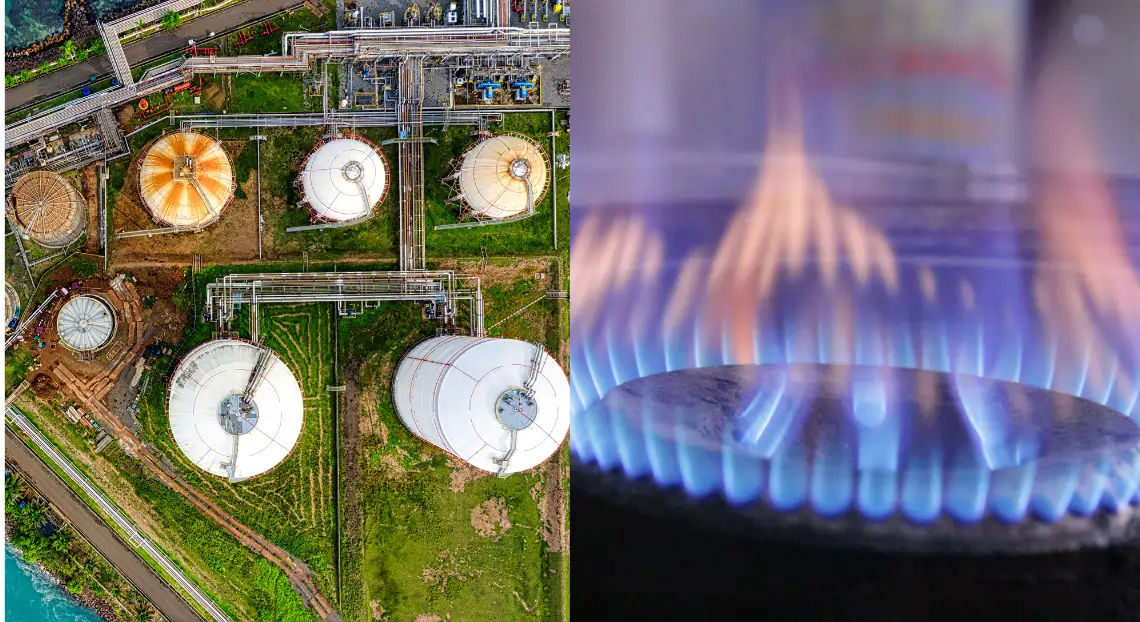
Methane is highly flammable and can burn easily when it comes in contact with air and a spark or flame. It burns with a clean, pale blue flame and produces carbon dioxide and water. When mixed with air in certain amounts, usually between about 5% and 15%, it can form an explosive mixture. Because of this, methane must be handled carefully in industries and homes.
Stability and Reactivity
Methane is generally stable under normal conditions. It does not react easily with most substances at room temperature. However, it can react under high heat or in the presence of oxygen. For example, during burning, it reacts with oxygen to release energy. It can also react with some chemicals under controlled conditions to form useful products.
Overall, methane is a simple, stable, and highly flammable gas with properties that make it useful as a fuel but also require careful handling.
Structure and Composition of Methane
Molecular Structure of Methane
Methane is a simple molecule with the chemical formula CH₄. It is made of one carbon atom and four hydrogen atoms. The carbon atom is placed at the center, and the four hydrogen atoms are arranged around it. This simple structure makes methane the smallest and most basic hydrocarbon. The atoms are arranged in a fixed pattern, which gives methane stable and predictable properties.
Bonding in Methane Molecule
In methane, the carbon atom forms four single covalent bonds with four hydrogen atoms. A covalent bond is formed when atoms share electrons. Carbon has four electrons in its outer shell and needs four more to become stable. Each hydrogen atom shares one electron with carbon. This sharing forms four strong single bonds. These bonds are equal in strength and length, which makes the molecule balanced and stable under normal conditions.
Shape of Methane Molecule
Methane has a tetrahedral shape. This means the four hydrogen atoms are placed evenly around the central carbon atom in three-dimensional space. The angle between each bond is about 109.5 degrees. This shape reduces repulsion between the bonds and keeps the molecule stable. Because of this symmetrical shape, methane is a non-polar molecule, which affects how it behaves with other substances.
Overall, the simple structure, strong bonding, and stable shape of methane make it an important and widely used chemical compound.
How Methane is Formed?
Formation from Decomposition of Organic Matter
Methane forms naturally when organic matter breaks down in the absence of oxygen. This process is called anaerobic decomposition. It happens when dead plants, animals, and other organic materials are buried under layers of soil, water, or waste.
Over time, microorganisms act on this material and slowly convert it into methane gas. This process can take place in both natural and man-made environments.
Methane from Biological Sources
A large amount of methane is produced by living organisms. Wetlands are one of the biggest natural sources. In these areas, water covers the soil and creates low-oxygen conditions, which helps methane formation. Animals, especially cattle and other ruminants, also produce methane during digestion. Microbes in their stomach break down food and release methane as a byproduct.
This gas is then released into the atmosphere. Other sources include rice fields and organic waste in landfills, where similar biological processes occur.
Methane from Geological Processes
Methane is also formed deep underground through geological processes. Over millions of years, heat and pressure act on buried organic matter, such as plant and animal remains. This leads to the formation of fossil fuels, including natural gas. Methane is the main component of natural gas found in underground reservoirs.
It is often extracted through drilling for energy use. In some cases, methane is also found trapped in coal beds and beneath the ocean floor.
Overall, methane is formed through natural, biological, and geological processes, making it widely available in different environments.
Sources of Methane
Natural Sources of Methane
Methane is released from many natural sources. Wetlands are the largest natural source. In wetlands, water covers the soil and creates low oxygen conditions. This helps bacteria break down organic matter and produce methane. Termites also release methane during digestion.
Microorganisms in their gut break down plant material and release methane as a byproduct. Oceans are another natural source. Methane is produced in deep ocean sediments and is slowly released into the water and atmosphere. Some methane also comes from natural gas leaks from underground deposits.
Human-Made Sources of Methane
Human activities produce a large amount of methane. Agriculture is one of the main sources. Animals like cows and buffalo produce methane during digestion. This process is known as enteric fermentation. Rice farming also produces methane because flooded fields create low oxygen conditions.
Landfills are another major source. When food waste and organic materials decompose without oxygen, methane is released. Oil and gas production also adds methane to the air. During drilling, processing, and transport, some methane escapes through leaks or incomplete burning.
Methane from human activities has increased over time due to population growth and industrial development. These emissions play a major role in environmental concerns.
Overall, methane comes from both natural processes and human activities, making it a widely present gas in the environment.
CAS Number of Methane – 74-82-8
Common Uses of Methane
Use of Methane as a Fuel
Methane is widely used as a fuel for cooking and heating. It is the main component of natural gas supplied to homes. It burns with a clean flame and produces less smoke compared to many other fuels. Because of this, it is a preferred choice for domestic use. It is also used in commercial kitchens, boilers, and heating systems.
Methane in Electricity Generation
Methane is used to generate electricity in power plants. Natural gas power plants burn methane to produce heat. This heat is used to create steam, which turns turbines to generate electricity. Methane-based power plants are considered more efficient and cleaner than coal-based plants. They produce lower levels of harmful gases and pollution.
Industrial Applications of Methane
Methane is used in many industries as a source of energy and raw material. It is used in furnaces, kilns, and industrial heating systems. Industries such as glass, steel, and cement use methane for high-temperature processes. It provides a steady and reliable source of heat, which is important for production.
Methane in Chemical Production
Methane is an important raw material in the chemical industry. It is used to produce hydrogen through a process called steam reforming. Hydrogen is further used in making ammonia and fertilizers. Methane is also used to produce methanol, which is used in fuels, plastics, and chemicals. These products are important in many industrial and daily applications.
Overall, methane is a useful fuel and an important raw material for energy and chemical production.
Advantages of Methane
High Energy Output and Efficiency
Methane has a high energy content, which means it can produce a large amount of heat when burned. It burns efficiently and gives more energy per unit compared to many other fuels. Because of this, it is widely used in homes, industries, and power plants. Its efficient burning also helps reduce fuel waste and improves overall performance.
Cleaner Burning Than Other Fossil Fuels
Methane burns cleaner than fuels like coal and oil. When it burns, it mainly produces carbon dioxide and water, with very low amounts of smoke, ash, and harmful particles. It releases fewer pollutants such as sulfur dioxide and particulate matter. This makes methane a better option for reducing air pollution and improving air quality, especially in cities and industrial areas.
Easy Availability and Wide Use
Methane is widely available in the form of natural gas. It is found in large underground reserves and is supplied through pipelines in many regions. It can also be produced from biogas using organic waste. Because of its availability and ease of transport, methane is used across many sectors, including domestic, industrial, and power generation.
Overall, methane is an efficient, cleaner, and widely available fuel, making it an important energy source.
Disadvantages of Methane
High Flammability and Fire Risk
Methane is highly flammable and can catch fire easily when it comes in contact with a spark or flame. When mixed with air in certain amounts, it can form an explosive mixture. This makes methane dangerous in closed spaces such as kitchens, storage areas, and industrial plants. Proper handling, storage, and ventilation are required to reduce the risk of fire and accidents.
Risk of Gas Leaks and Safety Issues
Methane is a colorless and odorless gas, which makes leaks difficult to detect in its natural form. If a leak occurs, the gas can spread quickly and build up in enclosed areas. This increases the risk of fire, explosion, and health hazards. In many cases, a strong smell is added to natural gas to help detect leaks early. Regular inspection and proper maintenance of pipelines and equipment are important to prevent such risks.
Environmental Impact of Methane Emissions
Methane is a powerful greenhouse gas. It traps more heat in the atmosphere than carbon dioxide over a short period of time. Even small leaks can have a strong impact on climate change. Methane is released from sources like agriculture, landfills, and energy production. Controlling these emissions is important to reduce its effect on global warming.
Conclusion
Methane is a simple and important gas that plays a major role in daily life and industry. It is a basic hydrocarbon with the formula CH₄ and is the main component of natural gas. Methane is widely used as a fuel for cooking, heating, and electricity generation because it burns efficiently and produces less pollution compared to many other fossil fuels.
At the same time, methane has some risks. It is highly flammable and can be dangerous if not handled properly. It can also leak easily and is hard to detect in its natural form. In addition, methane is a strong greenhouse gas and contributes to global warming when released into the atmosphere.
Methane comes from both natural sources like wetlands and human activities such as agriculture and energy production. Because of this, managing methane emissions is important for environmental protection.
Overall, methane is a useful and widely used energy source, but it must be handled carefully and used responsibly to reduce safety risks and environmental impact.
Frequently Asked Questions (FAQs) About Methane
What is methane used for?
Methane is mainly used as a fuel for cooking, heating, and electricity generation. It is also used to make chemicals like hydrogen and methanol.
Is methane dangerous?
Methane can be dangerous because it is highly flammable. It can cause fire or explosion if it leaks and comes in contact with a spark.
Is methane harmful to the environment?
Yes, methane is a strong greenhouse gas. It traps heat in the atmosphere and contributes to global warming.
Is methane the same as natural gas?
Methane is the main component of natural gas, but natural gas may also contain small amounts of other gases.
How is methane produced naturally?
Methane is formed when organic matter breaks down without oxygen. This happens in wetlands, landfills, and inside animal stomachs.
Does methane have a smell?
Pure methane has no smell. A strong odor is added to natural gas to help detect leaks.
Why is methane considered a clean fuel?
Methane burns cleaner than coal and oil. It produces less smoke, ash, and harmful gases.
Can methane be found in the air?
Yes, methane is naturally present in small amounts in the atmosphere.
How is methane stored and transported?
Methane is stored and transported as natural gas through pipelines or in compressed or liquefied form.
What are the main sources of methane emissions?
Major sources include agriculture, landfills, oil and gas production, and natural sources like wetlands.