

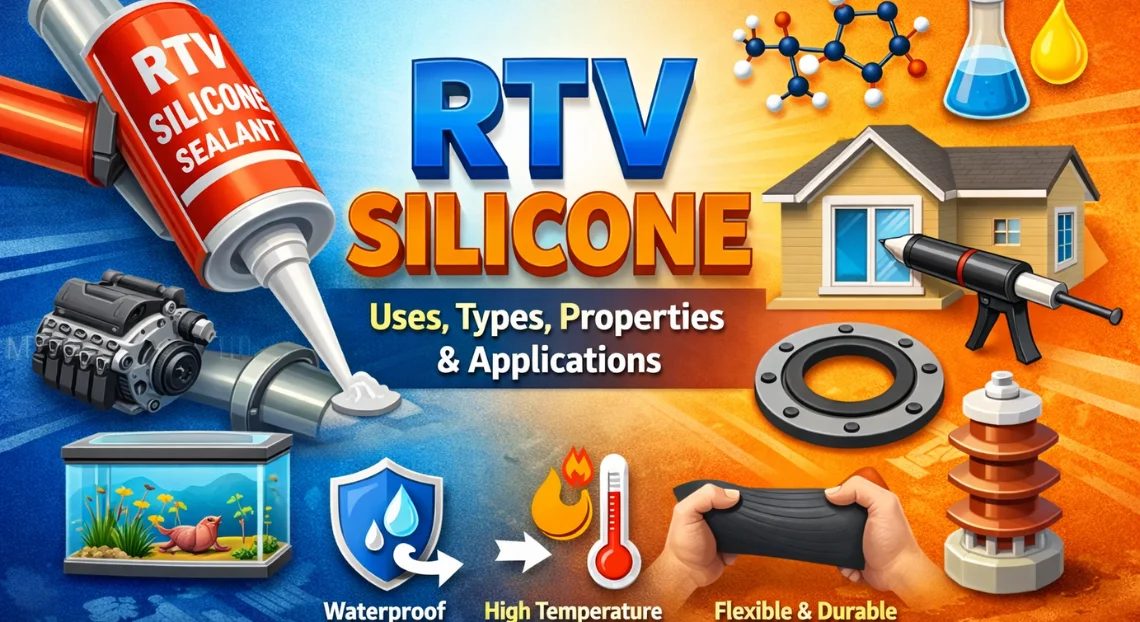
What Is RTV Silicone?
RTV silicone is a type of silicone rubber material that cures and turns into a solid seal or adhesive at normal room temperature without needing heat or special equipment. The term “RTV” stands for Room Temperature Vulcanizing, which means the silicone changes from a paste or liquid into a rubbery solid simply by reacting with moisture in the air.
RTV silicone is made from silicone polymers mixed with other ingredients like catalysts and fillers. When it is applied on a surface, it starts to form a skin within minutes, and over a few hours, it fully cures into a flexible, tough material. This cured silicone can bend, stretch, and stay elastic for a long time while still holding two surfaces together or sealing a joint.
One of the main reasons RTV silicone is used so widely is because it combines sealing and bonding in one product. It acts as a sealant by filling gaps, cracks, and joints to stop air, water, oil, dust, or chemicals from passing through. At the same time, in many applications it also functions as an adhesive, bonding different materials like metal, glass, plastic, ceramics, and rubber.
RTV silicone stands out for several key reasons:
- Cures at room temperature – no oven, heat gun, or pressure needed.
- Stays flexible after it dries, so it can handle movement, vibration, and expansion without cracking.
- Waterproof and weather resistant, making it ideal for outdoor use or wet areas.
- Heat and chemical resistant, useful in engines, exhausts, and industrial equipment.
Because of these properties, RTV silicone is used in many industries including automotive repairs, appliance assembly, construction, electronics, plumbing, and manufacturing. Its ease of use and reliable performance make it a go-to material for sealing and bonding jobs around homes and in professional settings.
What Is RTV Silicone Sealant?
RTV silicone sealant is a special silicone-based sealant that forms a strong, flexible rubbery seal when it cures at normal room temperature. The term “RTV” means Room Temperature Vulcanizing, which tells you exactly how it works: it cures (hardens) without needing ovens or extra heat. RTV silicone sealants react with moisture in the air to slowly change from a soft paste into a solid but flexible rubber seal.
Difference Between RTV Silicone and Regular Silicone Sealants
Although both RTV silicone and regular silicone sealants are silicone chemistry products, there are important differences:
- Curing Method – RTV silicone cures at room temperature using air moisture. Regular silicone sealants often need other curing conditions or are designed mainly for everyday caulking.
- Performance and Use – RTV silicone sealants are usually made for tougher, high-stress jobs like machinery, engines, and industrial sealing where movement, heat, or pressure happens. Regular silicone sealants are most common for simple sealing around homes, like windows or bathrooms.
- Temperature Resistance – RTV versions can handle much wider temperature ranges and are more suited for demanding environments.
These differences make RTV silicone sealant a higher-performance product compared to standard silicone caulk, especially where tougher sealing or bonding is needed.
How RTV Silicone Sealant Works
RTV silicone sealant works through a curing process that starts when it comes in contact with air. After application, moisture in the atmosphere reacts with the silicone material. This reaction begins at the surface and slowly moves inward. First, a thin skin forms on the outer layer, which helps the sealant stay in place and prevents it from flowing out of the joint. Over time, the material underneath continues to cure until the entire seal becomes solid yet flexible. This process does not need heat, pressure, or special tools, which makes RTV silicone easy to use in both home and industrial settings.
As the sealant cures, it tightly fills gaps, joints, and uneven surfaces. It also bonds well with materials such as metal, glass, rubber, plastic, and ceramics. Once fully cured, RTV silicone forms a rubber-like seal that stays firmly attached to the surfaces. This cured seal does not become hard or brittle. Instead, it keeps its elasticity, allowing it to stretch and return to its original shape. Because of this curing method, RTV silicone is reliable for sealing areas that experience movement, vibration, or temperature changes.
Key Sealing Properties of RTV Silicone Sealant
One of the most important sealing properties of RTV silicone sealant is its long-lasting flexibility. Even after full curing, the sealant remains elastic, which helps it handle expansion, contraction, and vibration without cracking or breaking. This makes it suitable for applications where parts move or where temperatures rise and fall regularly. The seal stays intact even under stress, which improves durability and reduces maintenance.
RTV silicone sealant is also highly resistant to water, weather, and moisture. Once cured, it creates a waterproof barrier that prevents leaks and protects joints from rain, humidity, and condensation. Many RTV silicone sealants can also withstand high temperatures, oils, and chemicals, depending on the formulation. These properties make it useful in engines, machinery, electrical enclosures, and outdoor installations. Because of its strong adhesion and resistance to harsh conditions, RTV silicone sealant provides a dependable sealing solution for both everyday and heavy-duty applications.
What Is RTV Silicone Adhesive?
RTV silicone adhesive is a silicone-based bonding material that cures at room temperature and forms a strong, flexible bond between surfaces. Like RTV sealants, this adhesive reacts with moisture in the air to cure. After curing, it turns into a rubber-like material that holds parts together while still allowing movement. Because it does not become hard or brittle, RTV silicone adhesive is used where both bonding and flexibility are needed.
RTV silicone adhesive is different from rigid adhesives such as epoxy or super glue. Instead of creating a stiff joint, it creates an elastic bond. This makes it suitable for parts that expand, contract, or vibrate during use. The adhesive fills small gaps between surfaces and maintains contact even if the bonded parts move slightly.
Bonding Strength and Flexibility of RTV Silicone Adhesive
RTV silicone adhesive provides medium to high bonding strength, depending on the formulation. While it may not be as rigid as epoxy, it offers excellent holding power combined with long-term flexibility. Once cured, the adhesive can stretch, compress, and return to its original shape without losing grip. This flexibility helps prevent bond failure caused by vibration, thermal expansion, or mechanical stress.
Another advantage is its resistance to heat, moisture, and weather. Many RTV silicone adhesives can handle high temperatures and remain stable in wet or outdoor conditions. This makes the bond reliable even in demanding environments such as engines, electrical housings, and outdoor equipment.
Materials RTV Silicone Adhesive Can Bond
RTV silicone adhesive bonds well to a wide range of materials. It adheres strongly to metals like aluminum, steel, and copper, making it useful in automotive and industrial assemblies. It also bonds effectively with glass and ceramics, which is why it is often used in appliances, lighting, and electronics.
In addition, RTV silicone adhesive works well on rubber and many plastics, allowing it to join flexible and rigid materials together. It can also bond to painted and coated surfaces when properly cleaned. Because of this wide material compatibility, RTV silicone adhesive is commonly used in construction, automotive repair, electrical applications, and general manufacturing where durable and flexible bonding is required.
What Is RTV Silicone Gasket Sealant?
RTV silicone gasket sealant is a liquid or paste-type silicone material used to form gaskets directly on machine parts. Instead of using a pre-cut solid gasket, this sealant is applied to one surface, and after curing, it turns into a flexible rubber gasket. It seals gaps between two joined surfaces and prevents leakage of oil, coolant, air, or other fluids. Because it cures at room temperature, it is easy to use in workshops, factories, and repair jobs.
RTV silicone gasket sealant is commonly used where standard gaskets cannot provide a perfect seal or where surfaces are uneven. It fills small surface imperfections and creates a tight seal even under pressure.
Purpose of RTV Silicone in Gasket Making
The main purpose of RTV silicone in gasket making is to create a custom-fit seal between two metal parts. When applied, the sealant spreads evenly and fills gaps, scratches, and surface irregularities. After curing, it forms a flexible gasket that stays firmly in place. This helps prevent leaks and protects parts from contamination.
RTV silicone gasket sealant also absorbs vibration and movement between parts. This is important in machines where parts expand and contract due to heat. The flexibility of the cured gasket helps maintain sealing performance over time.
Why RTV Silicone Replaces Traditional Gaskets
RTV silicone gasket sealant is often used instead of traditional paper, rubber, or cork gaskets. One reason is better sealing performance. Traditional gaskets can shrink, crack, or break under heat and pressure. RTV silicone stays flexible and maintains its sealing ability for a longer time.
Another reason is convenience. RTV silicone does not require cutting or precise fitting. It can be applied directly from the tube, saving time and reducing inventory of different gasket sizes. It also provides better resistance to heat, oil, and chemicals compared to many traditional gasket materials.
Use of RTV Silicone Gasket Sealant in Engines and Machinery
RTV silicone gasket sealant is widely used in engines, gearboxes, pumps, and industrial machinery. In engines, it is used for sealing valve covers, oil pans, timing covers, and water pump housings. In gearboxes and machinery, it helps seal casings and flanges to prevent oil and fluid leaks.
Because it can handle high temperatures, pressure, and vibration, RTV silicone gasket sealant is a reliable solution for both automotive and industrial gasket applications.
Types of RTV Silicone Sealants
RTV silicone sealants are available in different types based on how they cure and where they are used. Each type has its own purpose and benefits. Understanding these types helps in choosing the right sealant for the job.
One-Component RTV Silicone Sealant
One-component RTV silicone sealant is the most commonly used type. It comes ready to use and cures when it comes in contact with moisture in the air. There is no need to mix anything before application. This type is easy to apply and is widely used in homes, automotive repairs, construction, and general industrial sealing.
One-component RTV silicone is ideal for sealing joints, gaps, and surfaces where normal curing time is acceptable. It is commonly used for engine sealing, plumbing joints, electrical enclosures, and household sealing jobs.
Two-Component RTV Silicone Sealant
Two-component RTV silicone sealant consists of two separate parts that must be mixed before use. Once mixed, the curing process starts immediately and does not depend on air moisture. This allows the sealant to cure faster and more evenly, even in thick sections or closed spaces.
This type is mainly used in industrial and manufacturing applications where controlled curing time and consistent results are important. It is suitable for mold making, electronic components, and precision sealing where air exposure is limited.
Acetoxy Cure RTV Silicone Sealant
Acetoxy cure RTV silicone releases a vinegar-like smell during curing. It cures quickly and provides strong adhesion to smooth surfaces like glass and ceramics. This type is commonly used in bathrooms, kitchens, and glass sealing applications.
However, acetoxy cure silicone is not suitable for sensitive metals because it can cause corrosion over time.
Neutral Cure RTV Silicone Sealant
Neutral cure RTV silicone does not release strong odors and is safe for metals, plastics, and electronics. It cures slightly slower than acetoxy types but offers better long-term durability. This type is widely used in construction, automotive, and electrical applications.
When to Use Each Type
Use one-component RTV silicone for general sealing and repair work. Choose two-component RTV silicone for industrial jobs that need fast and uniform curing. Use acetoxy cure for glass and ceramic sealing, and neutral cure for metal, plastic, and sensitive surfaces.
What Is 100% RTV Silicone?
100% RTV silicone refers to a pure silicone-based sealant that does not contain fillers, acrylics, or other low-cost additives. The term “100%” means the main sealing material is true RTV silicone, not a blended or diluted formula. This type of sealant cures at room temperature and turns into a flexible, rubber-like material after curing. Because of its purity, 100% RTV silicone offers better performance and longer service life compared to mixed sealants.
100% RTV silicone is commonly used in applications where reliability, durability, and resistance are very important. It is trusted for both professional and industrial use as well as long-term sealing jobs.
Meaning of 100% RTV Silicone
When a product is labeled as 100% RTV silicone, it means the sealant is made primarily from silicone polymers and cures through the RTV process. It does not shrink, crack, or harden over time like lower-quality sealants. After curing, it stays elastic and maintains a strong seal even under stress, temperature changes, or moisture exposure.
This type of sealant is designed to perform consistently in both indoor and outdoor environments.
Difference Between 100% RTV Silicone and Blended Sealants
Blended sealants often mix silicone with acrylic, latex, or other materials to reduce cost. While these sealants may look similar, their performance is usually lower. Blended sealants can lose flexibility, shrink, or fail when exposed to heat, water, or movement.
In contrast, 100% RTV silicone provides better adhesion, higher flexibility, and stronger resistance to water, weather, and temperature. It also lasts longer and requires less maintenance over time, making it more suitable for demanding applications.
Advantages of Using Pure RTV Silicone
One of the biggest advantages of 100% RTV silicone is its long-lasting flexibility. It can stretch and compress without breaking the seal. It is also completely waterproof once cured, making it ideal for wet or humid areas.
Pure RTV silicone resists heat, UV exposure, and many chemicals. It bonds well to materials like metal, glass, plastic, rubber, and ceramics. Because of these benefits, 100% RTV silicone is widely used in automotive engines, industrial machinery, construction joints, and high-performance sealing applications.
Black RTV Silicone Sealant
Black RTV silicone sealant is a special type of silicone sealant that cures at room temperature and turns into a black, rubber-like material. Like other RTV silicones, it reacts with moisture in the air to form a flexible seal. The black color is added to help users easily identify the product and match it to specific applications. Black RTV silicone is known for its strength, resistance to heat and oil, and ability to work well with many materials. This makes it different from general clear or white silicone sealants that are mainly used for simple household sealing.
Heat and Oil Resistance Properties of Black RTV Silicone
One of the key features of black RTV silicone sealant is its high heat resistance. Once cured, the material can withstand elevated temperatures without breaking down. This makes it suitable for use in engine compartments and other high-temperature environments. In many cases, black RTV silicone can handle temperatures up to 600°F (315°C) or more, depending on the specific product. This resistance helps maintain a strong and durable seal even when parts get very hot.
Black RTV silicone also offers good oil resistance. It is designed to resist fuels, engine oil, lubricants, and many industrial fluids. This quality helps prevent seal failure when the sealant is exposed to oil splashes, spills, or prolonged contact with hydrocarbons. The combined heat and oil resistance mean the sealant does not soften, swell, or lose adhesion easily under demanding conditions.
Typical Uses in Automotive and Industrial Applications
Black RTV silicone sealant is widely used in both automotive and industrial settings. In vehicles, it is often applied for sealing engine parts, valve covers, oil pans, timing covers, and transmission housings. These areas experience both high heat and frequent contact with oil, so the black RTV silicone provides a reliable and long-lasting seal. Mechanics prefer it because it fills gaps evenly and remains flexible even under vibration and temperature changes.
In industrial use, black RTV silicone sealant is applied to machinery joints, pumps, compressors, and equipment housings where heat and oil exposure are common. It also works well as a gasket maker when custom sealing is needed. In factories and workshops, its resistance to heat, oil, and movement makes it a dependable choice for both maintenance and assembly tasks.
Black RTV silicone sealant is valued for its durability, flexibility, and strong sealing performance where ordinary sealants may fail. Its ability to handle tough conditions makes it a popular choice among professionals and technicians.
Orange RTV Silicone Sealant
Orange RTV silicone sealant is a special high-performance silicone sealant that cures at room temperature and turns into a flexible rubber seal. The bright orange color is more than just a visual difference. It often indicates that the sealant is formulated for high-temperature and heavy-duty sealing jobs. Many manufacturers use orange coloring to help users easily identify products that can withstand extreme heat and harsh conditions, especially in engines and industrial equipment.
Orange RTV silicone is made from silicone polymers that cure when they react with moisture in the air. After curing, the sealant remains elastic and forms a strong, durable bond between surfaces. It can handle heat, vibration, and movement without cracking or losing adhesion. This makes orange RTV silicone ideal for many demanding applications where regular sealants may fail.
What Orange RTV Silicone Indicates
The orange color in RTV silicone sealant usually indicates enhanced heat resistance and durability compared to standard silicone sealants. While not all orange silicones are the same, many products with this color are designed to tolerate higher temperature ranges and harsher environments. The color helps technicians and users quickly distinguish it from general-purpose sealants like clear or white RTV silicones. Because of its formulation, orange RTV silicone is often used where strong, flexible, and heat-stable seals are necessary.
Orange RTV silicone sealants are chosen when sealing surfaces that are exposed to high heat, oil, and engine fluids. The special formulation helps the sealant maintain performance even when temperatures rise and fall repeatedly.
High-Temperature Capability of Orange RTV Silicone
One of the main advantages of orange RTV silicone sealant is its high temperature resistance. Once cured, it can withstand very high heat without breaking down or losing its sealing ability. Depending on the product, it can handle temperatures commonly found in automotive engines and industrial machinery.
This high-temperature capability makes orange RTV silicone suitable for places where ordinary sealants would soften, melt, or fail under heat stress. It maintains flexibility even at elevated temperatures, which prevents leaks and keeps parts sealed securely.
Common Automotive and Engine Applications
Orange RTV silicone sealant is widely used in automotive and engine applications where heat and pressure are common. It is often applied to seal engine valve covers, intake manifolds, water pumps, and timing covers. These parts face high engine temperatures and constant vibration, making a strong and flexible seal essential.
In addition, orange RTV silicone is used when forming custom gaskets between surfaces that do not have a pre-made gasket. Mechanics prefer orange RTV silicone for sealing parts that are exposed to engine heat, oil, coolant, and exhaust air because it holds up well under these harsh conditions.
Overall, orange RTV silicone sealant is chosen for its heat resistance, durability, and strong sealing performance in demanding automotive and engine environments. It provides a reliable seal where many standard sealants cannot perform effectively.
High Temperature RTV Silicone Sealant
High temperature RTV silicone is a special type of RTV silicone sealant that can withstand very high heat without losing its sealing ability. Like other RTV silicones, it cures at room temperature and turns into a flexible rubbery material. What sets it apart is its ability to resist extreme temperatures for long periods, making it suitable for places where ordinary sealants cannot perform. This sealant is widely used in engines, exhaust systems, industrial machinery, and other high-heat environments.
Temperature Resistance Range of High Temperature RTV Silicone
High temperature RTV silicone can resist temperatures much higher than standard silicone sealants. Depending on the product and formulation, it typically handles temperatures from around −50°C (−58°F) up to +315°C (600°F) or higher. Some specialty high temp RTV silicones can even tolerate short bursts of temperatures up to +350°C (662°F) or more. This wide temperature range allows the sealant to stay stable, flexible, and reliable even when exposed to heat that would weaken or melt regular sealants.
This heat resistance comes from the silicone polymer structure, which remains stable at high temperatures and does not break down easily. Once cured, the material does not soften or lose adhesion when exposed to constant heat over time.
Where High-Temperature RTV Silicone Is Required
High temperature RTV silicone is required wherever surfaces are exposed to continuous or repeated heat exposure. Common applications include automotive engines, where parts such as cylinder heads, valve covers, exhaust manifolds, and turbocharger housings get very hot during operation. It is also used in industrial furnaces, ovens, boilers, and heaters, where sealants must maintain strength in hot environments.
In addition, this sealant is used in electrical and electronic equipment that operates at elevated temperatures, as well as in industrial machinery that generates heat through friction or high-speed operation. Anywhere normal sealants may soften or fail due to heat, high temperature RTV silicone is a dependable choice.
Benefits of High Temperature RTV Silicone in Extreme Heat
The main benefit of high temperature RTV silicone is its ability to remain flexible and strong under extreme heat. Unlike many other sealants, it does not crack, peel, or degrade when exposed to high temperatures over time. It also provides excellent resistance to oil, water, chemicals, and vibration, making it useful in harsh working conditions.
Because it maintains a reliable seal even in hot environments, high temperature RTV silicone helps prevent leaks, reduces maintenance needs, and increases the lifespan of parts and equipment. Its durability in extreme heat makes it a trusted solution for both automotive and industrial sealing needs.
Common Uses of RTV Silicone Sealant
RTV silicone sealant is used across many industries because it provides a strong, flexible, and long-lasting seal. It works well in both simple and demanding conditions, which makes it a reliable choice for sealing, bonding, and gasket making.
Automotive Applications of RTV Silicone Sealant
In the automotive industry, RTV silicone sealant is widely used to seal engine and vehicle components. It is commonly applied to valve covers, oil pans, timing covers, water pumps, and transmission housings. These areas face heat, oil, vibration, and pressure. RTV silicone stays flexible and maintains a tight seal, which helps prevent oil and fluid leaks. It is also used as a gasket maker where traditional gaskets are not available or do not fit properly.
Electrical and Electronics Sealing Uses
RTV silicone sealant is often used in electrical and electronic applications to protect components from moisture, dust, and vibration. It is applied to seal electrical enclosures, junction boxes, sensors, and cable entry points. Because cured RTV silicone provides insulation and resists heat, it helps protect sensitive electronic parts. Neutral cure RTV silicone is usually preferred in electronics because it does not harm metals or circuits.
Construction and Home Use
In construction and home applications, RTV silicone sealant is used for sealing joints, gaps, and cracks. It is applied around windows, doors, sinks, bathrooms, and kitchens to prevent water leaks. The sealant remains flexible, which allows it to handle building movement and temperature changes. Its waterproof and weather-resistant nature makes it suitable for both indoor and outdoor use.
Industrial and Manufacturing Uses
In industrial and manufacturing settings, RTV silicone sealant is used to seal machinery housings, pumps, compressors, and pipelines. It helps prevent leakage of oils, gases, and chemicals. The sealant can handle heat and vibration, which makes it reliable for continuous operation equipment.
Marine and Outdoor Applications
RTV silicone sealant is also used in marine and outdoor environments. It seals boat fittings, deck hardware, and marine equipment where exposure to water, salt, and sunlight is common. Its resistance to water, weather, and UV exposure makes it effective for long-term outdoor sealing applications.
Key Properties and Benefits of RTV Silicone Sealant
RTV silicone sealant is widely used because it offers a unique combination of durability, flexibility, and resistance. These properties help it perform well in both simple and demanding sealing applications.
Heat Resistance of RTV Silicone
One of the most important properties of RTV silicone is its heat resistance. Once cured, it can withstand high temperatures without breaking down or losing its sealing ability. Many RTV silicone sealants work well in both very low and very high temperature conditions. This makes them suitable for engines, machinery, and equipment that heat up during operation. The sealant does not melt or harden when exposed to heat, which helps maintain a reliable seal over time.
Flexibility and Elasticity
RTV silicone remains flexible and elastic even after full curing. It can stretch, compress, and return to its original shape without cracking. This flexibility allows the sealant to handle vibration, movement, and thermal expansion. Because of this property, RTV silicone is ideal for joints and parts that move or shift during use. It helps prevent seal failure caused by stress or repeated motion.
Waterproof and Weather Resistance
RTV silicone sealant provides excellent waterproof and weather resistance. Once cured, it forms a tight barrier that blocks water, moisture, air, and dust. It also resists rain, humidity, and sunlight, making it suitable for outdoor use. These qualities help protect sealed areas from leaks and environmental damage in both indoor and outdoor conditions.
Chemical and Oil Resistance
RTV silicone sealant is resistant to many oils, fuels, and chemicals. This makes it useful in automotive and industrial environments where exposure to such substances is common. The sealant does not easily swell, soften, or lose adhesion when in contact with oils or chemicals, which helps maintain seal integrity.
Long Service Life
Another key benefit of RTV silicone is its long service life. It does not shrink, crack, or become brittle over time. Because of its durability, RTV silicone requires less maintenance and replacement, making it a cost-effective sealing solution for long-term applications.
RTV Silicone vs Other Sealants
Choosing the right sealant depends on heat, movement, surface type, and durability needs. Below is a clear comparison of RTV silicone with common alternatives.
RTV Silicone vs Acrylic Sealant
RTV silicone and acrylic sealants are used for very different purposes. Acrylic sealant is mainly for indoor, low-stress areas such as wall cracks and paintable joints. It dries hard and has limited flexibility. Over time, it can crack if the joint moves or if there are temperature changes.
RTV silicone, on the other hand, stays flexible after curing. It handles heat, moisture, and movement much better. It is waterproof and suitable for wet areas and outdoor use. Where durability and flexibility are needed, RTV silicone performs far better than acrylic sealant.
RTV Silicone vs Polyurethane Sealant
Polyurethane sealants offer strong adhesion and are commonly used in construction. However, they can become stiff over time and are less resistant to very high temperatures. They may also degrade faster when exposed to UV light.
RTV silicone sealant provides excellent flexibility and superior heat resistance. It remains elastic for years and performs well in hot, wet, and outdoor environments. For applications involving temperature changes or vibration, RTV silicone is usually the better option.
RTV Silicone vs Epoxy
Epoxy is a rigid adhesive used for strong structural bonding. Once cured, it becomes very hard and does not allow movement. This makes epoxy unsuitable for joints that expand, contract, or vibrate.
RTV silicone creates a flexible bond instead of a rigid one. It absorbs movement and vibration without cracking. While epoxy is better for load-bearing bonding, RTV silicone is better for sealing and flexible joints.
When RTV Silicone Is the Best Choice
RTV silicone is the best choice when flexibility, heat resistance, and waterproof sealing are required. It is ideal for engines, machinery, electrical enclosures, bathrooms, outdoor joints, and gasket making. If the application involves movement, temperature changes, moisture, or long-term durability, RTV silicone sealant offers the most reliable performance compared to acrylic, polyurethane, or epoxy sealants.
Safety, Storage, and Handling Tips for RTV Silicone Sealant
Using RTV silicone sealant correctly helps ensure good results and avoids health or performance issues. Following basic safety, storage, and handling guidelines is important for both professionals and regular users.
Safety Precautions During Use
When using RTV silicone sealant, always work in a well-ventilated area. During curing, some types of RTV silicone release fumes that may cause irritation if inhaled in closed spaces. Avoid direct contact with eyes and skin. If the sealant touches your skin, wash the area with soap and water. Wearing protective gloves is recommended, especially during long applications.
Do not ingest RTV silicone sealant, and keep it away from food and drinking water. If the sealant accidentally gets into the eyes, rinse immediately with clean water and seek medical advice if irritation continues. Always read the manufacturer’s instructions before use, as different formulations may have specific safety guidelines.
Proper Storage Conditions for RTV Silicone Sealant
RTV silicone sealant should be stored in a cool, dry place away from direct sunlight and heat sources. High temperatures can reduce product quality and shorten shelf life. The tube or cartridge must be tightly sealed after use to prevent air and moisture from entering. Exposure to air can cause the sealant to cure inside the packaging, making it unusable.
Store RTV silicone sealant in its original packaging and keep it away from children. Do not store near open flames or ignition sources, even though silicone itself is generally stable.
Shelf Life of RTV Silicone Sealant
The shelf life of RTV silicone sealant usually ranges from 12 to 24 months, depending on the product and storage conditions. Always check the expiration date printed on the packaging. Using sealant past its shelf life can result in poor curing, weak sealing, or uneven application.
If the sealant feels hard, lumpy, or does not cure properly, it should not be used. Proper storage helps maintain performance and ensures the sealant works as expected when needed.
Common Questions About RTV Silicone Sealant (FAQs)
Here are some practical and clear answers to frequently asked questions about RTV silicone sealant. These help users understand its use, curing, temperature tolerance, and compatibility.
What is RTV silicone sealant?
RTV silicone sealant is a silicone-based material that cures at room temperature to form a flexible, rubber-like seal. It is used for sealing, bonding, and gasket making in automotive, industrial, and household applications.
How long does RTV silicone take to cure?
Curing time depends on thickness, humidity, and type of sealant. A thin layer may skin over in 10-30 minutes, while full curing can take 24 hours or more for thicker joints. Higher humidity can speed up curing.
Can RTV silicone withstand high temperatures?
Yes. Most RTV silicone sealants resist heat ranging from −50°C to +315°C (−58°F to 600°F). High-temperature variants can withstand even higher temperatures, making them ideal for engines, exhausts, and industrial machinery.
Can RTV silicone be used on metal, glass, or plastic?
Yes. RTV silicone bonds well with metal, glass, rubber, ceramics, and many plastics. For sensitive plastics, a neutral cure silicone is recommended to avoid surface damage.
Is RTV silicone waterproof?
Yes. Once fully cured, RTV silicone forms a waterproof and weatherproof seal, making it suitable for bathrooms, kitchens, marine applications, and outdoor joints.
Can RTV silicone replace a gasket?
Yes. RTV silicone gasket sealants can create custom-fit gaskets that fill gaps and surface imperfections, often replacing paper, rubber, or cork gaskets.
Can RTV silicone be painted over?
RTV silicone is generally not paintable because its surface remains flexible and smooth. Specialized coatings or primers may be required for adhesion.
How should RTV silicone be stored?
Store in a cool, dry place, away from sunlight and heat. Keep the tube tightly sealed. Proper storage can extend its shelf life to 12-24 months.
Can RTV silicone sealant be used outdoors?
Yes. RTV silicone is weatherproof and UV resistant, making it suitable for outdoor applications like sealing windows, doors, roofs, and marine equipment. It maintains flexibility and adhesion even under sun, rain, and temperature changes.
Is RTV silicone safe for food contact areas?
Most standard RTV silicones are not recommended for direct food contact. For kitchens or food-processing equipment, use food-grade RTV silicone that is certified safe for contact with food.
Can RTV silicone sealant be removed after curing?
Once fully cured, RTV silicone is difficult to remove. It can be scraped off using a sharp tool or softened with silicone removers or solvents. Removing it carefully avoids damaging the underlying surface.
Does RTV silicone shrink while curing?
No. RTV silicone generally does not shrink, even after full curing. This property ensures a tight, consistent seal that fills gaps and prevents leaks.
Can RTV silicone be used on moving parts?
Yes. RTV silicone remains flexible and elastic after curing, which allows it to seal joints and gaps in moving parts without cracking or losing adhesion. This makes it ideal for engines, machinery, and vibrating equipment.
Conclusion: RTV Silicone Sealant – Reliable, Flexible, and Versatile
RTV silicone sealant is a highly versatile sealing and bonding solution used across automotive, industrial, construction, and household applications. Its unique properties—such as flexibility, heat resistance, waterproofing, chemical and oil resistance, and long service life—make it suitable for both simple and demanding jobs.
From engine gasket making and high-temperature sealing to electrical insulation, plumbing, and outdoor weatherproofing, RTV silicone delivers a durable and reliable seal where other sealants may fail. Different types, such as one-component, two-component, neutral cure, acetoxy cure, black, orange, and high-temperature RTV silicone, allow users to choose the right product for specific needs.
100% RTV silicone provides pure performance and long-lasting durability, while colored variants like black and orange indicate special properties like heat and oil resistance, making them ideal for automotive and industrial environments. Proper handling, storage, and safety precautions further ensure optimal performance and longevity.
Overall, RTV silicone sealant is an essential material for anyone looking for a flexible, strong, and reliable seal. Whether you are a professional mechanic, an industrial technician, or a DIY enthusiast, understanding its types, applications, and key properties will help you get the best results.
In short, RTV silicone is a dependable solution for sealing, bonding, and gasket making, offering long-term protection and flexibility in a wide range of applications. Using the right type of RTV silicone sealant ensures efficiency, safety, and durability in every project.