
Introduction to Anti Foaming Agent
Foam is a common problem in many industrial and commercial processes. It can slow down production, reduce product quality, and cause problems in machines and pipelines. To control this foam, industries use a chemical called an anti foaming agent.
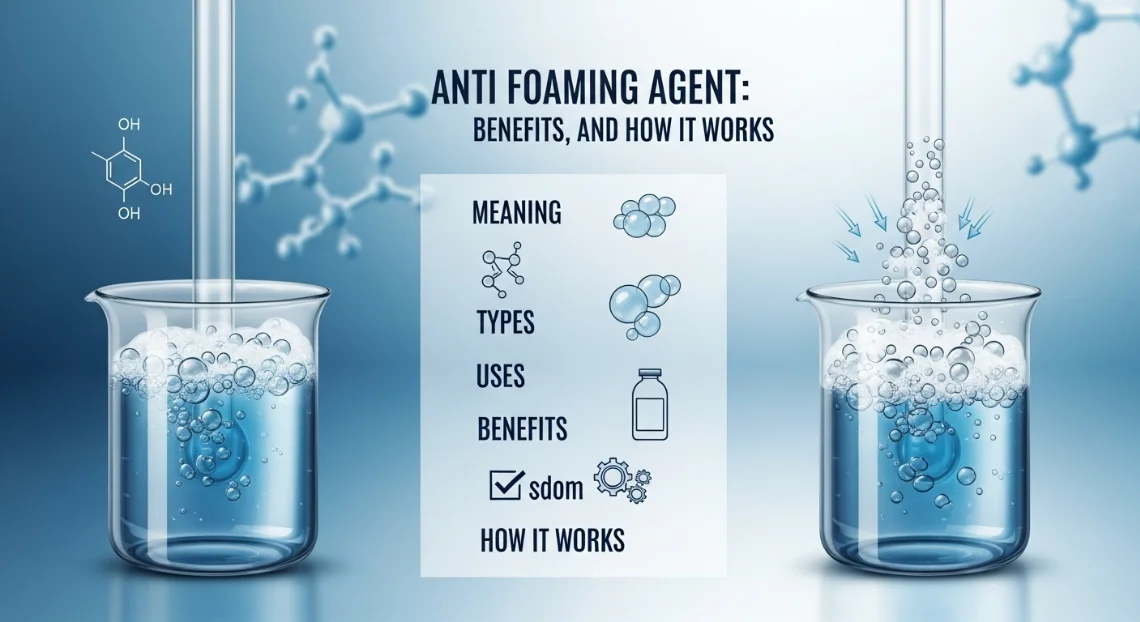
An anti foaming agent is a substance that helps stop foam from forming or breaks down foam that is already present. It works during processing and keeps liquids running smoothly without air bubbles or thick foam layers.
Foam problems are seen in many industries such as chemicals, food and beverage, pharmaceuticals, wastewater treatment, paints, coatings, paper, and detergents. In these processes, foam can cause overflow, poor mixing, measurement errors, and production delays.
This guide explains what an anti foaming agent is, how it works, its types, uses, and benefits. The content is written in simple language to help you clearly understand foam control and choose the right solution for your process.
What Is an Anti Foaming Agent?
An anti foaming agent is a chemical substance used to reduce or prevent foam in liquids. Foam forms when air mixes with liquid and creates many small bubbles. In many industrial and commercial processes, too much foam can cause problems. An anti foaming agent helps control this foam so machines and systems can work smoothly.
Difference Between Foam and Surface Bubbles
Foam and surface bubbles may look similar, but they are not the same.
- Foam is a mass of many connected bubbles on the surface of a liquid. Foam is stable and does not break easily. It can cover large areas and affect the process.
- Surface bubbles are small, loose bubbles that form on the liquid’s surface. They are usually short-lived and break quickly without forming thick foam.
Understanding the difference is important because foam can block equipment, slow down filters, and reduce product quality. Surface bubbles are normal and usually not a problem on their own.
How Anti Foaming Agents Control Foam
Anti foaming agents work by reducing the strength of the foam bubbles. They do this in two ways:
- Breaking existing foam: When foam has already formed, the anti foaming agent breaks the thin walls between bubbles. This causes the foam to collapse quickly and disappear.
- Preventing new foam: Anti foaming agents also stop new foam from forming by making it harder for air andliquid to form stable bubbles.
Anti foaming agents spread quickly across the liquid surface and change the surface tension. This helps bubbles burst easily and prevents large foam layers from forming.
Simple Practical Explanation
Think of foam as a crowd of tiny soap bubbles sticking together. An anti foaming agent is like a special oil that stops the bubbles from sticking. When this oil touches the foam, the bubbles break and the surface becomes flat again. In industries, this helps machines run without blockages and keeps products free from thick foam.
Anti foaming agents are used in many areas where foam can cause trouble, such as food processing, wastewater treatment, paint production, and chemical manufacturing. They help improve efficiency, reduce delays, and protect equipment.
Why Foam Forms in Industrial Processes?
Foam forms in liquids when tiny air bubbles get trapped in the liquid and do not pop quickly. In many industrial processes, foam is a common issue because of the way liquids are moved, mixed, or treated. Understanding why foam forms helps in choosing the right solution to control it.
Main Causes of Foam Formation
There are a few main reasons foam forms in industrial systems:
- Air contact: When air enters liquids during pouring, pumping, or mixing, it can get trapped and form bubbles.
- Agitation: Fast stirring, shaking, or spraying of liquids creates motion that traps air and makes foam.
- Surfactants and chemicals: Some chemicals reduce the surface tension of liquids. This makes it easier for bubbles to form and stay stable. Surfactants are common in detergents, food products, and many chemical solutions.
- Heat and pressure changes: When liquid is heated or pressure is changed quickly, it can release gas and form foam.
How Air, Agitation and Chemicals Play a Role?
- Air: The presence of air is essential for foam to form. Without air, bubbles cannot form.
- Agitation: Moving the liquid too fast creates many surfaces for air to stick to, forming more bubbles.
- Surfactants and some chemicals: These make the bubble walls stronger so the bubbles do not break easily. Soap, detergents, proteins, and polymers often act like this.
Industries Where Foam Is a Big Problem
In the food and beverage industry, foam forms during mixing, heating, fermentation, and cleaning. It can affect filling accuracy, slow down production lines, and lower product quality.
In wastewater treatment plants, foam is caused by detergents, organic waste, and biological activity. Excess foam can overflow tanks and disturb the treatment process.
In chemical manufacturing, many raw materials act as surfactants. During reactions and mixing, foam becomes stable and difficult to control, affecting process safety and efficiency.
In the paints, coatings, and inks industry, foam forms during mixing and application. This can lead to surface defects, air pockets, and poor finish quality.
In pulp and paper production, foam appears during pulping and washing stages. It reduces drainage speed and lowers machine performance.
In pharmaceutical and detergent manufacturing, foam interferes with accurate dosing and uniform mixing. This can affect consistency and final product quality.
Problems Caused by Uncontrolled Foam
One common problem is overflow from tanks and vessels. Foam expands quickly and spills out, causing product loss and safety risks.
Foam can block pipes, filters, and sensors. This leads to incorrect readings, reduced flow, and unexpected system shutdowns.
Uncontrolled foam often slows down production. It reduces mixing efficiency and increases processing time.
Foam can damage pumps and valves when air enters liquid-handling equipment, leading to wear and frequent maintenance.
It also affects product quality by causing uneven texture, contamination, or measurement errors.
Frequent cleaning, downtime, and wasted materials due to foam result in higher operating costs and reduced productivity.
How an Anti Foaming Agent Works?
An anti foaming agent works by controlling air bubbles in liquids. It stops foam from building up and helps processes run smoothly. To understand this better, it is important to look at how it acts inside a liquid system.
Basic Working Mechanism of Anti Foaming Agents
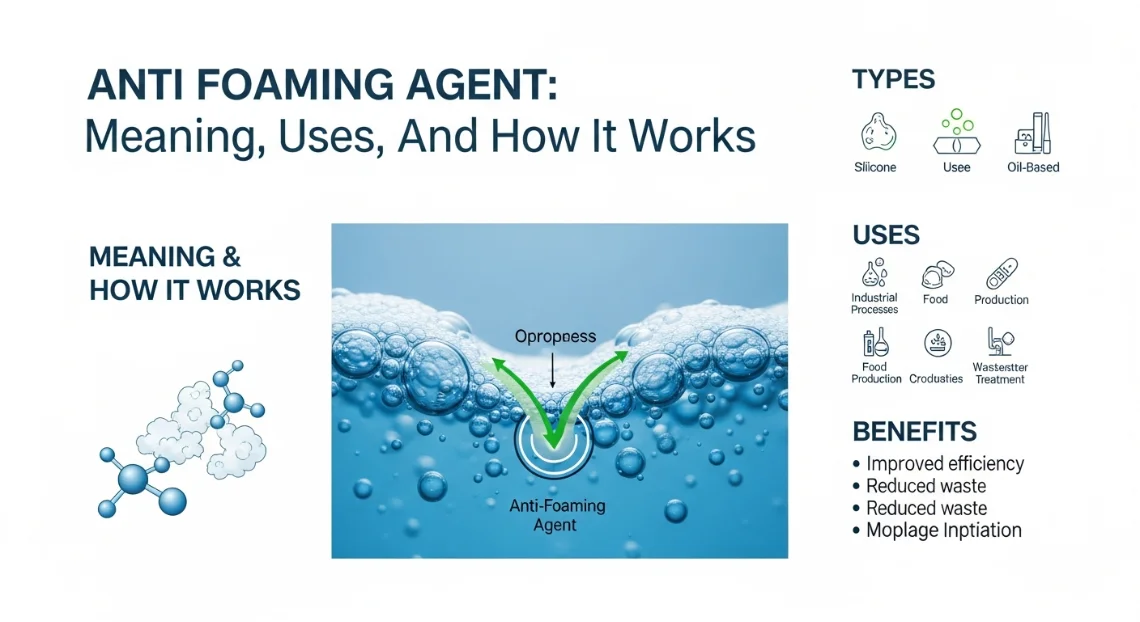
Anti foaming agents work by spreading quickly over the surface of the liquid. They do not mix fully with the liquid. Instead, they stay as tiny droplets. When these droplets reach foam bubbles, they weaken the bubble walls. This makes the bubbles unstable and easy to break.
Most anti foaming agents are designed to act fast and work in small amounts. Even a low dose can control foam if applied correctly.
How Anti Foaming Agents Break Existing Foam
When foam has already formed, the anti foaming agent attacks the thin liquid film around each bubble. It enters this film and reduces its strength. As a result, the bubble walls collapse and the trapped air escapes.
Once the bubbles break, the foam layer reduces quickly. This helps prevent overflow, blockages, and process delays. This action is often called foam knockdown.
How Anti Foaming Agents Prevent New Foam Formation
Anti foaming agents also help stop new foam from forming. They stay active in the liquid and make it difficult for air to create stable bubbles. When air enters the system, the bubbles break before they can join together and form foam.
This is useful in continuous processes where mixing, pumping, or heating happens for a long time.
Effect on Surface Tension and Bubble Stability
Foam stays stable because of surface tension. Anti foaming agents change this balance. They reduce bubble stability without affecting the main liquid properties.
By lowering the strength of bubble walls, the agent makes bubbles burst faster. This keeps the liquid surface clear and smooth, even under strong agitation.
Because of this action, anti foaming agents are widely used in industries where foam control is critical for safety, quality, and efficiency.
Types of Anti Foaming Agents
Anti foaming agents are available in different types. Each type is made for specific process conditions, liquids, and industries. Choosing the right type helps in better foam control and stable operations.
Silicone-Based Anti Foaming Agents
Silicone-based anti foaming agents are widely used because they work very effectively at low doses. They spread quickly on the liquid surface and break foam fast. These agents are stable at high temperatures and work well in both acidic and alkaline conditions. Silicone-based types are commonly used in chemical processing, wastewater treatment, paper manufacturing, and food processing, including food-grade applications.
Oil-Based Anti Foaming Agents
Oil-based anti foaming agents are made using mineral oils or vegetable oils. They are often mixed with hydrophobic particles to improve foam breaking action. These agents are suitable for heavy foam and thick liquids. Oil-based types are commonly used in fermentation, textile processing, paints, and coatings. They are cost-effective and easy to apply but may not work well in very clean or sensitive systems.
Water-Based Anti Foaming Agents
Water-based anti foaming agents are diluted systems that are easy to mix with water-based processes. They are safer to handle and easier to clean from equipment. These agents are mainly used in food processing, pharmaceuticals, and detergent manufacturing. Water-based types are ideal where oil or silicone residues are not preferred.
Powder Anti Foaming Agents
Powder anti foaming agents are solid forms used in dry or powdered products. They release the active agent when mixed with liquid during processing. These are commonly used in cement, dry detergents, and powdered food products. Powder types are easy to store and have a long shelf life.
Comparison of Anti Foaming Agent Types and Uses
Silicone-based agents offer strong and long-lasting foam control. Oil-based agents are good for heavy foam and cost-sensitive applications. Water-based agents are preferred for clean and regulated processes. Powder agents are best for dry systems. Selecting the right type depends on process conditions, industry needs, and product requirements.
Key Ingredients Used in Anti Foaming Agents
Anti foaming agents are made using a combination of active and supporting ingredients. Each ingredient has a specific role in breaking foam and preventing it from forming again. The final performance depends on how these ingredients work together.
Silicone Compounds in Anti Foaming Agents
Silicone compounds are one of the most effective ingredients used in anti foaming agents. They spread very quickly over the liquid surface and weaken foam bubbles. Silicone works well at high temperatures and in harsh chemical conditions. Because of strong performance at low dosage, silicone compounds are widely used in chemical processing, wastewater treatment, and food-grade applications.
Mineral and Vegetable Oils
Mineral oils and vegetable oils are commonly used in oil-based anti foaming agents. These oils enter the foam structure and disturb the bubble walls. Vegetable oils are often chosen for food and eco-friendly applications, while mineral oils are used in industrial processes. Oils are effective for thick liquids and heavy foam conditions.
Hydrophobic Particles
Hydrophobic particles do not mix with water. When added to anti foaming agents, they help puncture the foam bubbles. These particles sit inside the bubble wall and cause it to break. They improve foam knockdown and increase the working life of the anti foaming agent. Hydrophobic silica is a common example.
Emulsifiers and Carriers
Emulsifiers help keep the active ingredients evenly mixed, especially in water-based systems. Carriers such as water or oil help deliver the active ingredients to the foam surface. These components improve stability, ease of handling, and proper dispersion during use.
How Ingredients Affect Anti Foaming Performance
Each ingredient affects how fast the foam breaks, how long control lasts, and how well the agent works in different conditions. Silicone gives fast and long-lasting control. Oils handle heavy foam. Hydrophobic particles improve bubble breaking. Emulsifiers ensure smooth application. A well-balanced formula gives reliable foam control across different industries and processes.
Applications of Anti Foaming Agents
Anti foaming agents are used in many industries where foam affects process efficiency, product quality, and equipment safety. Each industry uses specific types based on its process needs.
Anti Foaming Agents in Food and Beverage Industry
In the food and beverage industry, foam forms during mixing, cooking, fermentation, and cleaning processes. Anti foaming agents help control foam in products like sugar solutions, juices, dairy products, brewing, and food processing lines. Food-grade anti foaming agents are used to ensure safety and product quality while maintaining smooth production.
Use in Pharmaceutical Manufacturing
Pharmaceutical manufacturing requires strict process control and cleanliness. Foam can affect accurate dosing, mixing, and filtration. Anti foaming agents are used during fermentation, liquid mixing, and formulation processes to ensure uniform products and stable operations. Only approved and controlled formulations are used in this industry.
Role in Chemical Processing
Chemical processing often involves surfactants, solvents, and reactions that create stable foam. Anti foaming agents help prevent foam buildup in reactors, mixers, and storage tanks. This improves reaction efficiency, reduces overflow risk, and protects equipment from damage.
Application in Wastewater Treatment
In wastewater treatment plants, foam forms due to organic waste, detergents, and biological activity. Anti foaming agents help control surface foam in aeration tanks and treatment basins. This ensures proper oxygen transfer and smooth operation of treatment systems.
Use in Paints, Coatings, and Inks
Foam in paints, coatings, and inks causes defects like craters and pinholes. Anti foaming agents are added during manufacturing and application to improve surface finish and product appearance.
Application in Pulp and Paper Industry
Foam affects washing, drainage, and paper formation in pulp and paper production. Anti foaming agents improve machine speed, sheet quality, and process stability.
Use in Textile and Detergent Production
In textile processing and detergent manufacturing, foam interferes with washing, dyeing, and mixing processes. Anti foaming agents help maintain process control and consistent product performance.
Benefits of Using an Anti Foaming Agent
Using an anti foaming agent offers many advantages in industrial and commercial processes. It helps control foam effectively and supports smooth, safe, and cost-efficient operations.
Improved Process Efficiency
Foam slows down production by blocking flow, reducing mixing efficiency, and disturbing measurements. Anti foaming agents keep the liquid surface clear, allowing processes to run at the desired speed. This improves overall system performance and ensures stable operation, especially in continuous processes.
Better Product Quality
Uncontrolled foam can trap air inside the product and cause uneven texture, defects, or contamination. By controlling foam, anti foaming agents help maintain uniform mixing and accurate dosing. This results in consistent product quality, better appearance, and improved performance of the final product.
Reduced Production Downtime
Foam often causes overflows, equipment alarms, and unplanned shutdowns. These issues lead to production delays and frequent cleaning. Anti foaming agents reduce foam-related interruptions, allowing processes to run longer without stoppage. This increases productivity and saves time.
Equipment Protection
Foam can enter pumps, valves, and sensors designed to handle liquids only. This can cause wear, damage, and early equipment failure. Anti foaming agents protect equipment by keeping air and foam out of sensitive components. This helps extend equipment life and reduce maintenance needs.
Cost Savings in Industrial Operations
Foam control reduces product loss, cleaning costs, and maintenance expenses. Lower downtime and improved efficiency lead to better use of resources. Since anti foaming agents work at low dosage, they offer effective foam control without high chemical consumption. Overall, using the right anti foaming agent helps industries lower operating costs while improving performance and reliability.
Anti Foaming Agent vs Defoaming Agent
Anti foaming agents and defoaming agents are both used to control foam, but they are used at different stages of a process. Understanding the difference helps in choosing the right solution.
Key Difference Between Anti Foaming and Defoaming Agents
The main difference lies in when they are used. An anti foaming agent is added before foam becomes a problem. It works continuously to stop foam from forming. A defoaming agent is used after foam has already formed. It is mainly used to quickly break down existing foam.
Anti foaming agents focus on long-term foam control, while defoaming agents focus on fast foam removal.
When to Use an Anti Foaming Agent
Anti foaming agents are best used in processes where foam is expected to form regularly. They are added at the start of the process or during continuous operation. These agents help prevent foam buildup during mixing, pumping, heating, or fermentation.
They are commonly used in food processing, wastewater treatment, chemical reactors, and continuous production systems where stable foam control is needed over time.
When Defoaming Agents Are More Suitable
Defoaming agents are used when foam appears suddenly and needs to be removed quickly. They act fast and collapse foam on contact. These agents are useful in emergency situations such as tank overflow, unexpected foam spikes, or batch processes.
Defoaming agents are often used during maintenance, cleaning cycles, or when foam formation is not constant.
Common Industry Terminology Explained
In many industries, the terms anti foaming agent and defoamer are used interchangeably. However, technically, anti foaming refers to foam prevention, while defoaming refers to foam removal.
Some products are designed to work as both. These are often called anti foaming and defoaming agents. Understanding this terminology helps in selecting the correct product for effective foam control.
How to Choose the Right Anti Foaming Agent
Choosing the right anti foaming agent is important for effective foam control. The wrong product may reduce performance or create new problems in the process. Several factors should be considered before selection.
Process Conditions to Consider
Start by understanding your process. Check whether the system is batch or continuous, how much agitation is involved, and how often foam forms. The type of liquid, flow speed, and presence of surfactants also affect foam behavior. An anti foaming agent must match these conditions to work properly.
Temperature and pH Compatibility
Temperature and pH have a strong effect on foam control. Some anti foaming agents lose effectiveness at high temperatures or extreme pH levels. Silicone-based agents usually perform well under heat and wide pH ranges. Always choose a product that remains stable under your operating conditions.
Food-Grade and Regulatory Requirements
In food, beverage, and pharmaceutical processes, only approved anti foaming agents can be used. These products must meet safety and regulatory standards. Using non-approved chemicals can lead to compliance issues and product rejection. Always check certifications before use.
Long-Term Foam Control vs Quick Foam Knockdown
If foam forms continuously, choose an anti foaming agent designed for long-term control. These products prevent foam formation over time. If foam appears suddenly, a fast-acting defoaming agent may be more suitable. Some products offer both prevention and quick foam breaking.
Testing and Dosage Considerations
Anti foaming agents work best at low dosage. Using too much can reduce performance or affect the product. Always test the agent in small amounts before full-scale use. Proper testing helps find the right dosage and ensures stable foam control without waste.
Selecting the right anti foaming agent improves efficiency, protects equipment, and maintains consistent product quality.
Dosage and Method of Application
Correct dosage and proper application are important for effective foam control. Even the best anti foaming agent will not work well if it is added in the wrong way or in the wrong amount.
Recommended Dosage Guidelines
Anti foaming agents are usually effective at very low dosage. In most processes, a small amount is enough to control foam. The exact dosage depends on the type of liquid, foam level, temperature, and process speed. Always start with the lowest recommended dose and increase only if needed. Overdosing does not improve performance and may cause side effects.
When and Where to Add Anti Foaming Agents
Anti foaming agents work best when added before foam becomes severe. They are often added at points where foam is most likely to form, such as mixers, pumps, inlets, or reaction vessels. Early addition helps prevent foam buildup and keeps the process stable. In some systems, dosing can be done automatically for better control.
Continuous vs Batch Processing
In continuous processes, anti foaming agents are added slowly and regularly to maintain constant foam control. This helps prevent foam from forming over long periods. In batch processes, the agent is usually added at the start or when foam appears. The dosing method should match the process type to ensure consistent results.
Continuous vs Batch Processing
In continuous processes, anti foaming agents are added slowly and regularly to maintain constant foam control. This helps prevent foam from forming over long periods. In batch processes, the agent is usually added at the start or when foam appears. The dosing method should match the process type to ensure consistent results.
Common Mistakes to Avoid
One common mistake is using too much anti foaming agent. This can reduce effectiveness and affect product quality. Another mistake is adding the agent too late, after foam has already spread. Using the wrong type for the process or ignoring temperature and pH limits can also lead to poor foam control. Proper testing and correct application help avoid these problems and ensure reliable foam management.
Safety, Handling, and Storage Guidelines
Anti foaming agents are generally safe when used correctly. Following proper safety, handling, and storage practices helps maintain product quality and protects people and the environment.
Safe Handling Practices
Always handle anti foaming agents according to the supplier’s safety instructions. Wear basic protective equipment such as gloves and eye protection, especially when handling concentrated products. Avoid direct contact with skin and eyes. In case of spills, clean the area promptly to prevent slipping hazards. Good ventilation is recommended during handling, particularly in enclosed spaces.
Proper Storage Conditions
Anti foaming agents should be stored in tightly closed containers to prevent contamination. Keep them in a cool, dry place away from direct sunlight and heat sources. Extreme temperatures can affect product performance. Some products may separate if exposed to freezing or excessive heat, so storage temperature should match supplier recommendations.
Shelf Life and Stability Considerations
Most anti foaming agents have a defined shelf life, usually ranging from 6 months to several years. Over time, ingredients may separate or lose effectiveness. Always check the manufacturing date and use the product within the recommended period. Stir or mix the product before use if separation occurs. Using expired products can reduce foam control efficiency.
Environmental and Health Aspects
Many modern anti foaming agents are designed to be environmentally responsible. Some formulations are biodegradable and suitable for wastewater systems. Food-grade products meet strict safety standards for human contact. However, improper disposal can cause environmental issues. Dispose of unused material and empty containers according to local regulations. Understanding environmental impact helps industries maintain safe and responsible operations while controlling foam effectively.
Regulatory and Compliance Considerations
Using anti foaming agents in industrial processes requires attention to regulatory and compliance standards. Following these rules ensures safety, product quality, and legal adherence.
Food-Grade Approvals
In the food and beverage industry, only approved anti foaming agents can be used. Food-grade agents are tested and certified to meet safety standards for human consumption. Regulatory bodies, such as the FDA, EFSA, or local authorities, provide guidelines on safe usage levels. Using non-approved agents can lead to product rejection, fines, or health risks. Always verify certifications before using an agent in food or pharmaceutical processes.
Industrial Safety Standards
Industries handling chemicals must follow safety standards for storage, handling, and usage. Anti foaming agents must comply with these standards to protect workers and prevent accidents. Proper labeling, personal protective equipment, and safe handling procedures are essential to meet industrial safety requirements. Training staff on correct usage reduces workplace hazards.
Environmental Regulations
Many anti foaming agents, especially in wastewater treatment or chemical processing, can affect the environment if not managed properly. Environmental regulations control discharge limits, chemical disposal, and biodegradability requirements. Using approved and environmentally friendly agents ensures compliance and reduces environmental impact.
Importance of Compliance in Manufacturing
Compliance is crucial for smooth and legal operations. Non-compliance can result in fines, product recalls, or legal action. Regulatory adherence also protects company reputation and ensures consumer trust. Selecting anti foaming agents that meet all regulatory requirements helps maintain consistent quality, safe working conditions, and responsible environmental practices.
Following these regulatory and compliance measures ensures that foam control is effective, safe, and legally approved across different industries.
Common Problems and Troubleshooting
Even the best anti foaming agents may face challenges if used incorrectly or under unsuitable conditions. Understanding common problems and how to fix them ensures effective foam control and smooth operations.
Anti Foaming Agent Not Working Effectively
Sometimes an anti foaming agent may not control foam as expected. This can happen if the wrong type is used for the process, if the dosage is too low, or if the liquid has high surfactant levels. In such cases, foam persists despite treatment. To solve this, review the process conditions, check the type of agent, and adjust the dosage according to supplier recommendations.
Overdosing Issues
Using too much anti foaming agent can also cause problems. Excess agent may form a thin oil layer on the liquid, affect product quality, or reduce foam control efficiency. Overdosing can also increase chemical costs unnecessarily. Always start with the minimum recommended dose and gradually increase if required. Regular testing helps prevent overdosing.
Compatibility Problems
Compatibility issues occur when the anti foaming agent does not mix well with the liquid or reacts with chemicals in the process. This can reduce performance or cause separation. Check chemical compatibility before use, especially in processes involving strong acids, bases, or reactive compounds. Selecting an agent suitable for the temperature, pH, and liquid type is critical.
How to Fix Foam Control Failures
To fix foam control failures, first identify the cause—wrong type, low dose, poor mixing, or incompatible conditions. Replace or adjust the agent as needed. Ensure correct addition points in the system and monitor foam levels regularly. Testing small-scale samples before full application helps find the right solution. Proper maintenance, correct handling, and following supplier guidelines prevent repeated failures and maintain effective foam control.
Future Trends in Anti Foaming Agents
The anti foaming agent industry is evolving to meet new environmental, regulatory, and industrial demands. Innovations focus on safer, more effective, and sustainable foam control solutions.
Eco-Friendly and Biodegradable Options
Environmental concerns are driving the development of eco-friendly anti foaming agents. Biodegradable formulations break down naturally without harming water systems or soil. These agents are especially important in wastewater treatment, food processing, and chemical industries where environmental regulations are strict. Companies are increasingly choosing green solutions to reduce pollution and meet sustainability goals.
Silicone-Free Formulations
While silicone-based agents are highly effective, there is a growing demand for silicone-free alternatives. Silicone-free formulations are preferred in industries where residue can affect product quality, such as in paints, coatings, adhesives, and food applications. These alternatives maintain foam control without leaving unwanted films or affecting surface finishes.
Industry Demand Trends
The demand for anti foaming agents is increasing due to industrial expansion, stricter environmental standards, and the growth of food, pharmaceutical, and chemical sectors. Continuous production processes and complex formulations in modern manufacturing require reliable foam control. This trend encourages the development of agents that are effective under high temperature, high shear, and extreme pH conditions.
Innovations in Foam Control Technology
New technologies focus on improving efficiency and reducing chemical use. Innovations include smart dosing systems, more stable formulations for long-term foam control, and multifunctional agents that act as both anti foaming and defoaming agents. Research is also targeting better performance in challenging processes like high-viscosity liquids, high-speed mixing, and environmentally sensitive applications.
The future of anti foaming agents lies in sustainable, high-performance, and versatile solutions that meet industrial needs while protecting the environment. Industries are moving toward safer, cleaner, and more efficient foam control methods that improve product quality and operational efficiency.
Market of Anti Foaming Agents
The market for anti foaming agents is growing steadily around the world. As industries expand and face stricter quality and environmental standards, the demand for reliable foam control solutions has increased. Anti foaming agents are no longer limited to traditional sectors like wastewater treatment and chemical processing. They are now essential in many modern industries including food and beverage, pharmaceuticals, paints and coatings, textiles, and consumer goods.
One key driver of market growth is the rise in industrial automation and continuous processing. Automated systems often involve high-speed mixing and constant agitation, which increases foam formation. Companies invest in effective anti foaming agents to ensure smooth operations and reduce downtime. Another driver is stringent environmental and safety regulations. Manufacturers prefer products that meet regulatory requirements for biodegradability, low toxicity, and food-grade safety. This has increased demand for eco-friendly and certified formulations.
The Asia-Pacific region has become a major market for anti foaming agents due to rapid industrialization in countries such as China, India, and Southeast Asian nations. Growth in manufacturing, wastewater management, and food processing industries contributes to higher consumption of foam control products in this region. North America and Europe also show strong demand, supported by advanced industrial facilities and strict regulatory frameworks. Companies in these regions focus on innovation, quality, and regulatory compliance.
Market trends show a shift toward specialized anti foaming agents designed for specific applications, such as high-temperature processes, sensitive manufacturing like pharmaceuticals, and biodegradable options for environmental safety. Manufacturers are developing value-added products that offer both foam prevention and long-term performance with minimal dosage.
Overall, the market for anti foaming agents is expected to continue growing as industries adopt better foam control practices. Increasing focus on product quality, operational efficiency, and environmental responsibility will support ongoing demand worldwide.
Conclusion
Anti foaming agents play a critical role in modern industrial and commercial processes. They prevent foam formation, break existing foam, and ensure smooth operations across many sectors, including food and beverage, pharmaceuticals, chemical processing, wastewater treatment, paints, paper, and textiles. Using the right type of anti foaming agent improves efficiency, protects equipment, maintains product quality, and reduces costs.
Choosing the correct agent depends on process conditions, temperature, pH, regulatory requirements, and whether long-term foam control or quick foam knockdown is needed. Proper dosage, correct application, and understanding of compatibility are essential for effective performance. Safety, handling, storage, and regulatory compliance are also key to using these chemicals responsibly.
The market for anti foaming agents is growing globally, driven by industrial expansion, stricter environmental standards, and increasing demand for eco-friendly, high-performance solutions. Innovations such as biodegradable formulations, silicone-free options, and multifunctional agents are shaping the future of foam control.
In summary, anti foaming agents are not just chemicals—they are essential tools for maintaining smooth, safe, and efficient industrial operations. Selecting the right product, applying it correctly, and following best practices ensures reliable foam control, higher productivity, and better product quality in any industry.
FAQs on Anti Foaming Agents
1. What is an anti foaming agent?
An anti foaming agent is a chemical that prevents or reduces foam in liquids. It keeps processes smooth and avoids problems caused by excess foam.
2. How does an anti foaming agent work?
It works by breaking existing foam bubbles and preventing new ones from forming. It changes the surface tension of the liquid so bubbles collapse easily.
3. What is the difference between anti foaming and defoaming agents?
Anti foaming agents prevent foam from forming, while defoaming agents remove foam that has already formed.
4. What industries use anti foaming agents?
They are used in food and beverage, pharmaceuticals, chemicals, wastewater treatment, paints, pulp and paper, textiles, and detergents.
5. Are anti foaming agents safe for food and beverages?
Yes, food-grade anti foaming agents are approved by regulatory authorities and safe for use in food and beverage processes.
6. What types of anti foaming agents are available?
Common types include silicone-based, oil-based, water-based, and powder anti foaming agents. Each type is chosen based on process needs.
7. How should anti foaming agents be stored?
They should be stored in closed containers, in a cool, dry place away from direct sunlight and heat.
8. Can overdosing anti foaming agents cause problems?
Yes, using too much can reduce performance, affect product quality, and increase costs unnecessarily.
9. How do I choose the right anti foaming agent for my process?
Consider temperature, pH, process type, foam frequency, regulatory requirements, and whether you need long-term control or quick foam removal.
10. How is an anti foaming agent applied?
It can be added at points where foam forms, such as mixers, pumps, or tanks. In continuous processes, dosing can be gradual and regular; in batch processes, it’s added at the start or when foam appears.
11. Can anti foaming agents be used in high-temperature processes?
Yes, silicone-based and some oil-based agents are stable at high temperatures and work well under extreme conditions.
12. Are there eco-friendly anti foaming agents?
Yes, biodegradable and environmentally safe formulations are available for industries like wastewater treatment and food processing.
13. How long does an anti foaming agent last in a process?
The effect depends on the type, process conditions, and dosage. Some agents work continuously, while others may need reapplication.
14. Can anti foaming agents damage equipment?
No, when used correctly. They protect equipment by preventing foam from entering pumps, valves, and sensors.
15. What should I do if foam control fails?
Check the type of agent, dosage, application points, and process conditions. Adjust or replace the agent as needed and test in small quantities before full application.