
What Is Phenyl Trimethicone?
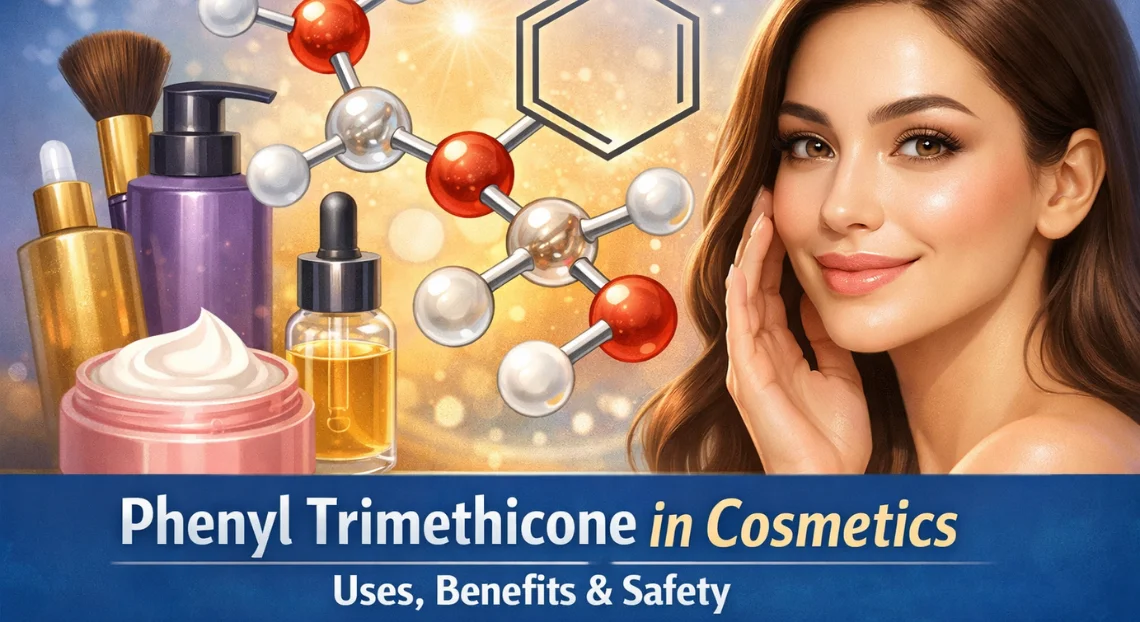
Phenyl trimethicone is a synthetic silicone polymer used in cosmetics and personal care products. From a chemistry point of view, it is a modified silicone fluid made by attaching phenyl groups to a trimethicone (silicone) backbone.
Silicones are made from silicon, oxygen, carbon, and hydrogen. In phenyl trimethicone, the added phenyl groups change how the silicone behaves. These groups improve light reflection, spreadability, and surface smoothness, which makes the ingredient useful in beauty products.
Phenyl trimethicone appears as a clear, colorless liquid. It is lightweight, non-sticky, and does not dissolve in water. Instead, it forms a smooth layer on skin or hair.
In cosmetics, phenyl trimethicone is used to improve shine, enhance texture, and create a smooth finish. It does not treat the skin or hair but helps products look better, feel better, and perform more evenly during use.
Chemical Nature of Phenyl Trimethicone
Understanding the Silicone Backbone
Phenyl trimethicone is built on a silicone backbone, which is a chain made from silicon and oxygen atoms. This backbone is flexible and stable, which is why silicone ingredients feel smooth and spread easily. The silicon-oxygen chain is different from natural oils because it does not break down easily and does not react with most other cosmetic ingredients. This makes phenyl trimethicone reliable and consistent in formulations.
Role of Phenyl Groups in the Structure
What makes phenyl trimethicone unique is the presence of phenyl groups attached to the silicone backbone. Phenyl groups are ring-shaped carbon structures. When these groups are added, they change how the silicone behaves. They increase compatibility with oils and pigments and improve how the ingredient interacts with light. This is why phenyl trimethicone is often used in makeup, hair serums, and shine-focused products.
Why This Structure Improves Shine and Texture?
The combination of the silicone backbone and phenyl groups allows phenyl trimethicone to form a smooth, even layer on hair or skin. This layer fills in surface roughness and reflects light more evenly. As a result, hair looks glossier and skin appears smoother. Because it stays on the surface instead of absorbing, it improves texture and shine without making products feel heavy or greasy.
Key Physical and Functional Properties of Phenyl Trimethicone
Smooth Texture and Light Feel
Phenyl trimethicone has a smooth and silky texture that feels light on the skin and hair. It does not feel greasy or heavy, even when applied in small amounts. This makes it suitable for products where a soft, pleasant feel is important, such as lotions, serums, and conditioners. Because it spreads easily, it helps products glide on without tugging or sticky residue.
High Gloss and Light Reflection
One of the main reasons phenyl trimethicone is used in cosmetics is its ability to reflect light and create shine. The phenyl groups in its structure help bounce light off the hair or skin surface. This results in a visible gloss that makes hair look healthy and skin appear smoother. Shampoos, hair oils, and makeup products use phenyl trimethicone to enhance shine without weighing down the product.
Water Resistance on Surface
Phenyl trimethicone is not soluble in water. When applied, it forms a thin, water-resistant layer on the surface of hair or skin. This layer helps products last longer and reduces the chance of them washing off quickly. In sunscreens and makeup, this property improves durability.
Easy Spreadability and Slip
Phenyl trimethicone has excellent spreadability, which means it moves easily across the skin or hair. It provides good “slip,” allowing products to be applied smoothly and evenly. This improves the application experience and makes products feel more luxurious by reducing friction during use.
How Phenyl Trimethicone Works in Cosmetic Formulations
Coating Action on Hair and Skin
Phenyl trimethicone works mainly by forming a thin layer on the surface of hair and skin. When a product is applied, the ingredient spreads easily and settles into small grooves and uneven areas. On hair, this creates a smooth surface that reduces roughness and enhances shine. On skin, it fills in tiny lines and helps products glide evenly. This coating does not penetrate deeply but stays mainly on the outer surface where it can improve feel and appearance.
Film-Forming Behavior
Once applied, phenyl trimethicone forms a light, continuous film over the hair or skin surface. This film is flexible and remains intact without feeling heavy. It acts as a protective layer that helps reduce moisture loss by sealing the surface. In conditioners and serums, this film effect makes hair feel softer and look glossier. In skin care and makeup, the film helps products stay smooth and last longer, especially when combined with other long-lasting ingredients. The film also helps resist sweat and light water exposure without blocking the skin.
Interaction with Other Cosmetic Ingredients
Phenyl trimethicone is compatible with many other ingredients found in hair and skin products. It blends well with oils, emollients, and certain polymers, helping them spread more evenly. In hair formulas, it works with conditioning agents to improve slip and detangling. In makeup, it mixes with pigments and powders to improve spreadability and finish. Because it is stable and does not react easily, it can be included in products with active ingredients like sunscreens and vitamins without reducing their effectiveness. Overall, phenyl trimethicone improves texture, feel, and performance when used with common cosmetic components.
Benefits of Phenyl Trimethicone for Hair
Enhanced Shine and Gloss
Phenyl trimethicone adds noticeable shine to hair by forming a smooth, reflective layer on the hair surface. This layer helps light bounce off hair more evenly, making hair look healthier and glossier. It is especially useful in hair serums, shine sprays, and finishing products that aim to create a polished look without weighing hair down.
Smoothness and Frizz Control
One of the key benefits of phenyl trimethicone is its ability to smooth the hair surface. When applied, it fills in rough areas and reduces friction between strands. This reduces frizz and flyaways, making hair easier to manage. The smooth layer also helps hair feel softer and silkier to the touch.
Lightweight Conditioning Effect
Unlike heavy oils or conditioners, phenyl trimethicone provides a lightweight conditioning effect. It does not make hair greasy or sticky. Instead, it wraps hair strands in a thin, smooth film that improves texture without adding bulk. This makes it suitable for fine or oily hair types that need smoothness and shine without heaviness.
Support for Heat Styling and Protection
While phenyl trimethicone is not a heat protection agent on its own, its film-forming property helps support other heat protectants in styling products. The smooth layer it forms can reduce friction during hot styling, which may help minimize heat damage. In many heat styling sprays and creams, phenyl trimethicone works with other ingredients to improve overall styling results and help maintain hair condition.
Benefits of Phenyl Trimethicone for Skin
Improved Skin Feel and Texture
Phenyl trimethicone gives skin a smooth, soft feel after application. When it is included in creams, lotions, or serums, it creates a light, silky layer on the skin surface. This layer fills in tiny uneven areas and rough patches, making the skin feel more even and comfortable. The result is a pleasant texture that is noticeable right after use.
Smooth and Even Product Application
Because phenyl trimethicone spreads easily, it helps other ingredients in a product apply more evenly across the skin. When you use a foundation, moisturizer, or sunscreen that contains this ingredient, it glides over the skin without tugging or pulling. This makes application easier and helps the product cover more area with less effort.
Non-Greasy Finish
One of the key benefits of phenyl trimethicone is that it provides a non-greasy finish. Unlike some oils and heavy emollients, it does not leave a heavy or oily feel. Instead, it gives a soft, matte-like surface that feels light. This makes it suitable for people with normal, combination, or oily skin who want smoothness without excess shine.
Enhanced Makeup Appearance
Phenyl trimethicone can improve the look and performance of makeup. In foundations, BB creams, and primers, it helps pigments spread smoothly and stick better to the skin. The thin, even layer it forms can reduce the appearance of fine lines and surface irregularities. This leads to a more polished, natural makeup finish that lasts longer throughout the day.
Common Uses of Phenyl Trimethicone in Cosmetic and Personal Care Products
Use in Hair Care Products
Phenyl trimethicone is widely used in hair care products to improve shine and manageability. It appears in shampoos, conditioners, hair serums, and styling creams. In these products, it helps the formula spread easily and leaves a smooth, glossy finish on the hair surface. In leave-in serums and oils, it enhances shine and reduces frizz without weighing hair down. In conditioners, it adds slip that makes detangling easier during rinsing.
Use in Skin Care Products
In skin care, phenyl trimethicone is found in moisturizers, lotions, and skin serums. It helps these products apply smoothly and gives a softer feel to the skin. Because it forms a light layer on the surface, it can improve texture without leaving an oily residue. Its non-greasy feel makes it suitable for daily moisturizers and lightweight creams, especially for normal and combination skin types.
Use in Color Cosmetics
Phenyl trimethicone is also used in makeup products such as foundations, primers, and powders. In these formulations, it helps pigments spread evenly and makes application easier. It improves the finish of the makeup by smoothing the surface and enhancing the look of coverage. In primers, it creates a smooth base that helps foundation last longer.
Use in Sunscreens and Primers
In sunscreens and face primers, phenyl trimethicone improves spreadability and helps the product feel light and smooth after application. It also supports long-wear performance by helping form a uniform, comfortable layer on the skin. This makes sunscreens easier to apply and more pleasant to wear throughout the day.
Safety, Skin Compatibility, and Regulations of Phenyl Trimethicone
Safety Profile in Cosmetics
Phenyl trimethicone has been evaluated by expert scientific bodies and regulatory authorities and is considered safe for use in cosmetic and personal care products. Independent safety reviews by the Expert Panel for Cosmetic Ingredient Safety found that it is non-toxic and non-irritating when used in normal cosmetic concentrations. Tests show it is not a sensitizer or a strong irritant to skin and eyes at typical use levels, and it does not pose a known health risk when used as intended in hair and skin products.
Suitability for Different Skin Types
Phenyl trimethicone is generally well-tolerated by most skin types, including normal, dry, combination, and oily skin. It has a lightweight feel and a non-greasy finish, making it suitable even for facial products like moisturizers and makeup primers. Because it is non-comedogenic, it is unlikely to clog pores or cause acne for most people. Rarely, individuals with very sensitive skin may experience mild irritation; in such cases, testing a small area first is recommended.
Regulatory Status and Approvals
Phenyl trimethicone is approved for use in cosmetics in major markets, including the United States and the European Union. In the U.S., safety assessments by cosmetic industry expert panels support its continued use in personal care formulas. In the EU, it is permitted under the general cosmetics regulation, which requires that all products placed on the market must be safe for human health when used under normal conditions. The ingredient is not listed as prohibited or restricted, meaning there are no specific bans or concentration limits, though manufacturers must ensure overall product safety before sale.
Overall, phenyl trimethicone is widely used in hair and skin products because it is stable, gentle, and compatible with many formulations. Patch testing any new product remains a good practice, especially for those with known sensitivities.
Does Phenyl Trimethicone Clog Pores or Cause Build-Up?
Comedogenic Concerns Explained
Phenyl trimethicone is a silicone-based ingredient that forms a light, flexible film on the surface of skin rather than penetrating deep into pores. Because of its large molecular size and structure, it has a low potential to clog pores or cause acne in most people. In ingredient rating systems, phenyl trimethicone scores low on comedogenic scales, meaning it is unlikely to block pores under normal use. However, individuals with extremely acne-prone skin or those who layer many heavy products without thorough cleansing may notice occasional congestion, as any film-forming ingredient can trap sweat, oil, or debris on the skin surface if not removed properly.
Hair Build-Up Myths versus Facts
On hair, phenyl trimethicone works by coating each strand with a light layer that improves shine and smoothness. It does not penetrate into the hair shaft but stays mostly on the outside. Because it is not water-soluble, repeated use of products containing silicones — including phenyl trimethicone — can lead to product residue over time if hair is not washed regularly. This residue may make hair feel limp, heavy, or less responsive to styling. The idea that it “suffocates” hair is a myth; the buildup comes from the physical layer of silicones and other styling ingredients remaining on the surface, not from internal blockage of hair structure.
How It Behaves with Regular Washing?
With proper cleansing, phenyl trimethicone is usually removed from hair and skin without difficulty. Regular shampooing or facial cleansing helps lift away the silicone layer along with oils and dirt. In hair care, occasional use of a clarifying shampoo can help prevent residue build-up from silicone-rich styling products. On skin, consistent cleansing at the end of the day ensures that the surface film does not trap impurities or contribute to congestion. Maintaining good hygiene practices reduces the chance of any unwanted buildup while still benefiting from the ingredient’s smoothing and shine-enhancing effects.
Environmental and Sustainability Considerations of Phenyl Trimethicone
Biodegradability of Phenyl Trimethicone
Phenyl trimethicone, like many silicone-based ingredients, is not readily biodegradable. This means it does not break down quickly through natural processes once it enters the environment. Because of its stable chemical structure, it can persist for a long time in soil and water without decomposing. Over time, phenyl trimethicone may slowly break down into simpler compounds, but this process can take many years. This persistence is a key factor in environmental discussions about silicones in personal care products.
Environmental Concerns Related to Silicones
Silicones, including phenyl trimethicone, are valued for their performance in cosmetics, but their environmental footprint raises concerns. Since they do not biodegrade easily, silicone residues can accumulate in waterways after rinsing products down the drain. This accumulation may affect aquatic environments and sediment. Although phenyl trimethicone is generally considered low in direct toxicity, its persistence means it can remain in the environment longer than naturally derived ingredients. These properties have led regulators and environmental groups to discuss how to manage silicone waste more effectively.
Current Industry Direction on Sustainability
The cosmetics industry is increasingly focused on sustainability and reduced environmental impact. Many brands are exploring biodegradable alternatives or reducing the use of long-lasting synthetic polymers like silicones in some product lines. Research methods such as improving recycling technologies or creating new silicone derivatives that break down more readily are part of ongoing development efforts. In addition, consumers who prioritize sustainability often choose products with ingredients that have a smaller environmental footprint. As awareness grows, manufacturers may offer more eco-friendly options while maintaining product performance.
In summary, phenyl trimethicone performs well in cosmetics, but its non-biodegradable nature is a key environmental consideration. This has prompted industry efforts to balance performance with ecological responsibility.
Typical Concentration Levels of Phenyl Trimethicone in Formulations
Common Usage Ranges in Products
Phenyl trimethicone is used at different levels depending on the type of product and the effect needed. In many hair oils, serums, and shine-enhancing products, formulators often include this ingredient in concentrations around 0.5% to 10% of the total formula to balance shine and feel without heaviness. In skin creams and lotions, it is commonly used around 1% to 5% to improve smoothness and spreadability while maintaining a light texture. In sunscreens and sprays, concentrations may also fall within similar ranges to help with spread and surface finish. In decorative cosmetics like lip glosses and foundations, the amount can vary more widely based on product design and performance goals.
Data from ingredient use surveys show that phenyl trimethicone has been found in cosmetic formulas at a broad range of concentrations, with some non-coloring hair products reporting use up to about 60% and certain leave-on makeup formulas using up to about 25% in specific cases. These higher levels are more common in specialized formulations or specific product types.
Why Concentration Matters in Formulation?
The concentration of phenyl trimethicone in a product affects both performance and feel. A lower concentration can provide subtle smoothing and light slip without making the product heavy. A moderate concentration enhances sheen and spread while still retaining a lightweight feel. At higher concentrations, the ingredient can significantly boost shine and surface texture but may increase the film-forming effect, which can change how the product feels on skin or hair.
Impact on Product Performance
When used at the right level, phenyl trimethicone improves spreadability, gloss, and smoothness without greasiness. Too little may not deliver noticeable benefits, while too much can make formulas feel overly slick or heavy. Formulators aim for the right balance to achieve desired effects like shine in hair products or smooth application in skin and makeup products.
Who Should Use Products Containing Phenyl Trimethicone
Hair Types That Benefit Most
Phenyl trimethicone works well for a wide range of hair types, especially those that need shine, smoothness, and easier styling. People with frizzy, dry, or chemically treated hair often notice improved manageability because the ingredient forms a thin, protective layer on hair strands that reduces roughness and improves gloss. Curly and textured hair types also benefit from reduced frizz and easier detangling when used in conditioners or leave-in serums. For fine or limp hair, phenyl trimethicone provides shine without heavy weight, helping hair look healthier without feeling greasy. Regular use in styling products supports overall hair appearance and feel.
Skin Types That Benefit Most
For skin, phenyl trimethicone is lightweight and non-greasy, making it suitable for normal, dry, combination, and oily skin. It forms a smooth surface layer that helps creams and makeup apply evenly and improves how products feel on the skin. Because it is generally non-comedogenic (unlikely to clog pores) and non-irritating, many people with oily or acne-prone skin can use products containing phenyl trimethicone without problems, as long as they cleanse the skin properly. People with sensitive skin also tend to tolerate it well, though any new product should be patch-tested if there is a history of irritation.
When to Avoid or Limit Use?
While phenyl trimethicone is suitable for most users, those with very sensitive skin or severe acne-prone skin may choose to monitor their response, since any film-forming ingredient can trap sweat or sebum if not removed thoroughly. People who prefer water-soluble or natural oil-based products may limit use, especially if they notice buildup on hair or skin. In such cases, clarifying shampoos for hair or careful cleansing routines for skin help prevent residue and maintain a fresh feel.
Overall, phenyl trimethicone is versatile and widely tolerated, but personal preferences and cleansing habits should guide regular use.
Frequently Asked Questions About Phenyl Trimethicone
1. Is phenyl trimethicone safe for daily use?
Yes, phenyl trimethicone is generally safe for daily use in hair and skin products when used in normal cosmetic concentrations. It is non-toxic and non-irritating for most users.
2. Is it suitable for oily skin?
Yes, it is lightweight and non-greasy, making it suitable for oily or combination skin. Proper cleansing helps prevent any surface buildup.
3. Is it good for curly or treated hair?
Yes, it helps reduce frizz, smooth the hair surface, and improve shine, which benefits curly, colored, or chemically treated hair.
4. Can it be used in leave-in products?
Yes, phenyl trimethicone is often used in leave-in conditioners, serums, and styling products because it forms a light, protective layer on hair without heaviness.
5. Is it a natural or synthetic ingredient?
Phenyl trimethicone is a synthetic silicone-based ingredient. It is not derived from natural oils but is designed for stability and performance.
6. Can it clog pores or cause acne?
It has a low risk of clogging pores. It stays mainly on the surface and is considered non-comedogenic. Proper cleansing prevents any potential surface buildup.
7. Does it build up on hair over time?
Phenyl trimethicone can leave a light residue if used frequently, especially in non-rinse products. Regular shampooing or clarifying treatments remove any buildup.
8. Does it protect hair from heat?
While not a heat protectant by itself, its film-forming property can reduce friction during styling and works well with other heat-protective ingredients.
9. Can it be used in makeup and sunscreen?
Yes, it is commonly used in foundations, primers, sunscreens, and other cosmetic products to improve spread, smoothness, and long-lasting finish.
Conclusion
Phenyl trimethicone is a versatile and widely used silicone-based ingredient in hair, skin, and cosmetic products. Its lightweight, non-greasy texture makes it suitable for most skin and hair types. On hair, it enhances shine, smoothness, and manageability, while on skin, it improves spreadability, feel, and the appearance of makeup. The ingredient is stable, compatible with other cosmetic components, and safe for regular use when used in typical concentrations.
While it can leave a light surface layer, proper cleansing prevents any buildup or pore congestion. From an environmental perspective, phenyl trimethicone is not readily biodegradable, but the cosmetics industry is exploring ways to balance performance with sustainability.
Overall, phenyl trimethicone improves the look and feel of products without adding weight or greasiness, making it a valuable component in shampoos, conditioners, moisturizers, serums, sunscreens, and makeup. Choosing products containing phenyl trimethicone can help achieve a smooth, glossy, and polished finish for hair and skin, while ensuring comfort and ease of use.
It is suitable for most users, especially those seeking shine, smoothness, and improved texture in their hair or skin care routine, and it continues to be a trusted ingredient in modern cosmetic formulations.