
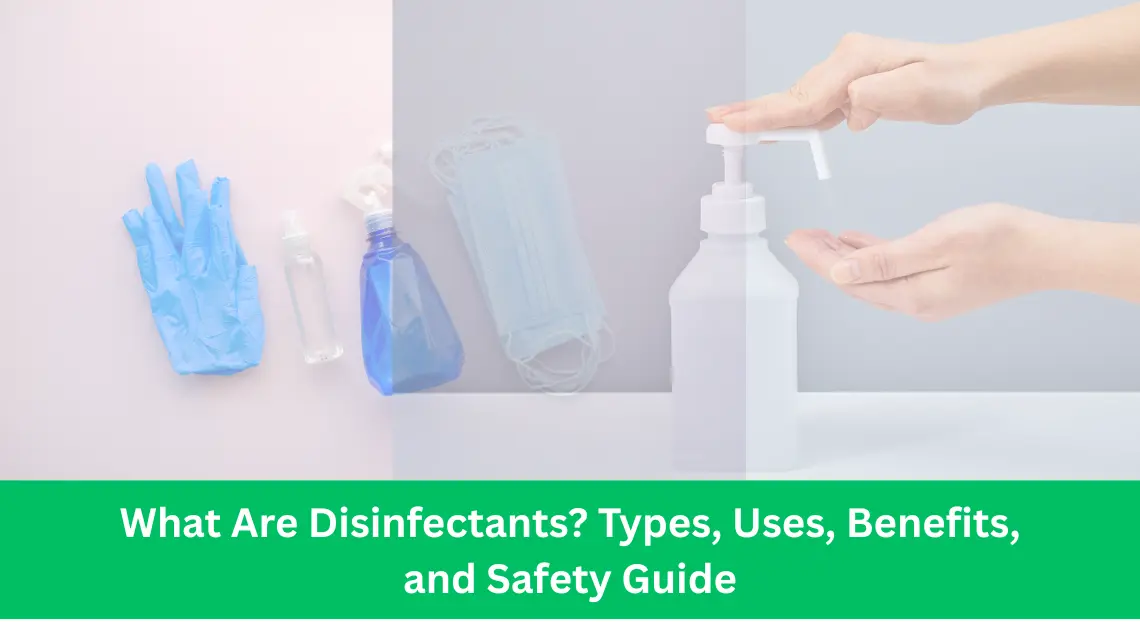
What Are Disinfectants?
Disinfectants are chemical agents used to kill or inactivate harmful microorganisms such as bacteria, viruses, and fungi on non-living surfaces.
They are mainly used on floors, walls, equipment, furniture, and medical instruments to reduce the risk of infection and contamination.
How Disinfectants Work?
How Disinfectants Destroy Microorganisms?
Disinfectants work by attacking the essential structures of microorganisms such as bacteria, viruses, and fungi. Many disinfectants damage the outer protective layer of these microbes. In bacteria, they break the cell wall or cell membrane, which causes the cell contents to leak out and results in cell death. In viruses, disinfectants often destroy the protein coat or lipid envelope, making the virus inactive and unable to infect a host. Some disinfectants also damage proteins and genetic material inside the microorganism, which stops normal cell functions and leads to death.
Difference Between Killing and Inhibiting Growth
Killing means the microorganism is completely destroyed and cannot recover. Once killed, it cannot multiply or cause infection. Inhibiting growth means the disinfectant only stops the microorganism from multiplying. The microbe may still be alive but remains inactive for a period. If conditions become favorable, it may start growing again. For effective infection control, killing is more reliable than only inhibiting growth.
Factors That Affect Disinfectant Effectiveness
The performance of a disinfectant depends on correct concentration, sufficient contact time, and surface condition. A weak solution may not work properly. The disinfectant must remain on the surface long enough to act. Dirty or porous surfaces can reduce effectiveness because organic matter like dust or grease can block direct contact with microorganisms.
Types of Disinfectants and Their Uses
Alcohol-Based Disinfectants for Quick Surface Cleaning
Alcohol-based disinfectants mainly include ethanol and isopropyl alcohol. They act fast and are effective against many bacteria and enveloped viruses. They are widely used in hospitals, clinics, laboratories, and households for cleaning small surfaces and equipment. They evaporate quickly and leave no residue. However, they are flammable and may not work well on dirty surfaces. They are also less effective against bacterial spores.
Chlorine-Based Disinfectants for Broad-Spectrum Control
Chlorine-based disinfectants include sodium hypochlorite, commonly known as bleach. They are widely used for water treatment, floor cleaning, and surface sanitation in healthcare and public places. They are effective against bacteria, viruses, and fungi. Chlorine solutions are low cost and strong acting. However, they can cause skin and eye irritation and may corrode metals if used at high concentration.
Quaternary Ammonium Compounds for Routine Disinfection
Quaternary ammonium compounds, often called quats, are common in household and industrial cleaners. They are effective against many bacteria and some viruses. They are stable, have low odor, and are safe for many surfaces. However, they may not be effective against certain non-enveloped viruses and spores.
Hydrogen Peroxide-Based Disinfectants for Medical Use
Hydrogen peroxide is used in hospitals and laboratories. It works against a wide range of microorganisms. It breaks down into water and oxygen, leaving no harmful residue, which makes it environmentally safer.
Phenolic and Aldehyde Disinfectants for High-Level Disinfection
Phenolic disinfectants are used in hospitals for surface disinfection. They are effective against bacteria and fungi but may irritate skin. Aldehyde-based disinfectants are used for high-level disinfection of medical equipment because they can destroy resistant microorganisms. They must be handled carefully due to their strong nature.
Difference Between Cleaning, Sanitizing, and Disinfecting
What Is Cleaning and Why It Matters?
Cleaning means removing dirt, dust, grease, and visible impurities from a surface. It is usually done with water, soap, or detergent. Cleaning does not always kill microorganisms, but it reduces their number by washing them away. This step is important because dirt and organic matter can block disinfectants from working properly. Cleaning is the first and basic step in maintaining hygiene in homes, offices, hospitals, and industries.
What Is Sanitizing and How It Reduces Germs?
Sanitizing means lowering the number of microorganisms to a safe level as defined by public health standards. It does not kill all germs, but it reduces them enough to decrease the risk of infection. Sanitizing is commonly used in kitchens, food processing areas, and restaurants. It is suitable for surfaces that come in contact with food, such as tables and utensils, where reducing germs to safe levels is enough.
What Is Disinfecting and When to Use It?
Disinfecting means using chemicals to kill most harmful microorganisms on surfaces. It is stronger than cleaning and sanitizing. Disinfecting is important in hospitals, clinics, bathrooms, and high-touch surfaces such as door handles and switches. It should be used when there is a higher risk of infection. For best results, surfaces should be cleaned first, then disinfected properly with the correct concentration and contact time.
Common Applications of Disinfectants
Use of Disinfectants in Healthcare Facilities
Healthcare facilities rely heavily on disinfectants to control infections. Hospitals, clinics, and diagnostic laboratories use them to clean floors, walls, medical equipment, and high-touch surfaces such as bed rails and door handles. Strong disinfectants are also used to process surgical instruments and reusable medical devices. Proper disinfection helps reduce hospital-acquired infections and protects both patients and healthcare workers.
Use of Disinfectants in Homes and Residential Areas
In households, disinfectants are used to clean bathrooms, kitchens, and frequently touched surfaces. They help control the spread of common illnesses caused by bacteria and viruses. Household disinfectants are often used on floors, sinks, toilets, and kitchen counters. Regular use improves hygiene and lowers the risk of infections, especially during outbreaks of contagious diseases.
Role in Food Processing and Hospitality Industry
Food processing units, restaurants, and hotels use disinfectants to maintain hygiene standards. Surfaces that come in contact with food must be properly cleaned and sanitized to prevent contamination. Equipment, storage areas, and preparation tables are disinfected to reduce the risk of foodborne illnesses. Maintaining proper disinfection is important for food safety compliance.
Application in Water Treatment Plants
Water treatment plants use disinfectants to kill harmful microorganisms in drinking water and wastewater. Chlorine and other approved agents are added to ensure water is safe for consumption and discharge.
Use in Pharmaceutical and Chemical Industries
Pharmaceutical and chemical industries use disinfectants to maintain clean production environments. Controlled areas and equipment are regularly disinfected to prevent contamination and ensure product quality.
Benefits of Using Disinfectants
Prevention of Infections and Disease Spread
One of the main benefits of disinfectants is infection prevention. Disinfectants kill harmful microorganisms on surfaces, which reduces the chance of bacteria and viruses spreading from one person to another. This is especially important in places where many people gather, such as hospitals, schools, offices, and public transport. Proper surface disinfection helps control outbreaks and lowers the risk of contagious diseases.
Improved Hygiene Standards in Daily Environments
Regular use of disinfectants improves overall hygiene standards. Clean and disinfected surfaces reduce the presence of harmful germs in homes and workplaces. In kitchens and bathrooms, disinfectants help maintain sanitary conditions and prevent the growth of bacteria and fungi. In industries, proper disinfection supports compliance with hygiene and safety regulations.
Protection in High-Risk and Sensitive Areas
High-risk environments such as healthcare facilities, laboratories, and food processing units require strict infection control. Disinfectants provide an added layer of protection in these areas. They help maintain sterile or near-sterile conditions where vulnerable individuals or sensitive products are present. This protection is critical for patient safety and product quality.
Support for Public Health and Community Safety
Disinfectants play an important role in public health. Safe water treatment, sanitation programs, and surface disinfection in public places help reduce community-wide infection rates. By lowering the number of harmful microorganisms in shared spaces, disinfectants contribute to safer and healthier communities.
Limitations of Disinfectants
Reduced Effectiveness on Dirty Surfaces
Disinfectants do not work properly on heavily soiled surfaces. Dirt, grease, blood, and other organic matter can block the chemical from reaching microorganisms. When a surface is not cleaned first, the disinfectant may not kill all harmful germs. For this reason, cleaning with water and detergent is an important step before applying any disinfectant. Without proper cleaning, the overall disinfection process becomes less reliable.
Risk of Microbial Resistance
Improper or frequent use of disinfectants may contribute to resistance in some microorganisms. When low concentrations are used or contact time is too short, certain microbes may survive. Over time, repeated exposure can make them less sensitive to the same disinfectant. This reduces its effectiveness and may require stronger or alternative products. Correct dilution and proper usage help lower this risk.
Possible Damage to Surfaces and Materials
Some disinfectants are strong chemicals that can damage surfaces. Chlorine-based products may corrode metals. Alcohol can dry out or crack certain plastics and rubber materials. Repeated use on delicate surfaces may cause fading, discoloration, or structural damage. It is important to choose a disinfectant that is compatible with the surface being treated.
Health Risks from Incorrect Use
Disinfectants can cause health problems if misused. Direct contact may lead to skin irritation or eye damage. Inhaling strong fumes can irritate the respiratory system. Mixing different disinfectants, such as chlorine with acids or ammonia, can produce harmful gases. Safe handling and proper ventilation are necessary to reduce health risks.
Safety Guidelines for Handling Disinfectants
Correct Dilution and Proper Usage
Disinfectants must be used at the correct concentration to work effectively and safely. Using a solution that is too weak may not kill harmful microorganisms. Using a solution that is too strong can damage surfaces and increase health risks. Always follow the manufacturer’s instructions for dilution, contact time, and method of application. Surfaces should be cleaned before disinfection to improve results. Disinfectants should never be mixed unless clearly stated as safe, as mixing certain chemicals can release harmful gases.
Use of Personal Protective Equipment
Personal protective equipment helps reduce direct exposure to disinfectants. Gloves should be worn to protect the skin from irritation. In cases where strong chemicals are used, eye protection and masks may also be necessary. In industrial or healthcare settings, additional protective clothing may be required. Proper ventilation is important to avoid breathing in fumes.
Safe Storage and Disposal Practices
Disinfectants should be stored in original containers with clear labels. They must be kept away from direct sunlight, heat, and children. Containers should be tightly closed to prevent spills or evaporation. Expired or unused disinfectants should be disposed of according to local regulations to avoid environmental contamination.
Environmental Impact of Disinfectants
Chemical Residues and Environmental Concerns
Many disinfectants contain strong chemicals that may leave residues after use. When these residues enter soil or water, they can affect microorganisms that are important for natural ecosystems. Some compounds break down quickly, while others remain in the environment for a longer time. Continuous discharge of disinfectant residues from households, hospitals, and industries can disturb the natural balance of bacteria in the environment.
Risk of Water Contamination
Disinfectants can enter water systems through drains and wastewater discharge. In high amounts, certain chemicals may harm aquatic life such as fish and beneficial microorganisms. Chlorine-based products, if not properly treated, can react with organic matter in water and form by-products. Proper wastewater treatment and controlled usage are important to reduce these risks and protect water quality.
Eco-Friendly and Safer Alternatives
To reduce environmental impact, many industries now use eco-friendly disinfectants. Products based on hydrogen peroxide and other biodegradable ingredients break down into safer substances. Choosing the right concentration and avoiding overuse also helps limit environmental damage. Responsible handling, correct disposal, and selecting environmentally safer products support sustainable hygiene practices.
How to Choose the Right Disinfectant?
Select Based on Type of Microorganism
Different disinfectants work against different microorganisms. Some are effective against bacteria but less effective against certain viruses or spores. Before choosing a product, it is important to know the type of microorganism that needs to be controlled. In healthcare and laboratory settings, a broad-spectrum disinfectant is often required. In homes, a general-purpose disinfectant may be sufficient for common bacteria and viruses.
Check Surface Compatibility and Material Safety
Not all disinfectants are suitable for every surface. Strong chemicals may damage metals, plastics, rubber, or painted surfaces. Alcohol can dry out certain materials, while chlorine may cause corrosion. Always check whether the disinfectant is safe for the specific surface. Choosing a compatible product helps maintain both hygiene and material durability.
Consider Application Area and Regulations
The area of use also matters. Hospitals, food processing units, and pharmaceutical facilities require specific disinfectants that meet safety and quality standards. Products used in food areas must be approved for such applications. Always select disinfectants that comply with local health and safety regulations. Proper labeling and certification indicate that the product meets required standards for safe and effective use.
Conclusion
Disinfectants play an important role in maintaining hygiene and preventing the spread of infections. They help control harmful microorganisms on surfaces in homes, hospitals, industries, and public spaces. Understanding how disinfectants work, their different types, and their correct applications is essential for effective use.
Each type of disinfectant has specific strengths and limitations. Choosing the right product depends on the type of microorganism, the surface being treated, and the area of application. Proper cleaning before disinfection, correct dilution, and adequate contact time are necessary for best results.
At the same time, disinfectants must be handled carefully. Incorrect use can cause health risks, surface damage, and environmental impact. Following safety guidelines, using protective equipment when needed, and disposing of products responsibly help reduce these risks.
When selected and used correctly, disinfectants provide strong protection against infections and support public health. They remain a key part of modern hygiene practices in both daily life and industrial operations.
Frequently Asked Questions About Disinfectants
1. What is the main purpose of a disinfectant?
A disinfectant is used to kill harmful microorganisms on surfaces and reduce the risk of infection.
2. Do disinfectants kill all types of germs?
Most disinfectants kill many bacteria and viruses, but not all can kill spores. Always check the product label for its effectiveness.
3. Should surfaces be cleaned before disinfecting?
Yes. Cleaning removes dirt and organic matter, which allows the disinfectant to work properly.
4. How long should a disinfectant stay on a surface?
It should remain on the surface for the recommended contact time mentioned on the label. Wiping too early can reduce effectiveness.
5. Can disinfectants be used on skin?
No. Disinfectants are meant for surfaces. Antiseptics are used for skin.
6. Is it safe to mix different disinfectants?
No. Mixing disinfectants can produce harmful gases and increase health risks.
7. Do disinfectants expire?
Yes. Over time, their effectiveness decreases. Always check the expiry date before use.
8. Are disinfectants safe for daily household use?
Yes, if used according to instructions. Proper dilution, ventilation, and safe storage are important for safe use.