

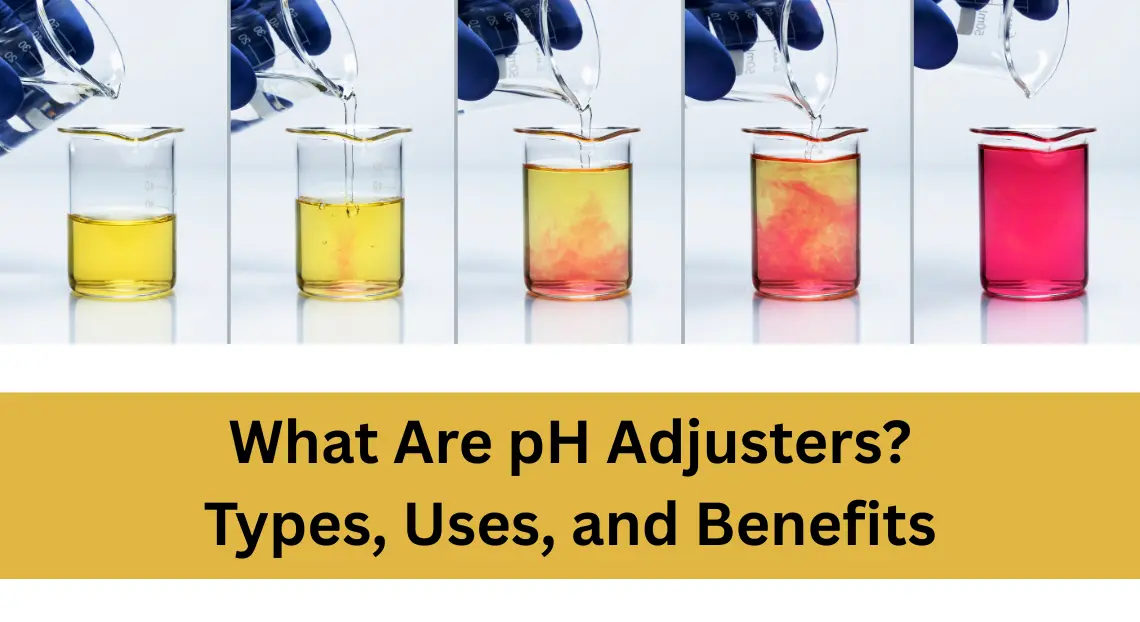
What Are pH Adjusters?
pH adjusters are chemical substances used to increase or decrease the pH level of a solution so it reaches the desired acidity or alkalinity. They help keep products stable, safe, and effective in many industries such as water treatment, cosmetics, food processing, pharmaceuticals, and agriculture.
Understanding the pH Scale
What pH Means?
pH is a number that shows how acidic or alkaline a liquid is. The term pH is related to the amount of hydrogen ions present in a solution. When a liquid has more hydrogen ions, it becomes more acidic. When it has fewer hydrogen ions, it becomes more alkaline. Because of this, pH is commonly used in chemistry, water testing, agriculture, and many industries to understand the nature of a solution. The pH value is measured on a scale from 0 to 14. This scale helps scientists and manufacturers quickly identify whether a substance is acidic, neutral, or basic.
Acidic, Neutral, and Alkaline Levels
The pH scale is divided into three main ranges. A pH value below 7 is considered acidic. Liquids such as lemon juice or vinegar fall into this category. A pH value of 7 is neutral, which means the liquid is neither acidic nor alkaline. Pure water is the most common example of a neutral substance. When the pH value is above 7, the substance is alkaline or basic. Products like soap, detergents, and ammonia are common examples. Each step on the pH scale represents a big change in acidity or alkalinity, which is why accurate measurement is important.
Why Correct pH Balance Matters?
Maintaining the correct pH is important in many processes. In water treatment, the right pH helps disinfectants work properly and prevents damage to pipes. In agriculture, soil pH affects how well plants grow and absorb nutrients. In cosmetics and food products, proper pH improves safety, stability, and product quality. If the pH is too high or too low, it can cause corrosion, reduce effectiveness, or harm living organisms. For this reason, controlling pH is an important step in many industries.
Types of pH Adjusters
Acidic pH Adjusters (Used to Lower pH)
Acidic pH adjusters are chemicals used when a solution becomes too alkaline. These substances increase the amount of hydrogen ions in the liquid, which lowers the pH level and makes the solution more acidic. Strong acids can change pH quickly, while weak acids adjust it more slowly and in a more controlled way. Because of this, industries select acids based on how fast and how much they need to reduce the pH. These adjusters are widely used in water treatment, food processing, cosmetics, and chemical manufacturing to bring solutions into the required pH range. In simple terms, acidic pH adjusters help correct high pH and maintain the proper chemical balance needed for a process to work properly.
Alkaline pH Adjusters (Used to Raise pH)
Alkaline pH adjusters are used when a liquid is too acidic. These chemicals increase the level of hydroxide ions in a solution, which raises the pH and makes the solution more basic. Some alkaline substances act very quickly, while others are used when gradual pH correction is needed. They are commonly used in wastewater treatment, cleaning products, textile processing, and many industrial operations where proper pH is important for safety and performance.
Buffering Agents That Stabilize pH
Buffering agents work differently from normal pH adjusters. Instead of only raising or lowering pH, they help keep the pH stable. A buffer solution usually contains a weak acid and its related salt or a weak base and its salt. This combination helps the solution resist sudden pH changes when small amounts of acid or base are added. Because of this property, buffers are widely used in chemical processing, food production, laboratories, and biological systems where a steady pH is necessary.
Common Chemicals Used as pH Adjusters
Citric Acid
Citric acid is a mild organic acid commonly used to lower pH. It is widely used in food, beverages, cosmetics, and cleaning products. Because it is safer and easier to handle than strong mineral acids, many manufacturers prefer it for controlled pH adjustment. It dissolves easily in water and helps maintain product stability while giving a gentle pH reduction.
Sodium Hydroxide
Sodium hydroxide is a strong alkaline chemical used to raise pH quickly. It is widely used in water treatment, soap making, paper processing, and chemical manufacturing. Even a small amount can increase pH significantly, so it must be handled carefully. It is valued for its strong neutralizing ability.
Potassium Hydroxide
Potassium hydroxide works in a similar way to sodium hydroxide. It is used to increase pH in many industrial and personal care products. It is commonly used in liquid soaps, fertilizers, and chemical processing where stable alkalinity is required.
Hydrochloric Acid
Hydrochloric acid is a strong acid used to lower pH in industrial processes and water treatment systems. It reacts quickly and is effective for large-scale pH correction.
Ammonium Hydroxide
Ammonium hydroxide is used to increase pH in cleaning products, textiles, and chemical manufacturing. It provides moderate alkalinity and evaporates more easily than many other bases.
Lactic Acid
Lactic acid is a mild acid used to reduce pH in food products, cosmetics, and pharmaceuticals. It also helps maintain product quality and stability.
How pH Adjusters Work in Chemical Solutions?
Chemical Reactions That Change pH
pH adjusters work through simple chemical reactions in a liquid. When an acidic substance is added to water or a solution, it releases hydrogen ions. These ions increase the acidity of the solution and lower the pH value. When a base or alkaline substance is added, it releases hydroxide ions. These ions reduce acidity and raise the pH level. The strength of the chemical and the amount used both affect how quickly the pH changes. Because of this, industries carefully measure and control the quantity added during a process.
The Neutralization Process
Neutralization happens when an acid and a base react with each other. During this reaction, hydrogen ions from the acid combine with hydroxide ions from the base. This forms water and usually a salt. As the reaction continues, the solution moves closer to a neutral pH level. Neutralization is widely used in water treatment, chemical production, and waste management to correct extreme pH levels and make solutions safer to handle.
Maintaining a Stable pH Balance
In many processes, the goal is not only to change pH but also to keep it stable. Small changes in pH can affect chemical reactions, product quality, and equipment safety. For this reason, pH levels are regularly tested and adjusted when needed. In some systems, buffering substances are also used to prevent sudden pH shifts and keep the solution within the required range.
Industrial Applications of pH Adjusters
pH Control in Water Treatment
pH adjusters are widely used in water treatment plants and wastewater systems. The correct pH helps disinfectants work properly and improves the removal of impurities. It also protects pipes, tanks, and equipment from corrosion or scaling. If water becomes too acidic or too alkaline, treatment processes may not work as expected. Because of this, operators regularly monitor and adjust the pH during treatment.
Use in Cosmetics and Personal Care Products
In cosmetics and personal care products, maintaining the right pH is important for safety and product performance. Skin and hair products must stay within a suitable pH range to avoid irritation and to keep ingredients stable. Manufacturers use pH adjusters during formulation to balance creams, shampoos, lotions, and cleansers so they remain effective and safe for daily use.
Importance in Food and Beverage Processing
Food and beverage companies use pH adjusters to control acidity, improve taste, and extend shelf life. The right pH can slow the growth of harmful microorganisms and help preserve quality. Many processed foods and drinks rely on controlled pH levels to remain safe and consistent during storage.
Applications in Pharmaceuticals, Agriculture, and Chemical Manufacturing
In pharmaceuticals, correct pH helps maintain drug stability and effectiveness. In agriculture, pH adjustment supports fertilizer performance and soil treatment. In chemical manufacturing, many reactions require a specific pH range to produce the desired results and maintain product quality.
How to Choose the Right pH Adjuster?
Select a pH Adjuster Based on the Required pH Range
The first step is to understand the current pH of the solution and the target range you want to reach. If the pH is too low, an alkaline chemical is used to raise it. If the pH is too high, an acid is added to reduce it. The strength and concentration of the acid or base also matter because strong chemicals can change pH very quickly, while weaker ones allow more controlled adjustment.
Check Compatibility With Other Ingredients
A pH adjuster must work well with the other chemicals in the formulation. Some substances may react with acids or bases and create unwanted salts or by-products. These reactions can affect product stability, quality, or performance. Because of this, manufacturers review the full formulation before choosing the chemical used for pH correction.
Consider Safety and Regulatory Requirements
Safety is an important factor when selecting pH adjusting chemicals. Some acids and bases are corrosive and require careful handling, storage, and protective equipment. In certain industries such as cosmetics, food processing, or wastewater treatment, regulations also set limits on acceptable pH levels and approved chemicals.
Evaluate Cost and Chemical Availability
Cost and supply are practical factors in industrial use. Some chemicals are widely available and easy to store, which makes them more suitable for large-scale operations. Companies usually select a pH adjuster that provides reliable performance while remaining cost-effective and easy to handle in daily operations.
Safety, Handling, and Storage of pH Adjusters
Safe Handling Practices for pH Adjusting Chemicals
Many pH adjusters are strong acids or bases, so careful handling is important. Workers should always read the chemical label and safety data sheet before use. Chemicals should be measured accurately and added slowly to a solution to avoid sudden reactions or splashing. Mixing chemicals without proper knowledge can cause heat, fumes, or dangerous reactions. Work areas should have proper ventilation and access to clean water in case of spills or contact with skin.
Personal Protective Equipment During Use
Protective equipment helps reduce the risk of injury when working with pH adjusting chemicals. Gloves that resist chemicals protect the hands from burns or irritation. Safety goggles protect the eyes from splashes. In some industrial environments, face shields, protective clothing, and masks may also be required. Using the right protective gear is important because both strong acids and strong bases can damage skin, eyes, and materials.
Proper Storage Conditions for pH Adjusters
Correct storage helps maintain chemical stability and prevents accidents. Most acids and alkaline substances should be kept in tightly sealed containers and stored in a cool, dry, and well-ventilated area. Containers should be clearly labeled so they are not confused with other chemicals. Acids and bases are usually stored separately to prevent unwanted reactions. Proper storage also helps maintain product quality and safety over time.
Environmental Impact of pH Adjusters
pH Control in Wastewater Treatment
pH adjusters play an important role in wastewater treatment. Industrial wastewater can become very acidic or very alkaline during manufacturing processes. If this water is released without correction, it can harm aquatic life and damage natural ecosystems. Treatment plants use acids or bases to bring the pH closer to neutral before discharge. Proper pH control also helps other treatment steps work more effectively, such as removing metals, solids, and harmful chemicals.
Safe Disposal of pH Adjusting Chemicals
Disposal of acids and bases must be handled carefully. Direct release of strong chemicals into soil, drains, or water bodies can cause environmental damage and safety risks. Many facilities first neutralize the chemicals so the pH becomes safer and more stable. After neutralization, the treated waste can be processed according to local environmental regulations. Proper disposal practices help prevent pollution and protect both people and ecosystems.
Sustainable and Safer Alternatives
Many industries are now looking for safer and more environmentally friendly options. In some cases, milder acids or naturally derived substances can be used to adjust pH. Improved dosing systems also help reduce chemical waste by adding only the required amount. Better monitoring and efficient treatment methods allow companies to control pH while lowering environmental impact. These practices support safer operations and more responsible chemical management.
Advantages of Using pH Adjusters
Improved Product Stability and Quality
pH control plays an important role in maintaining product stability. Many chemical ingredients perform best within a specific pH range. If the pH moves too high or too low, the product can break down, lose effectiveness, or change in color, texture, or smell. By using the right pH adjuster, manufacturers keep the formula balanced and stable during production and storage. This is especially important in cosmetics, food products, pharmaceuticals, and cleaning solutions where consistency and safety are necessary.
Better Efficiency in Industrial Processes
Many industrial and chemical processes depend on the correct pH level to work properly. Reactions often occur faster and more efficiently when the pH is controlled. In water treatment, the correct pH improves the removal of impurities and helps disinfectants perform better. In manufacturing, proper pH can protect equipment, reduce scaling or corrosion, and support smoother operations. Because of this, adjusting and maintaining pH helps improve overall process performance.
Meeting Safety and Regulatory Requirements
Many industries must follow strict safety and environmental regulations. Authorities often set limits for pH levels in products, wastewater, and industrial processes. Using pH adjusters helps companies stay within these limits and meet quality standards. Proper pH control also helps reduce risks related to chemical reactions, environmental harm, and product safety.
Common Challenges When Adjusting pH
Overcorrection During pH Adjustment
One common problem when adjusting pH is adding too much acid or base at once. This can quickly push the solution beyond the desired pH range. When this happens, more chemicals are needed to correct it again, which wastes time and materials. Sudden changes in pH can also affect chemical reactions and product quality. To avoid this issue, chemicals are usually added slowly while the pH is checked regularly.
Errors in pH Measurement
Accurate measurement is important for proper pH control. If the measuring device is not calibrated or used correctly, the reading may be wrong. This can lead to adding the wrong amount of chemicals. Dirty probes, old sensors, or poor testing methods can also affect results. Regular maintenance and correct testing procedures help ensure reliable readings and better pH control.
Chemical Compatibility Problems
Not all chemicals work well together. Some acids or bases may react with other ingredients in the solution. These reactions can create unwanted by-products, reduce product quality, or affect the process. In some cases, it may also cause heat, gas formation, or precipitation. Because of this, it is important to review the formulation and understand how each chemical will react before selecting a pH adjuster.
Conclusion
pH adjusters play an important role in many industries where controlling acidity or alkalinity is necessary. They help bring solutions to the required pH level so processes can run safely and efficiently. From water treatment and food production to cosmetics and chemical manufacturing, proper pH control supports product quality, stability, and performance.
Different types of pH adjusters are used depending on the situation. Acids lower the pH, while alkaline substances raise it. In some cases, buffering agents are used to keep the pH stable over time. Choosing the right chemical, using the correct amount, and monitoring the pH regularly are important steps for achieving accurate results.
Proper handling, storage, and environmental management are also important when working with these chemicals. Safe practices help protect workers, equipment, and the environment.
Understanding how pH adjusters work and where they are used helps businesses maintain consistent processes and meet safety standards. With the right approach, pH control becomes a simple but essential part of many industrial and commercial operations.
Frequently Asked Questions About pH Adjusters
What are pH adjusters used for?
pH adjusters are used to increase or decrease the pH level of a solution. They help keep products stable and ensure processes work properly.
Where are pH adjusters commonly used?
They are widely used in water treatment, cosmetics, food processing, pharmaceuticals, agriculture, and chemical manufacturing.
What is the difference between acidic and alkaline pH adjusters?
Acidic pH adjusters lower the pH of a solution, while alkaline pH adjusters raise the pH.
Why is pH control important in water treatment?
Correct pH helps disinfectants work properly, improves impurity removal, and protects pipes and equipment from damage.
Are pH adjusters safe to use?
They are safe when used correctly and with proper protective equipment. Many of them are strong chemicals, so careful handling is necessary.
How is pH measured?
pH is usually measured using a pH meter, test strips, or chemical indicators.
Can too much pH adjuster cause problems?
Yes. Adding too much can push the pH too high or too low, which may affect product quality and process performance.
What industries rely the most on pH adjustment?
Industries such as water treatment, food and beverage production, cosmetics, pharmaceuticals, and chemical manufacturing depend heavily on proper pH control.