
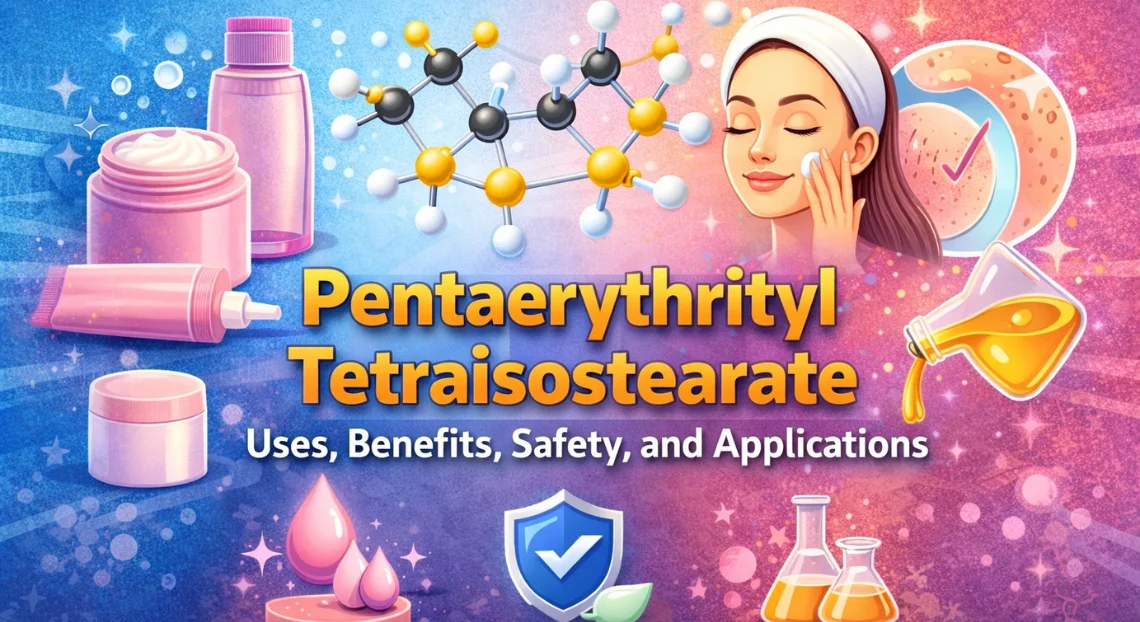
What Is Pentaerythrityl Tetraisostearate?
Pentaerythrityl tetraisostearate is a synthetic cosmetic ingredient mainly used in skin care and makeup products. It is made by combining pentaerythritol, a type of alcohol, with isostearic acid, a fatty acid. The final ingredient is an oily, smooth liquid that feels light and soft on the skin.
This ingredient is classified as an ester and works as an emollient. Esters are commonly used in cosmetics because they help improve texture and stability. As an emollient, pentaerythrityl tetraisostearate helps soften the skin and makes products spread easily without feeling greasy or heavy.
It is used in cosmetics because it improves how a product feels during and after application. It gives creams, lotions, and makeup a smooth and even finish. In lipsticks and lip balms, it adds shine and helps the color apply evenly. In skin care products, it helps reduce moisture loss by forming a light protective layer on the skin.
Overall, pentaerythrityl tetraisostearate is used to make cosmetic products more comfortable, smooth, and easy to use.
Chemical Composition and Structure of Pentaerythrityl Tetraisostearate
Pentaerythritol and Isostearic Acid
Pentaerythrityl tetraisostearate is made from pentaerythritol and isostearic acid. Pentaerythritol is a small alcohol molecule with four bonding sites. This allows it to attach to multiple fatty acids. Isostearic acid is a fatty acid with a branched shape. This branched form helps improve smoothness and reduces heavy or greasy feel on the skin.
How Pentaerythrityl Tetraisostearate Is Formed
This ingredient is created through a chemical process called esterification. During this process, one pentaerythritol molecule reacts with four isostearic acid molecules. Water is released, and a stable ester is formed. The result is a smooth, oil-like liquid that is resistant to heat and oxidation. This stability makes it suitable for long-lasting cosmetic products.
Why the Chemical Structure Improves Skin Feel
The unique structure of pentaerythrityl tetraisostearate affects how it feels on the skin. The branched fatty acid chains help the product spread evenly and smoothly. The four-chain structure forms a light and flexible layer on the skin. This layer softens the skin, improves slip, and provides comfort without feeling sticky or heavy.
Physical and Chemical Properties of Pentaerythrityl Tetraisostearate
Appearance and Texture
Pentaerythrityl tetraisostearate is a clear to pale yellow liquid. It has a thick, smooth, and oily texture. The ingredient feels soft when applied and does not leave a sticky or heavy layer on the skin. Because of its rich but smooth texture, it is often used in products that need good slip and easy spread, such as lipsticks and creams.
Solubility Characteristics
This ingredient is oil-soluble and does not dissolve in water. It blends well with other oils, waxes, and oil-based ingredients used in cosmetic formulations. Due to this property, it is mainly added to the oil phase of creams, lotions, and makeup products.
Stability and Shelf Life
Pentaerythrityl tetraisostearate is chemically stable. It has good resistance to heat and oxidation, which helps prevent product breakdown over time. This stability improves the shelf life of cosmetic products and helps maintain their texture, performance, and appearance during storage.
Odor and Color
The ingredient has very low odor, making it suitable for fragrance-free and lightly scented products. Its light color does not affect the final shade of cosmetics, especially in lip and makeup products.
How Pentaerythrityl Tetraisostearate Works on Skin
How It Spreads Evenly on the Skin
Pentaerythrityl tetraisostearate spreads smoothly and evenly when applied to the skin. Its oil-based structure allows it to glide easily without pulling or dragging. This helps creams, lotions, and makeup apply in a thin and uniform layer. Because it spreads well, only a small amount is needed to cover the skin. This improves product performance and gives a more polished and even look, especially in makeup products.
How It Helps Lock in Moisture
This ingredient works as an emollient that helps reduce moisture loss from the skin. It forms a light, flexible layer on the skin surface. This layer slows down water evaporation without blocking the skin. By keeping moisture inside, the skin stays soft and comfortable for a longer time. It is especially useful in products designed for dry or normal skin, as it supports hydration without feeling heavy.
Skin Feel and Finish After Application
After application, pentaerythrityl tetraisostearate leaves the skin soft, smooth, and silky. It does not feel sticky or greasy. The finish is light and comfortable, making it suitable for daily-use products. In makeup, it adds a smooth finish and helps colors look even and natural. In lip products, it improves glide and adds shine without a waxy feel. Overall, it improves skin comfort and gives products a clean and refined finish.
Key Benefits of Pentaerythrityl Tetraisostearate in Cosmetics
Skin Softening and Conditioning
Pentaerythrityl tetraisostearate helps soften and condition the skin. It fills in small gaps on the skin surface, making the skin feel smooth and even. By forming a light protective layer, it helps prevent dryness and roughness. This makes it useful in creams, lotions, and lip care products where skin comfort is important.
Smooth and Easy Product Application
One of the main benefits of this ingredient is better product spread. It allows cosmetics to glide easily on the skin without dragging. This improves how products apply and reduces uneven patches. In makeup, smooth application helps create a clean and natural look with less effort.
Improved Texture and Stability of Products
Pentaerythrityl tetraisostearate improves the overall texture of cosmetic products. It helps create a creamy and uniform feel. This makes products easier to apply and more pleasant to use. It also helps maintain product consistency over time, supporting stable formulations that do not separate easily.
Shine and Gloss Enhancement
This ingredient is widely used to add shine and gloss, especially in lipsticks and lip balms. It enhances light reflection, giving lips a healthy and polished appearance. Unlike heavy oils, it provides shine without feeling sticky. This balance makes it a preferred choice in modern makeup and personal care products.
Common Uses of Pentaerythrityl Tetraisostearate in Personal Care Products
Use in Lipsticks and Lip Care Products
Pentaerythrityl tetraisostearate is widely used in lipsticks, lip balms, and lip glosses. It improves glide, making lip products apply smoothly without pulling. It also adds shine and helps spread color evenly. This ingredient helps keep lips soft and prevents dryness, which is important for daily lip care products.
Use in Face Creams and Lotions
In face creams and body lotions, this ingredient works as a skin softener. It improves texture and makes products feel smooth and rich. It also helps reduce moisture loss, keeping the skin comfortable for longer hours. Because it feels light on the skin, it is used in both day and night creams.
Role in Sunscreen Formulations
Pentaerythrityl tetraisostearate is used in sunscreen products to improve spread and comfort. It helps sunscreen apply evenly, which is important for proper skin coverage. It also improves the feel of sunscreens, reducing the heavy or greasy feeling that many people dislike.
Use in Makeup Products
This ingredient is commonly found in foundations, blushes, and concealers. It helps pigments spread evenly and improves product blendability. This results in a smoother finish and more even skin tone.
Use in Hair Care Formulations
In hair care products, pentaerythrityl tetraisostearate adds softness and shine. It helps smooth the hair surface, reducing dryness and improving manageability.
Why Pentaerythrityl Tetraisostearate Is Popular in Lipsticks and Makeup
High Gloss Without Heavy Feel
Pentaerythrityl tetraisostearate is well known for its high gloss performance. It reflects light well, which helps give lipsticks and glosses a smooth and shiny finish. Unlike heavier oils, it adds shine without making the product feel thick. This makes it ideal for modern makeup that aims for a clean and polished look.
Non-Sticky and Comfortable Texture
One of the main reasons this ingredient is used in makeup is its non-sticky feel. It spreads evenly and sits lightly on the skin and lips. This improves comfort during wear and prevents the product from feeling tacky. Users can wear makeup for longer hours without discomfort.
Long-Lasting Wear and Better Hold
Pentaerythrityl tetraisostearate helps improve the lasting power of makeup products. It forms a flexible layer that helps keep pigments in place. This reduces the need for frequent touch-ups. In lip products, it helps color stay smooth and even for a longer time.
Improved Pigment Dispersion
This ingredient helps disperse pigments evenly in makeup formulas. Even pigment spread improves color strength and prevents patchy application. This results in better color payoff and a more uniform finish. Because of this, makeup products look more balanced and professional after application.
Pentaerythrityl Tetraisostearate Compared to Other Common Esters
Comparison with Isopropyl Myristate
Isopropyl myristate is a widely used ester in skin care and makeup. It has a light and fast-spreading feel and absorbs quickly into the skin. However, it can feel too oily for some skin types and may cause breakouts in acne-prone skin. Pentaerythrityl tetraisostearate, on the other hand, spreads more slowly and evenly. It provides a smoother and more controlled application, making it better for lipsticks and long-wear makeup products.
Comparison with Octyldodecyl Oleate
Octyldodecyl oleate is a heavier ester with a rich and oily texture. It is mainly used in products that need deep softness and moisture. While it gives good skin conditioning, it can feel greasy and heavy, especially in makeup products. Pentaerythrityl tetraisostearate offers a more balanced feel. It provides softness and shine without the heavy oil effect, making it more suitable for lightweight makeup formulas.
Key Differences in Texture and Performance
Pentaerythrityl tetraisostearate stands out because of its smooth texture, high gloss, and non-sticky finish. Compared to lighter esters, it offers better pigment hold and longer wear. Compared to heavier esters, it feels more comfortable and less greasy. These differences make it a preferred choice in modern cosmetics where smooth application, comfort, and lasting performance are important.
Is Pentaerythrityl Tetraisostearate Safe for Skin?
Overall Safety Profile
Pentaerythrityl tetraisostearate is considered safe for use in cosmetic and personal care products. It is mainly used as an emollient and texture enhancer. Studies and long-term use in cosmetics show that it does not damage the skin when used in proper amounts. It is not known to be toxic, irritating, or harmful under normal use conditions.
Cosmetic Regulatory Approval
This ingredient is approved for cosmetic use by major regulatory bodies. It is allowed in products sold in the European Union, the United States, and many other regions. Safety assessments by cosmetic review panels have found it safe for use in skin care, makeup, and lip products. Manufacturers must still follow usage limits and good formulation practices to ensure product safety.
Suitability for Sensitive Skin
Pentaerythrityl tetraisostearate is generally well tolerated by most skin types, including sensitive skin. It has a low risk of causing irritation because it does not react easily with the skin. It also has very low odor and does not contain harsh active substances. This makes it suitable for fragrance-free and gentle formulations.
However, as with any cosmetic ingredient, individual skin reactions can vary. People with very sensitive or acne-prone skin should always check the full ingredient list and perform a patch test before regular use.
Overall, pentaerythrityl tetraisostearate is a safe and widely trusted ingredient in modern cosmetic products when used correctly.
Is Pentaerythrityl Tetraisostearate Comedogenic or Suitable for Oily Skin?
Pore-Clogging and Breakout Concerns
Pentaerythrityl tetraisostearate is an oil-based ingredient, so it often raises concerns about clogged pores. On its own, it is not strongly comedogenic. However, because it forms a soft layer on the skin, heavy use or high amounts in a formula may not suit very oily or acne-prone skin. The risk of breakouts depends more on the full product formula than on this ingredient alone.
How Formulators Use It Safely
Cosmetic formulators carefully balance the amount of pentaerythrityl tetraisostearate in products. It is often combined with lighter esters, silicone alternatives, or absorbent powders. This helps control oiliness and keeps the product feeling light. In makeup products, it is usually used in small amounts to improve texture and hold without making the skin greasy.
When It Works Best for Oily Skin
Pentaerythrityl tetraisostearate works best for oily skin in leave-on products that are well balanced, such as foundations, lip products, and sunscreens. It performs better in makeup than in heavy skin creams for oily skin types. Products labeled as non-greasy or lightweight usually contain this ingredient in controlled amounts.
For oily skin users, it is best to choose products designed for oil control and always check how the skin reacts. When used correctly, this ingredient can still provide smooth application and comfort without causing excess oil buildup.
Is Pentaerythrityl Tetraisostearate Natural or Synthetic?
Source of Raw Materials
Pentaerythrityl tetraisostearate is made using pentaerythritol and isostearic acid. Isostearic acid usually comes from plant-based oils, such as soybean or palm oil, after processing. Pentaerythritol is produced through a chemical process using simple raw materials. While some parts come from natural sources, the final ingredient is not taken directly from nature.
Why It Is Classified as Synthetic
This ingredient is considered synthetic because it is created through controlled chemical reactions in a laboratory or manufacturing facility. The esterification process changes the original raw materials into a new substance with different properties. Since this process does not occur naturally and requires industrial production, it is labeled as synthetic in cosmetic ingredient lists.
Natural-Derived vs Fully Natural Ingredients
Natural-derived ingredients start with natural sources but are chemically processed to improve performance, stability, or safety. Pentaerythrityl tetraisostearate falls into this category. Fully natural ingredients, such as plant oils or butters, are used with little or no chemical change.
Natural-derived ingredients are often preferred in cosmetics because they offer better texture, longer shelf life, and consistent quality. While pentaerythrityl tetraisostearate is not natural, it is designed to be skin-friendly and stable. Understanding this difference helps users make informed choices based on product performance and personal preference.
Environmental and Sustainability Aspects of Pentaerythrityl Tetraisostearate
Biodegradability and Environmental Impact
Pentaerythrityl tetraisostearate has limited biodegradability because of its complex ester structure. It does not break down as quickly as simple natural oils. However, it is also not classified as highly harmful to the environment when used in cosmetic products. It is used in small amounts, which reduces its overall environmental impact.
Responsible Sourcing of Fatty Acids
The fatty acid used to make this ingredient, isostearic acid, is often sourced from plant-based oils such as soybean or palm oil. Many cosmetic manufacturers now prefer suppliers that follow responsible sourcing practices. This includes using certified sustainable palm oil and reducing environmental damage during raw material production. Responsible sourcing helps lower the environmental footprint of cosmetic ingredients.
Role in Modern Cosmetic Formulations
In modern cosmetics, pentaerythrityl tetraisostearate is used to improve product performance, which can support sustainability goals. Better texture and stability help reduce product waste caused by separation or spoilage. Long-lasting formulations also mean fewer reapplications, which can reduce overall product use.
While it is not a fully natural ingredient, it plays a role in creating effective and stable cosmetic products. Many brands balance its use with biodegradable and plant-based ingredients to meet sustainability expectations. As the cosmetic industry moves toward cleaner and more responsible formulations, this ingredient continues to be used carefully and in controlled amounts.
How to Identify Pentaerythrityl Tetraisostearate on Ingredient Labels
INCI Name of the Ingredient
On cosmetic ingredient lists, pentaerythrityl tetraisostearate is usually listed under its INCI name, which is “Pentaerythrityl Tetraisostearate”. INCI names are standardized and used worldwide to help consumers and professionals recognize ingredients, even if they are sourced differently or manufactured in various regions.
Position in Ingredient Lists
The placement of pentaerythrityl tetraisostearate in an ingredient list depends on its percentage in the product. Ingredients are usually listed from highest to lowest concentration. In creams, lotions, and lip products, it is often found in the middle of the list, indicating moderate usage. In makeup products like lipsticks and foundations, it may appear higher in the list because it is a key emollient and texture enhancer.
Common Product Types Containing It
Pentaerythrityl tetraisostearate is commonly used in products where smooth application and skin comfort are important. These include:
- Lipsticks, lip balms, and lip glosses for glide, shine, and softness
- Face creams, lotions, and sunscreens for moisture retention and smooth texture
- Foundations, blushes, and concealers for even pigment dispersion
- Hair care products for shine and improved manageability
By checking for the INCI name on product labels, consumers can easily identify whether a product contains this ingredient. Awareness of its placement in the list can also help users understand how much is used and the likely effect on the product’s feel and performance.
Advantages and Limitations of Pentaerythrityl Tetraisostearate
Main Advantages
Pentaerythrityl tetraisostearate offers several benefits in cosmetic and personal care products. It softens and smooths the skin, improving comfort and feel. It enhances product texture, making creams, lotions, and makeup glide easily and apply evenly. In lip products, it adds shine and gloss without feeling sticky. The ingredient is also stable, resistant to heat and oxidation, which helps maintain product quality and extends shelf life. Its versatility allows it to be used in skin care, makeup, and hair care products effectively.
Possible Drawbacks
While generally safe and well-tolerated, pentaerythrityl tetraisostearate has some limitations. Being oil-based, it may not be ideal for very oily or acne-prone skin if used in high concentrations. It is synthetic, which may be a concern for users seeking fully natural ingredients. Its limited biodegradability means it is not as environmentally friendly as natural oils, although its impact is low when used in small amounts in cosmetics.
When It May Not Be Ideal
This ingredient may not be the best choice for ultra-light formulations designed for oily or sensitive skin, where minimal oil content is preferred. It is also less suitable for products marketed as fully natural or organic, since it is a chemically processed ester. In such cases, formulators may use lighter natural oils or plant-based alternatives.
Overall, pentaerythrityl tetraisostearate is highly useful for improving skin feel, product performance, and gloss, but it should be used thoughtfully based on skin type, product purpose, and user preferences.
Frequently Asked Questions About Pentaerythrityl Tetraisostearate
1. What is the main function of pentaerythrityl tetraisostearate?
It works as an emollient and texture enhancer, making skin and makeup products smooth, soft, and easy to apply.
2. Is it safe for daily use?
Yes. It is safe for daily use in creams, lotions, lip products, and makeup when used in approved amounts.
3. Can it cause breakouts or clog pores?
It is low risk for clogging pores, but very oily or acne-prone skin may react if used in large amounts.
4. Is it suitable for sensitive skin?
Yes. It is gentle and non-irritating for most skin types, including sensitive skin.
5. Is pentaerythrityl tetraisostearate natural or synthetic?
It is synthetic, created by chemically combining pentaerythritol and isostearic acid, although some raw materials come from plants.
6. What types of products usually contain it?
It is used in lipsticks, lip balms, face creams, lotions, foundations, blushes, and hair care products.
7. Does it make skin feel greasy?
No. It provides a light, smooth, and non-sticky finish while softening the skin.
8. Can it be used in products for oily skin?
Yes, but it works best in balanced, lightweight formulas designed for oily skin to avoid excess oiliness.
Conclusion
Pentaerythrityl tetraisostearate is a versatile and widely used cosmetic ingredient. It works as an emollient and texture enhancer, making skin and makeup products smooth, soft, and easy to apply. Its high gloss, non-sticky feel, and stability make it especially popular in lipsticks, lip balms, foundations, and creams.
It is safe for most skin types, including sensitive skin, and is approved for use in cosmetic formulations worldwide. While it is a synthetic ingredient, it is designed to be gentle and effective. Formulators balance its use in products to suit oily or acne-prone skin and to provide a comfortable finish.
Overall, pentaerythrityl tetraisostearate helps improve product performance, skin comfort, and appearance, making it an essential ingredient in modern beauty and personal care products. By understanding its benefits, uses, and limitations, consumers can make informed choices when selecting cosmetics and skincare items.