
What is Polyacrylamide Crystals?
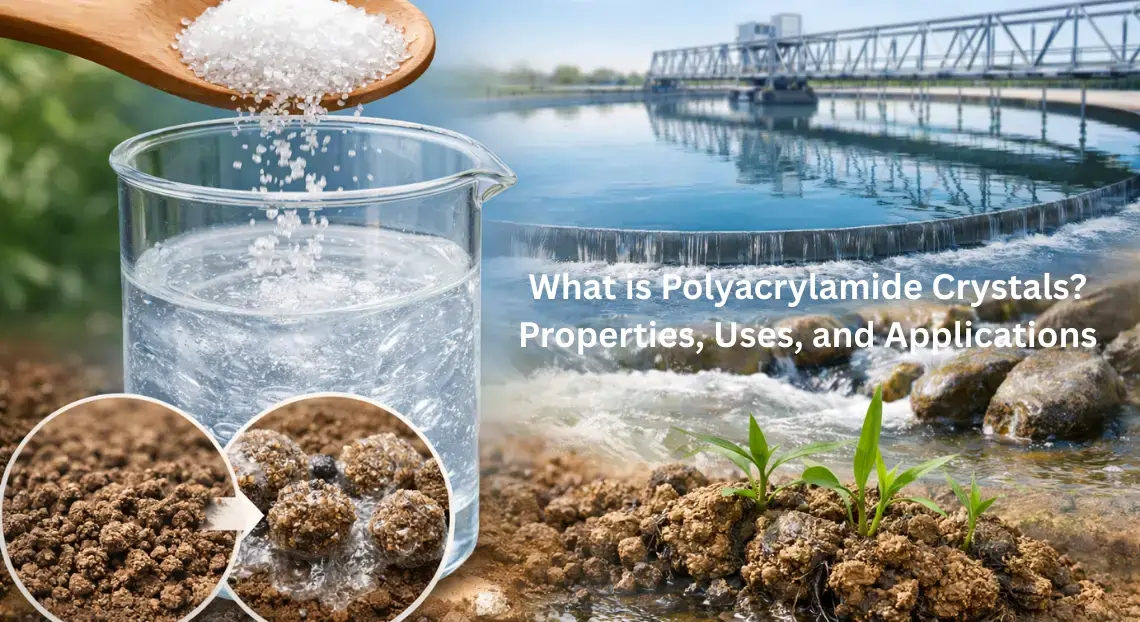
Polyacrylamide crystals are solid forms of polyacrylamide (PAM), a synthetic polymer made from acrylamide monomers. They usually appear as white or colorless granular crystals or powder, which can absorb water and swell to form a gel-like substance. These crystals are widely used in water treatment, agriculture, and industrial applications due to their ability to act as flocculants, thickeners, or soil conditioners.
Physical and Chemical Properties of Polyacrylamide Crystals
Appearance and Physical Form
Polyacrylamide crystals are solid, white to faintly yellow granules or powder. They are stable in dry conditions and can be stored for long periods if kept away from moisture, heat, and sunlight. These crystals do not have a fixed melting point and start decomposing at temperatures above 200–300 °C.
Water Solubility and Swelling
A key feature of polyacrylamide crystals is their ability to dissolve in water. When added to water with stirring, they quickly form a clear, thick, and viscous solution. The polymer chains attract and hold water molecules, creating a gel-like consistency. However, they are not soluble in most organic solvents such as acetone, benzene, or hexane, although some swelling may occur in polar solvents.
Chemical Structure
Polyacrylamide is made from repeating acrylamide units, forming long chains with water-attracting amide groups. This chemical structure makes the polymer highly soluble and effective in binding particles in water or soil. The polymer can also be modified to form different types: non-ionic, anionic, or cationic, depending on the desired application. These variations affect how the crystals interact with particles, water, or soil.
Stability and Handling
In solid form, polyacrylamide crystals are chemically stable under normal storage conditions. They should be protected from moisture and extreme heat to maintain effectiveness for industrial, agricultural, or water treatment applications.
How Polyacrylamide Crystals Work?
Flocculation and Particle Binding
Polyacrylamide crystals work mainly by flocculation, a process that helps small particles clump together in water. When the crystals dissolve in water, they form long polymer chains. These chains attach to tiny solid particles suspended in the liquid. As more particles attach, the chains bridge between them and form larger clumps, called flocs. Larger flocs settle faster or can be removed more easily from the water. This makes the water clearer and cleaner.
Interaction With Water and Soil
In water, dissolved polyacrylamide increases the size of particle clusters without changing the water’s chemical balance. This is especially useful in wastewater treatment, rivers, and ponds where fine solids are hard to settle. In soil, polyacrylamide helps soil particles bind together, improving structure and porosity. This makes the soil more stable and less prone to erosion. It also helps soil hold water longer, which benefits crops by reducing water loss.
Charge Types and Their Role
Polyacrylamide can carry different charges depending on its type: anionic (negative), cationic (positive), or non‑ionic (neutral). The charge type affects how the polymer interacts with particles. Anionic forms are often used in water with positively charged particles. Cationic types are used when particles carry negative charges. Non‑ionic polyacrylamide works where there is no strong charge on particles. Choosing the right type increases flocculation efficiency.
Gel Formation and Viscosity
When dissolved, polyacrylamide increases water viscosity because its long chains trap water molecules. This thicker solution helps slow down the movement of particles, giving more time for flocs to form and settle.
Types of Polyacrylamide Crystals
Anionic Polyacrylamide Crystals
Anionic polyacrylamide crystals carry a negative charge along the polymer chain. This type is widely used in water treatment and wastewater management. When the solution dissolves, the negative charge helps attract and bind positively charged particles in water. This attraction forms larger clumps that settle out more easily. Anionic polyacrylamide is also effective in soil where it improves structure and helps particles stick together, reducing erosion and improving water retention.
Cationic Polyacrylamide Crystals
Cationic polyacrylamide crystals have a positive charge on their polymer chains. These are best used where the particles in water or soil carry a negative charge. The positive charge helps pull the particles together for faster settling or separation. Cationic forms are especially common in industrial wastewater treatment, sludge thickening, and specific processes in paper and textile manufacturing where strong binding to particles is needed.
Non‑Ionic Polyacrylamide Crystals
Non‑ionic polyacrylamide crystals do not carry a strong positive or negative charge. This makes them suitable for neutral conditions, where particles do not have a strong electrical charge. Non‑ionic types help with general flocculation and viscosity increase but rely mainly on physical binding rather than charge attraction. They are used when water characteristics vary or when other charged types are less effective.
Choosing the Right Type
The choice between anionic, cationic, and non‑ionic polyacrylamide depends on the charge of particles in your water or soil. Matching the charge type increases the efficiency of clumping and settling. Correct selection ensures better performance in water clarification, soil conditioning, or industrial processes.
Applications of Polyacrylamide Crystals
Water and Wastewater Treatment
One of the main uses of polyacrylamide crystals is in water and wastewater treatment. When dissolved, they act as a flocculant that helps tiny particles in water stick together to form larger clumps. These clumps settle faster or can be filtered out easily, making it simpler to remove suspended solids, organic matter, and other contaminants. This improves water clarity and helps meet treatment standards for municipal drinking water and industrial effluent.
Agriculture and Soil Management
In agriculture, polyacrylamide crystals help improve soil structure and water retention. When mixed with soil or irrigation water, they bind soil particles together, reducing erosion and preventing topsoil loss. These crystals also increase the soil’s ability to hold moisture, which supports plant growth and reduces water loss in dry conditions. This makes irrigation more efficient and helps crops in areas with irregular rainfall.
Industrial Uses
Industries such as paper, textile, and mining use polyacrylamide crystals to improve processing and waste handling. In papermaking, they help retain fibers and speed up drainage. In textiles, they aid in removing dyes and chemicals from wastewater. In mining and mineral processing, polyacrylamide helps settle fine particles and separate liquids from solids, improving efficiency and reducing waste.
Oil and Gas Sector
The oil and gas industry uses polyacrylamide crystals in enhanced oil recovery and drilling. The dissolved polymer increases the effectiveness of water injected into reservoirs. It also helps control fluid flow and improves the extraction of oil from underground formations.
These applications show how polyacrylamide crystals serve many sectors by improving water quality, stabilizing soil, and supporting industrial processes.
Advantages of Using Polyacrylamide Crystals
Improved Water Clarity and Treatment Efficiency
Polyacrylamide crystals offer significant advantages in water and wastewater treatment because they help tiny particles in water stick together and form larger clumps that settle quickly. This makes it easier to remove suspended solids and contaminants, improving water clarity and reducing the time and cost required for treatment. In both municipal and industrial systems, this leads to faster processing and cleaner water output.
Cost Savings and Operational Benefits
Using polyacrylamide crystals can lower overall treatment costs. Because the crystals work efficiently at low doses, they reduce the need for other chemicals and energy typically required for clarifying water. This results in long‑term savings in chemical use, reduced energy consumption, and lower sludge handling expenses, making operations more economical.
Better Soil and Water Management in Agriculture
In agriculture, polyacrylamide crystals improve soil structure and moisture retention. When applied to soil or irrigation water, they help soil particles bind together and retain water longer. This reduces water loss, lowers irrigation frequency, and limits soil erosion. These benefits support stronger plant growth, especially in dry or water‑scarce regions.
Versatility Across Industries
Polyacrylamide crystals are useful in many industries. In oil and gas, they enhance oil recovery and reduce friction in drilling fluids. In paper and textile manufacturing, they improve retention and drainage. In mining, they help with solid‑liquid separation and slurry handling. This versatility makes them a valuable tool in diverse industrial processes.
Overall, the advantages of polyacrylamide crystals include efficient particle removal, lower treatment costs, better soil and water conservation, and wide industrial applicability.
Common Mistakes to Avoid When Using Polyacrylamide Crystals
Not Choosing the Right Type and Dose
One common mistake is using the wrong type of polyacrylamide for the specific water or soil conditions. Polyacrylamide comes in anionic, cationic, and non‑ionic forms, and each works best with certain particle charges and conditions. Using the wrong type can lead to poor flocculation and weak results. It is also important to choose the right dosage. Too much chemical can make the water thick, sticky, and harder to filter, while too little may not form enough flocs for effective treatment.
Poor Dissolution and Mixing
Another mistake is improper dissolution of the crystals. Solid polyacrylamide should be added slowly to water while stirring. Dumping crystals directly can cause clumps that do not dissolve well, reducing effectiveness. If the polymer is not completely dissolved, it cannot spread evenly and will not work properly in the treatment process. Mixing too hard or using very high‑speed agitation can break polymer chains and weaken performance.
Ignoring Water Quality and Conditions
Failing to consider water temperature, pH, and chemical conditions can also cause problems. Very hot or very cold water, extreme acidity or alkalinity, and high salt concentrations can reduce the effectiveness of dissolved polyacrylamide and slow down floc formation. Testing water quality before use helps achieve better results and avoids treatment failure.
Incorrect Storage and Handling
Storing polyacrylamide crystals in damp or hot conditions can cause them to clump or degrade before use. Crystals should be kept in a cool, dry place in sealed packaging. Handling them without proper equipment can also expose workers to dust or cause contamination. Good storage and careful handling protect both the product’s performance and worker safety.
By avoiding these mistakes—selecting the correct type, dissolving and mixing properly, checking water conditions, and storing correctly—you can improve the effectiveness of polyacrylamide crystals in any application.
Safety Measures and Handling Guidelines for Polyacrylamide Crystals
Safe Handling and Personal Protection
When working with polyacrylamide crystals, it is important to follow basic safety measures to protect health and avoid accidents. Polyacrylamide itself is generally not highly toxic, but it can irritate the skin, eyes, and respiratory system if there is direct contact with dust or concentrated solutions. Wearing protective gloves, safety goggles, and a dust mask helps prevent irritation and reduces the chance of breathing in fine particles. In areas where dust is likely, ensure good ventilation so that airborne particles do not accumulate.
Safe Storage and Environment
Polyacrylamide crystals should be stored in a cool, dry place away from moisture, heat, and direct sunlight. Moisture can cause the crystals to clump or cake, making them harder to dissolve and less effective in use. Keep containers tightly sealed when not in use so that dust and humidity do not affect the product. Avoid storing near strong oxidizing agents or incompatible chemicals that could react with the material.
Mixing and Application Safety
When preparing a solution, add the crystals slowly into water while stirring gently. This prevents lumps and ensures the crystals dissolve evenly. Never add large amounts of powder all at once, and avoid creating dust clouds that can irritate the eyes and lungs. After mixing, clean all tools and equipment to prevent buildup of residues that may cause slips or contamination.
First Aid and Spill Response
If polyacrylamide dust or solution contacts the skin or eyes, wash the area immediately with plenty of clean water. For eye contact, rinse for several minutes and seek medical attention if irritation continues. If inhaled, move to fresh air and rest; if symptoms persist, consult a doctor. In case of spills, avoid sweeping dry powder into the air; instead, contain the material and clean up with damp cloths or appropriate absorbents, then dispose of waste according to local regulations.
These safety and handling guidelines help reduce risks during storage, preparation, and use of polyacrylamide crystals, supporting both worker safety and effective performance.
Frequently Asked Questions (FAQs) About Polyacrylamide Crystals
1. Is polyacrylamide crystals safe for water and agriculture use?
Yes, fully polymerized polyacrylamide crystals are generally safe for water treatment and agriculture. They help improve soil structure, retain moisture, and remove suspended particles from water. However, care should be taken to avoid products with residual acrylamide monomers, as they can be toxic.
2. How should polyacrylamide crystals be stored?
Polyacrylamide crystals should be stored in a cool, dry place, away from moisture, heat, and direct sunlight. Containers should be tightly sealed to prevent clumping and maintain their effectiveness. Avoid storing near strong oxidizing agents or incompatible chemicals.
3. How do I dissolve polyacrylamide crystals in water?
To dissolve, add the crystals slowly to water while stirring gently. Do not pour all at once, as this can form lumps. Allow the crystals to fully hydrate and form a clear, viscous solution before use. Proper mixing ensures maximum efficiency in water treatment or soil application.
4. Can polyacrylamide crystals cause health issues?
Direct contact with dust or concentrated solutions can irritate the skin, eyes, or respiratory system. Use protective gloves, goggles, and a mask when handling. In case of contact, rinse immediately with plenty of water. Fully polymerized crystals are much less harmful than the raw monomer.
5. What are the main uses of polyacrylamide crystals?
Polyacrylamide crystals are mainly used for water and wastewater treatment, soil conditioning in agriculture, and industrial processes such as papermaking, textile production, mining, and oil extraction. They help remove suspended solids, improve soil moisture, and enhance process efficiency.
Conclusion
Polyacrylamide crystals are a versatile and widely used polymer with applications across water treatment, agriculture, and various industries. Their ability to form long polymer chains that bind particles makes them highly effective in removing suspended solids, clarifying water, and improving soil structure. Choosing the right type—anionic, cationic, or non‑ionic—and using the correct dosage ensures maximum efficiency and desired results.
In addition to their performance benefits, polyacrylamide crystals are cost-effective and help save resources by reducing chemical use, water loss, and soil erosion. Proper handling, storage, and safety measures are essential to maintain their effectiveness and protect workers from dust or irritation. By avoiding common mistakes such as using the wrong type, incorrect dosage, or poor mixing, users can achieve consistent results in both industrial and agricultural applications.
Overall, polyacrylamide crystals provide a reliable solution for improving water quality, enhancing soil management, and supporting industrial processes. Their efficiency, versatility, and ease of use make them an important tool for anyone working in water treatment, farming, or manufacturing. Proper knowledge, careful handling, and correct application ensure that the full benefits of polyacrylamide crystals are realized safely and effectively.