
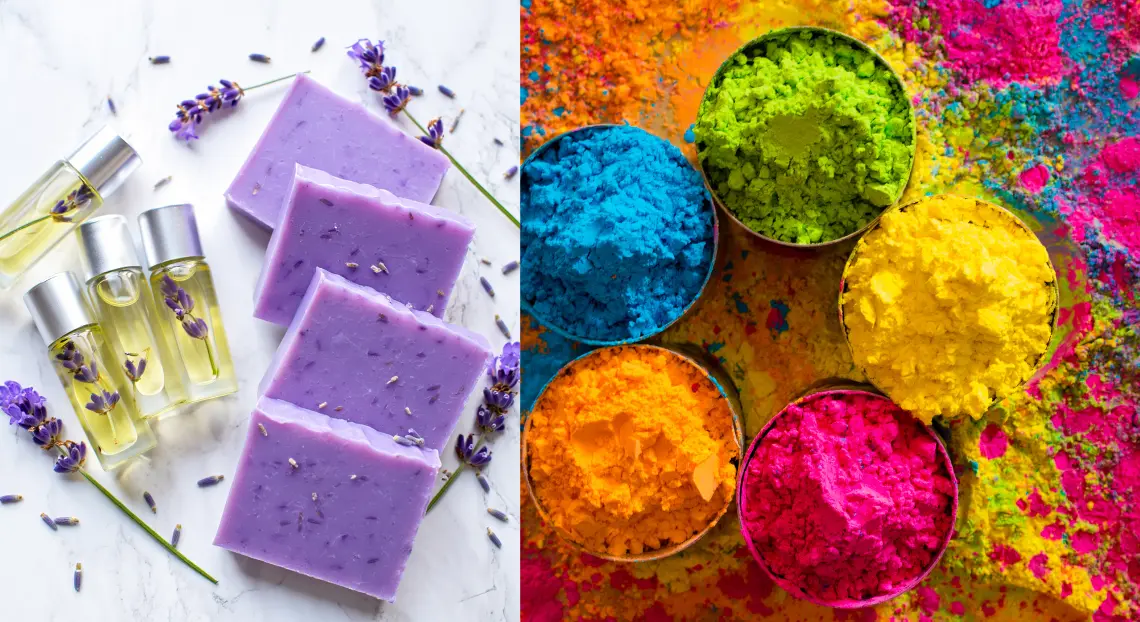
What Are Natural Soap Colorants?
Natural soap colorants are ingredients taken from plants, herbs, roots, spices, clays, minerals, and other natural sources that are used to add color to soap. They are commonly used in handmade soaps to create soft, earthy, and natural-looking shades without using synthetic dyes.
These colorants are available in different forms, including powders, infused oils, purees, and clays. Some natural ingredients also provide extra skin benefits along with color.
In handmade soap making, natural colorants are added to the soap batter during the mixing process. The amount used depends on the type of colorant and the shade the soap maker wants to achieve. Some ingredients create light pastel tones, while others produce deeper and richer colors.
For example:
- Turmeric gives yellow shades
- Spirulina creates green tones
- Activated charcoal produces black or gray colors
- Rose clay adds pink shades
- Cocoa powder creates brown tones
Natural soap colorants are widely used in cold process, hot process, and melt-and-pour soaps.
The main difference between natural and synthetic soap colorants is their source. Natural colorants come from naturally occurring materials, while synthetic colorants are made in laboratories. Natural colors usually look softer and more earthy, whereas synthetic dyes often produce brighter and stronger colors.
Natural colorants may fade or change over time because they react to light, heat, and soap pH levels. Synthetic colorants are generally more stable and consistent in appearance.
Many soap makers prefer natural soap colorants because they fit well with herbal, organic, and eco-friendly soap products.
Why Natural Soap Colorants Are Used in Soap Making?
Natural soap colorants are widely used in handmade soap because they give soap a simple, clean, and natural appearance. Many people prefer soaps made with plant-based and mineral-based ingredients instead of artificial dyes. Natural colors usually create soft and earthy shades that match herbal and organic soap products.
Natural Colors Give Soap a More Natural Look
Many synthetic dyes produce very bright and strong colors that may not match the look of natural skincare products. Natural soap colorants create softer shades such as light green, brown, yellow, pink, and beige. These colors make handmade soaps look more natural and traditional. Soap makers often use ingredients like turmeric, cocoa powder, spirulina, and clays to create these shades.
Natural Colorants Are an Eco-Friendly Option
Most natural soap colorants come from renewable sources such as plants, herbs, roots, spices, and natural clays. Because of this, they are considered a more eco-friendly choice compared to many artificial colorants. Many handmade soap brands use natural ingredients to reduce the use of synthetic chemicals in their products.
Natural colorants also fit well with sustainable and environmentally friendly soap making practices. This is one reason they are popular in small-batch and artisan soap production.
Popular in Herbal and Organic Soaps
Natural soap colorants are commonly used in herbal, organic, and chemical-free soaps. Many customers look for soaps made with simple ingredients and natural additives. Using natural colors helps soap makers create products that match this demand.
Some natural colorants also contain skin-friendly properties. For example, activated charcoal is often used in cleansing soaps, while clays are used to improve texture and absorb excess oil. Turmeric and cocoa powder are also commonly added for their natural properties along with color.
Types of Natural Soap Colorants
Natural soap colorants come from different natural sources such as plants, clays, minerals, herbs, and charcoal. Each type gives a different shade, texture, and look to handmade soap. Some colorants create soft pastel tones, while others produce deep and rich colors.
Plant-Based Soap Colorants
Plant-based colorants are made from leaves, roots, flowers, fruits, and seeds. These are commonly used in herbal and organic soaps. Ingredients like spirulina, indigo powder, alkanet root, beetroot powder, and annatto seeds are popular choices. They can create green, blue, purple, pink, and orange shades in soap.
Many plant-based colorants are added as powders or infused oils. However, some natural plant colors may fade over time because of heat, light, and soap pH levels.
Clay-Based Soap Colorants
Natural clays are widely used in handmade soap for both color and skin benefits. Clays can create soft earthy shades such as green, pink, beige, brown, and gray. Common examples include French green clay, rose clay, kaolin clay, and bentonite clay.
Clay colorants are popular because they are stable and usually keep their color well during soap curing. They also help improve soap texture and cleansing properties.
Spice and Herb Soap Colorants
Spices and herbs are simple natural ingredients used to color soap. Turmeric gives yellow shades, paprika creates orange tones, and cocoa powder adds brown color. Matcha powder and dried herbs can also be used for green shades.
These ingredients are easy to find and are often used in homemade soap recipes.
Mineral and Charcoal Soap Colorants
Mineral-based colorants and activated charcoal are commonly used for darker and stronger shades. Activated charcoal creates black and gray soap, while natural mineral powders can produce red, brown, yellow, and earthy colors.
These colorants are known for better color stability compared to some plant-based ingredients.
Common Natural Soap Colorants and Their Colors
Different natural ingredients create different shades in handmade soap. Some produce bright colors, while others create soft earthy tones. The final color may also change slightly during the soap curing process.
Turmeric for Yellow Soap
Turmeric is one of the most popular natural soap colorants. It gives soap a bright yellow to golden color. A small amount creates a light yellow shade, while a larger amount gives a deeper golden tone. Turmeric is commonly used in herbal and skincare soaps.
Spirulina for Green Soap
Spirulina powder is used to create natural green soap. It usually gives a medium to dark green shade. The color may fade slightly over time if the soap is exposed to sunlight for long periods.
Activated Charcoal for Black Soap
Activated charcoal is widely used for black and gray soaps. It creates deep black shades and is commonly added to cleansing and detox soaps. The color is stable and works well in cold process soap.
Annatto Seed for Orange Soap
Annatto seeds are used to make orange and golden soap shades. Soap makers often infuse the seeds in oil before adding them to soap batter. This colorant creates warm natural tones.
Indigo Powder for Blue Soap
Indigo powder gives soap blue shades that can range from light blue to dark navy. It is commonly used in natural handmade soaps because it produces one of the few true natural blue colors.
Alkanet Root for Purple Soap
Alkanet root is used to create purple and lavender shades in soap. The final color depends on the soap recipe and oil infusion method.
Rose Clay, Cocoa, Matcha, and Paprika
Rose clay gives soft pink shades and is popular in facial soaps. Cocoa powder creates light to dark brown colors and adds a natural chocolate scent. Matcha powder produces soft green tones, while paprika gives orange-red shades in handmade soap.
Best Natural Colorants for Different Soap Colors
Natural soap colorants are available in many shades, but some ingredients work better for specific colors. Choosing the right colorant helps create stable and attractive handmade soaps. The final color can also depend on the soap recipe, oils, and curing process.
Best Natural Green Colorants for Soap
Spirulina and matcha powder are commonly used for green soap. Spirulina gives a darker green shade, while matcha creates a softer green color. French green clay is another popular option because it produces stable earthy green tones and works well in facial soaps.
Best Natural Yellow Colorants for Soap
Turmeric is one of the best natural yellow colorants for soap making. It creates bright yellow to golden shades even in small amounts. Calendula petals and annatto seeds are also used for warm yellow and golden-orange colors.
Best Natural Red and Pink Colorants for Soap
Rose clay is widely used for soft pink soap shades. It creates a smooth natural color and is often added to skincare soaps. Beetroot powder and pink kaolin clay may also give light pink or reddish tones, although some colors can fade during curing.
Best Natural Blue and Purple Colorants for Soap
Indigo powder is one of the most reliable natural blue soap colorants. It can produce light blue, denim blue, or dark navy shades depending on the amount used. Alkanet root is commonly used for purple and lavender soap colors. Soap makers usually infuse it in oil before adding it to soap batter.
Best Natural Black and Gray Colorants for Soap
Activated charcoal is the most popular natural black soap colorant. It creates deep black or gray shades and is widely used in detox and cleansing soaps. Bentonite clay can also produce gray tones in handmade soap.
Best Natural Brown and Beige Colorants for Soap
Cocoa powder and coffee are commonly used for brown soap shades. Kaolin clay creates soft beige and cream colors. These ingredients are often used in natural and rustic soap designs.
Natural Soap Colorants for Cold Process Soap
Cold process soap making is one of the most popular methods for using natural soap colorants. In this process, oils and lye react together to create soap through a process called saponification. During this reaction, the soap batter becomes highly alkaline, which can affect how natural colors appear in the final soap.
How Natural Colorants React in Cold Process Soap?
Natural colorants behave differently in cold process soap compared to melt-and-pour soap. Some ingredients keep their color well, while others may fade, darken, or change shade during curing. Plant-based powders such as spirulina, beetroot, and matcha can react to heat and high pH levels. Because of this, green shades may turn olive or brown over time, and pink shades may become lighter.
Clay-based and mineral-based colorants are usually more stable in cold process soap. French green clay, rose clay, activated charcoal, and natural mineral pigments often keep their color better during the curing process.
Common Color Changes During Soap Curing
Cold process soap normally cures for four to six weeks. During this time, colors may continue to change. Fresh soap batter often looks brighter at first, but the shade may become softer after the soap dries and hardens. Heat during gel phase can also make colors appear deeper and more even.
Some natural ingredients are known for fading faster than others. Matcha, spinach, and beetroot are common examples. On the other hand, turmeric, activated charcoal, and clays usually stay more stable in handmade soap.
Tips for Better Color Stability
To improve color stability, many soap makers mix powders with oil before adding them to soap batter. Keeping soap away from direct sunlight also helps reduce fading. Using stable natural colorants such as clays, charcoal, turmeric, and indigo can produce more consistent results in cold process soap.
Natural Soap Colorants for Melt and Pour Soap
Melt and pour soap is one of the easiest soap making methods for beginners and small handmade soap businesses. In this method, the soap base is already prepared, so the maker only needs to melt it, add ingredients, and pour it into molds. Natural colorants work well in melt and pour soap because the soap base does not go through the strong chemical reaction found in cold process soap. This helps many natural colors stay brighter and more stable.
Best Natural Colorants for Melt and Pour Soap
Many natural ingredients can be used successfully in melt and pour soap. Activated charcoal is commonly used for black and gray shades because it mixes easily and gives stable color. Rose clay and French green clay are also popular because they create soft natural shades and hold their color well.
Turmeric, cocoa powder, paprika, spirulina, and annatto seed are also widely used in melt and pour soap. These ingredients create earthy yellow, brown, green, and orange shades. Natural clays and herbal powders are often preferred because they match the natural look of handmade soap.
How to Avoid Clumping in Melt and Pour Soap?
Powder-based colorants can form lumps if they are added directly into melted soap. To avoid this problem, many soap makers first mix the powder with a small amount of glycerin, rubbing alcohol, or lightweight oil before adding it to the soap base. This creates a smooth paste that blends more easily.
Some soap makers also strain the mixture if small lumps remain. Proper mixing helps create a smoother and cleaner soap appearance.
Tips for Even Color Distribution
For even color distribution, natural colorants should be stirred slowly and thoroughly into the melted soap base. Adding small amounts at a time helps control the final shade. If the soap base becomes too cool, some powders may settle unevenly.
Finished soap should also be stored away from direct sunlight to help maintain color for a longer time. Natural colorants can fade slowly when exposed to strong light and heat.
Benefits of Using Natural Soap Colorants
Natural soap colorants are widely used in handmade soap because they provide a simple and natural look without relying on strong artificial dyes. Many soap makers prefer natural ingredients because they match the growing demand for herbal, organic, and eco-friendly skincare products.
Natural Colorants Give Soap a Clean and Simple Look
Natural soap colorants create soft and earthy shades that make handmade soaps look more natural. Colors from turmeric, cocoa powder, rose clay, and spirulina usually appear warm and gentle instead of overly bright. This type of appearance is popular in herbal and artisan soaps because it reflects the use of natural ingredients.
Many customers prefer soaps with simple colors because they look less artificial and more traditional.
Better Choice for Eco-Friendly Soap Making
Most natural soap colorants come from renewable sources such as plants, herbs, roots, spices, and clays. Because of this, they are commonly used in eco-friendly soap making. Natural ingredients usually require less chemical processing compared to synthetic dyes.
Small handmade soap brands often choose natural colorants to support sustainable and environmentally friendly products. Plant powders, natural clays, and charcoal are commonly used because they are widely available and biodegradable.
Gentle Option for Many Skin Types
Some natural colorants are also known for their skin-friendly properties. Clays are often used in facial soaps because they help absorb excess oil and improve soap texture. Activated charcoal is popular in cleansing soaps, while turmeric and cocoa powder are commonly added to herbal skincare products.
Although natural colorants are generally considered mild, the final soap formula still matters. Using high-quality ingredients and proper amounts helps create balanced soap products.
Suitable for Herbal and Organic Soaps
Natural soap colorants fit well in herbal, organic, and handmade soap recipes. They help soap makers create products that match natural skincare trends. These colorants also allow soap makers to create unique earthy shades that are difficult to achieve with synthetic dyes.
Because of their natural appearance and simple ingredients, natural soap colorants continue to be a popular choice in handmade soap making.
Limitations of Natural Soap Colorants
Natural soap colorants are popular in handmade soap making, but they also have some limitations. Unlike synthetic dyes, many natural ingredients react to heat, light, air, and the high pH level of soap. Because of this, the final soap color may not always stay the same over time.
Natural Colors May Fade Over Time
One of the most common problems with natural soap colorants is color fading. Plant-based ingredients such as spirulina, matcha, spinach, and beetroot can lose their brightness after a few weeks or months. Green shades may turn olive or brown, while pink and red shades can become lighter during curing and storage.
Sunlight and air exposure can make fading happen faster. Many soap makers store handmade soaps in cool and dark places to help maintain color for a longer time.
Bright Color Options Are Limited
Natural soap colorants usually create soft and earthy shades instead of bright and vibrant colors. Deep neon shades, strong reds, and bright blues are difficult to achieve with fully natural ingredients. Most natural colorants produce muted greens, browns, yellows, and pastel tones.
Because of this, handmade soaps made with natural colorants often have a more rustic and traditional appearance.
Colors Can Change During Soap Curing
Natural colorants can react to the alkaline environment of soap during the curing process. Some ingredients may darken, fade, or completely change shade after the soap hardens. For example, spirulina may shift from green to olive, while turmeric can become dull yellow or brown over time.
These color changes are common in cold process soap because the soap continues changing as it cures.
Some Natural Ingredients Have Lower Stability
Certain natural colorants have shorter shelf stability compared to mineral-based or synthetic colorants. Ingredients made from herbs, vegetables, and plants can break down faster when exposed to heat, moisture, and oxygen. Testing small batches before large production is important for better results.
Tips for Getting Better Results With Natural Soap Colorants
Natural soap colorants can create beautiful handmade soaps, but getting consistent results takes proper testing and preparation. Many natural ingredients react differently depending on the soap recipe, curing conditions, and storage method. Following a few simple practices can help improve color stability and overall soap appearance.
Test Small Soap Batches First
Testing small batches is one of the best ways to understand how a natural colorant behaves in soap. Some ingredients may look bright in fresh soap batter but become lighter or darker after curing. Small test batches help soap makers check the final shade before making larger quantities.
Testing also helps identify how much colorant is needed. A very small amount may produce light pastel shades, while larger amounts can create deeper colors.
Store Soap Away From Direct Sunlight
Sunlight and heat can fade natural soap colors over time. Plant-based ingredients such as spirulina, beetroot, and matcha are especially sensitive to light exposure. Handmade soaps should be stored in a cool and dry place away from direct sunlight.
Proper storage helps maintain the color and quality of the soap for a longer time. Closed containers and shaded shelves are commonly used for better protection.
Use Distilled Water for Better Consistency
Many soap makers use distilled water because it contains fewer minerals and impurities compared to regular tap water. Minerals in hard water can sometimes affect soap texture and color appearance.
Using distilled water helps create more consistent soap batches and reduces unwanted reactions during soap making.
Avoid Using Too Much Colorant Powder
Adding too much powder can make soap feel rough or grainy. Some strong colorants may also stain washcloths or create uneven shades in the soap. It is usually better to start with a small amount and slowly increase if needed.
Mixing powders with oil before adding them to soap batter can also help create smoother color blending.
Keep Notes of Recipes and Results
Keeping detailed notes helps soap makers track which colorants work best in different recipes. Recording the amount used, curing time, and final color makes it easier to repeat successful soap batches in the future.
How to Choose the Right Natural Soap Colorant?
Choosing the right natural soap colorant is important for getting the desired color, texture, and soap quality. Different natural ingredients behave differently in soap, so soap makers usually select colorants based on the soap type, shade preference, skin needs, and color stability.
Choose Colorants Based on Soap Type
Some natural colorants work better in certain soap making methods. Cold process soap has a high pH level, which can change or fade delicate plant colors. Ingredients like spirulina and beetroot may lose brightness during curing. More stable options such as clays, turmeric, indigo, and activated charcoal usually perform better in cold process soap.
Melt and pour soap often keeps colors brighter because it does not go through strong chemical reactions. Herbal powders, clays, and infused oils are commonly used in this type of soap.
Select Colorants Based on the Desired Shade
Different natural ingredients create different shades. Turmeric produces yellow tones, cocoa powder gives brown shades, and rose clay creates soft pink colors. Indigo powder is commonly used for blue soap, while activated charcoal produces black and gray shades.
Natural soap colorants usually create earthy and muted tones instead of bright neon colors. Soap makers often test small batches first to see the final cured color.
Consider Skin Sensitivity and Safety
Some people choose natural colorants because they are considered gentler than certain synthetic dyes. Clays, charcoal, herbs, and plant powders are commonly used in soaps for sensitive skin. However, some natural ingredients may still cause irritation in certain people, so patch testing is important.
Check Color Stability and Eco-Friendly Goals
Color stability is another important factor. Some plant-based colors fade faster when exposed to sunlight, air, and heat. Clays, charcoal, and mineral-based colorants are usually more stable than delicate herbal powders.
Soap makers who focus on herbal, organic, or eco-friendly products often choose biodegradable and plant-based colorants because they fit natural soap making practices.
Mistakes to Avoid When Using Natural Soap Colorants
Natural soap colorants can produce beautiful handmade soaps, but mistakes during the soap making process can affect the final color and texture. Some natural ingredients are sensitive to heat, light, and high pH levels, so proper handling is important for better results.
Using Too Much Natural Colorant
Adding too much natural colorant is a common mistake in handmade soap making. Large amounts of powders such as turmeric, charcoal, cocoa, or clays can make soap feel rough or grainy. Strong colorants may also leave stains on washcloths or skin.
Using too much powder can also change the soap texture and make the color appear uneven. Most soap makers start with a small amount and increase slowly if a deeper shade is needed.
Not Testing Small Soap Batches First
Natural colorants can react differently in every soap recipe. Some ingredients may fade, darken, or change color during curing. Testing small soap batches first helps soap makers understand how the final color will look after the soap fully hardens.
Without testing, large batches may produce unexpected results and lead to wasted ingredients and time.
Ignoring pH Changes in Soap
Cold process soap has a high pH level during saponification, and this can affect many natural colors. Ingredients like beetroot, spirulina, and matcha may lose brightness or shift to different shades after curing.
Some natural colorants are more stable than others. Clays, activated charcoal, turmeric, and indigo usually perform better in high-pH soap recipes.
Poor Mixing Methods
Improper mixing can cause color spots, clumps, or uneven shades in soap. Powder colorants should be mixed with a small amount of oil, glycerin, or water before adding them to the soap batter. This helps create smoother and more even color distribution.
Stirring thoroughly is also important for consistent results.
Storing Soap the Wrong Way
Heat, moisture, and direct sunlight can fade natural soap colors over time. Handmade soaps should be stored in cool, dry, and shaded areas to help maintain color and quality. Proper storage helps natural soap colorants stay more stable for a longer period.
Conclusion
Natural soap colorants are a popular choice in handmade soap making because they provide soft, natural-looking colors using plant-based, mineral-based, and earth-derived ingredients. They help create herbal, organic, and eco-friendly soaps without relying on strong synthetic dyes.
Ingredients like turmeric, spirulina, activated charcoal, clays, cocoa powder, and indigo are widely used to create different shades in cold process and melt and pour soaps. Each natural colorant behaves differently, so testing small batches and understanding color stability are important for getting better results.
Although natural soap colorants may fade or change over time, proper mixing, storage, and ingredient selection can help improve color performance. Choosing stable colorants and using the right amount can make handmade soaps look clean, attractive, and professional.
For soap makers who want a more natural and simple approach, natural soap colorants remain one of the best options for creating unique and visually appealing soaps.
Frequently Asked Questions (FAQs)
What are the best natural soap colorants?
Some of the best natural soap colorants include turmeric, spirulina, activated charcoal, indigo powder, rose clay, cocoa powder, and annatto seed. These ingredients are widely used in handmade soap making.
Are natural soap colorants safe for skin?
Most natural soap colorants are considered safe when used in proper amounts. However, some people may still have sensitivities to certain herbs, spices, or plant powders.
Do natural soap colorants fade over time?
Yes, some natural colorants can fade when exposed to sunlight, air, or heat. Plant-based colors usually fade faster than clays and mineral-based colorants.
Can I use food powders in soap?
Yes, many food powders such as turmeric, cocoa powder, paprika, and matcha are commonly used in handmade soap for natural coloring.
Which natural colorant makes black soap?
Activated charcoal is the most popular natural ingredient used to create black or dark gray soap.
What is the best natural green colorant for soap?
Spirulina and French green clay are commonly used for green soap colors. Matcha powder is also used for softer green shades.
Can natural colorants stain skin?
Some strong natural colorants may temporarily stain skin or washcloths if used in large amounts. Turmeric and activated charcoal are common examples.
Are natural soap colorants eco-friendly?
Yes, many natural soap colorants come from plants, herbs, clays, and minerals, making them a more eco-friendly option compared to synthetic dyes.
Which natural colorants work best in cold process soap?
Clays, activated charcoal, indigo powder, turmeric, and cocoa powder usually perform well in cold process soap because they are more stable during curing.
Can I mix different natural soap colorants together?
Yes, different natural colorants can be mixed to create custom shades and unique soap designs. Testing small batches first helps achieve better results.